
GVT Tiles (Glazed Vitrified Tiles): Features, Uses & Designs
In This Article
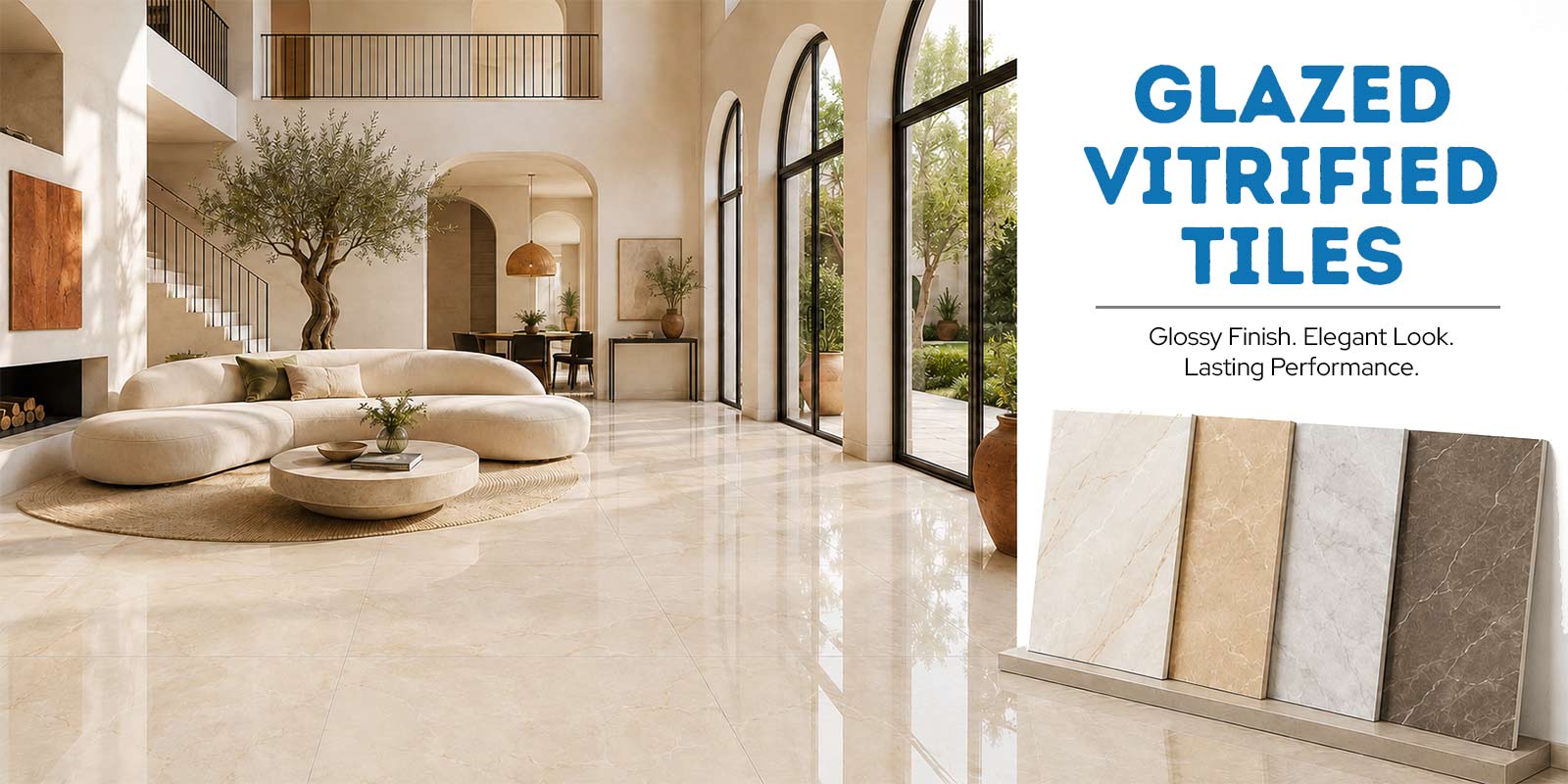
GVT stands for glazed vitrified tile, which is a low-porosity vitrified-body tile finished with a digitally printed glaze layer to replicate marble, wood, or natural stone.
GVT tile has a water absorption ratio of less than 0.5%. This is because of high-temperature vitrification of the clay, feldspar, and silica body beneath the glaze.
This guide covers the GVT family (GVT, PGVT, DGVT, full-body), as well as specifications, sizes, finishes, and usage. This also covers where GVT should not be used.
What Are Glazed Vitrified Tiles?
Glazed vitrified tiles are made from clay, feldspar, and silica. They are pressed and fired in kilns at temperatures exceeding 1200°C to fuse the minerals into a dense, glass-like structure. Then, a digitally printed glaze is applied on top before a final firing seals the surface. The result is a tile with water absorption below 0.5%, stain-resistant, and surface hardness driven by glaze.
Aparna Enterprises tiles are manufatcured to these standards at their Kakinada and Morbi factories and offer GVT tiles in different sizes, designs, and finishes.
Glazed vitrified tiles are available in three main variants: GVT (Glazed Vitrified Tile), PGVT (Polished Glazed Vitrified Tile), and DGVT (Digital Glazed Vitrified Tile). All feature a vitrified body with a digitally printed glaze layer. Double Charge Vitrified Tiles (DCVT) and Full-Body Vitrified Tiles are related vitrified tile categories but are unglazed and designed for different applications.
Tile Type |
What It Means |
Where the Design Is |
Slip Risk |
| GVT | Glazed Vitrified Tile | Printed glaze on the surface | Medium (depends on finish) |
| PGVT | Polished Glazed Vitrified Tile | Polished glaze on the surface | High when wet |
| DGVT | Digital Glazed Vitrified Tile | Digitally printed glaze on the surface | Depends on finish |
| DCVT | Double Charge Vitrified Tile | Colour extends 3–4 mm into the tile | Medium when wet |
| Full-Body | Full-Body Vitrified Tile | Colour runs throughout the tile | Low |
Why Choose GVT Tiles? Key Advantages
GVT tiles are preferred over ceramic and natural stone because of their low water absorption, durability, design range, scratch and stain resistance, low maintenance, and hygienic surface.
- Low water absorption: GVT absorbs less than 0.5% water, which meets the official Indian standards (IS 15622:2017). This makes GVT resistant to water ingress when compared to ceramic tiles (which absorb 3–6%).
- Durability: GVT features a hard base that can handle daily walking on indoor floors. Their glazed surface protects against water, tough stains, and daily scratches. However, dropping heavy items can chip the top layer and expose the inside core.
- Design range: Digital printing allows GVT tiles to look like real marble, wood, or stone. They also come in various design options.
- Stain and scratch resistance: The hard GVT surface can resist stains and scratches from daily spills and furniture scuffs. PGVT uses nano-polishing to seal pores for long-lasting shine, and matte GVT hides surface wear and tear.
- Low maintenance: These tiles don’t need regular sealing like natural stone. Sweeping and mopping are sufficient to maintain them.
- Hygienic surface: Their low-porosity glazed surface helps resist stains and moisture, making cleaning easier. Regular cleaning of both the tile surface and grout joints is still recommended to maintain hygiene.
Where Are GVT Tiles Used?
GVT is used for indoor floors and walls in residential and commercial spaces. The outdoor use of these tiles is restricted to specific finishes.
- Residential and commercial flooring: For light and moderate foot traffic areas like living rooms, offices, and retail floors, glossy/matte finish tiles are a better option. And for heavy-traffic areas like malls and airports, full-body vitrified tiles or DGVT are preferred.
- Bathrooms and kitchens: GVT is a perfect choice for bathrooms and kitchens because of its low water absorption and non-porous glaze. They block spills, oil, and moisture. Also, matte or carving finishes prevent slipping in these wet zones.
- Feature walls, countertops, and backsplashes: The design range (marble/wood/stone-look) and hygienic, easy-to-clean surface suit both aesthetic wall applications and food-contact areas.
- Outdoor and rooftop use: Matte or anti-skid GVT tiles with an R10–R11 slip rating are suitable for outdoor applications. For heavy outdoor traffic, full-body vitrified tiles provide better long-term wear resistance.
Common GVT Tile Sizes
The most common GVT format is 600×600mm, though large-format sizes have become standard for open-plan interiors.
Size (mm) |
Best for |
| 600 × 600 | Standard residential flooring |
| 600 × 1200 | Living rooms and commercial interiors |
| 800 × 1600 | Large-format floors (if offered) |
| 1200 × 1800 | Feature walls and premium interiors |
Aparna Enterprises manufactures GVT/PGVT tiles across this span, from standard 600×600mm and 600×1200mm formats up to a large-format 1200×1800mm.
Top Design & Finish Options of GVT Tiles
GVT mimics natural materials: marble, wood, stone, and concrete – across matte, polished, and textured finish families. The finish you pick should match the traffic and moisture conditions of the space.
Tile Finishes and Applications
| Finish Type | Look | Where to Use | Safe for Wet Floors? |
| Glossy | Shiny & mirror-like | Living rooms & walls | No |
| Sugar / Metallic | Sparkly & decorative | Feature walls only | No |
| Matte | Smooth & non-shiny | Kitchens & bathrooms | Yes |
| Carving / Rustic | Rough & textured | Showers & outdoors | Yes |
| Natural Looks | Mimics wood or stone | Any room | Only if matte |
Aparna Enterprises offers matte, glossy, carving, and high-gloss finish categories. It has over 3,500 tile designs and 500-plus ready-to-use design concepts.
Tile Type, Finish and Aplications
| Tile Type | Finish | Best For |
| GVT | Matte / Textured | Normal floors, walls, and wet areas |
| PGVT | Shiny / High-Gloss | Living rooms and decorative areas |
| DGVT | Digital marble, wood and stone designs | Premium residential and commercial interiors |
| Full-Body | Solid Color Throughout | Heavy outdoor use and stairs |
All four types have less than 0.5% water absorption, and the difference lies in where the design/pigment sits in the tile.
Takeaway
GVT tiles have water absorption below 0.5%, making them suitable for residential and commercial interiors. They are easy to maintain and save money in the long run.
Aparna Enterprises manufactures GVT and full-body vitrified tiles with water absorption below 0.5% as per IS 15622:2017 standards and is certified GreenPro.
If you’re looking for GVT, PGVT, and full-body options for your project, explore Aparna Enterprises’ range for the current sizes and finishes.
Frequently Asked Questions On GVT Tiles
Yes, GVT is good for flooring because it has water absorption below 0.5% and resists staining and moisture damage. It is suitable for residential and light commercial floors, but for wet areas, a matte or anti-skid finish must be preferred.
GVT has a matte or textured glaze finish, and PGVT has a glossy surface. GVT is good for everyday use and can handle wet areas better. PGVT works for low-traffic living areas where shine matters more than grip.
Vitrified tile is an umbrella term for any tile with a vitrified body. GVT is a type of vitrified tile, which refers to vitrified tile with a digitally printed glaze layer on top.
Yes, GVT is good for outdoors. But you have to choose matte or anti-skid finishes with an R10 to R11 slip rating. For outdoors, avoid glossy, polished PGVT, sugar, or metallic finishes as they turn slippery when wet.
GVT is a type of vitrified tile with a digitally printed glazed surface. It is ideal for homes and commercial interiors. Double Charge and Full-Body vitrified tiles are good for heavy-traffic areas.
Start Your Project with the Right Materials
We provide everything you need for modern construction. Connect with our experts to discuss your requirements and get the best solution for your project. Submit your details and our team will contact you soon.
CORPORATE OFFICE
8-2-293/82/A, Plot No-1214, Road No-60,
Jubilee Hills, Hyderabad-500 033.