
Soundproof uPVC Windows: How They Work, Benefits & Noise Reduction Explained
In This Article
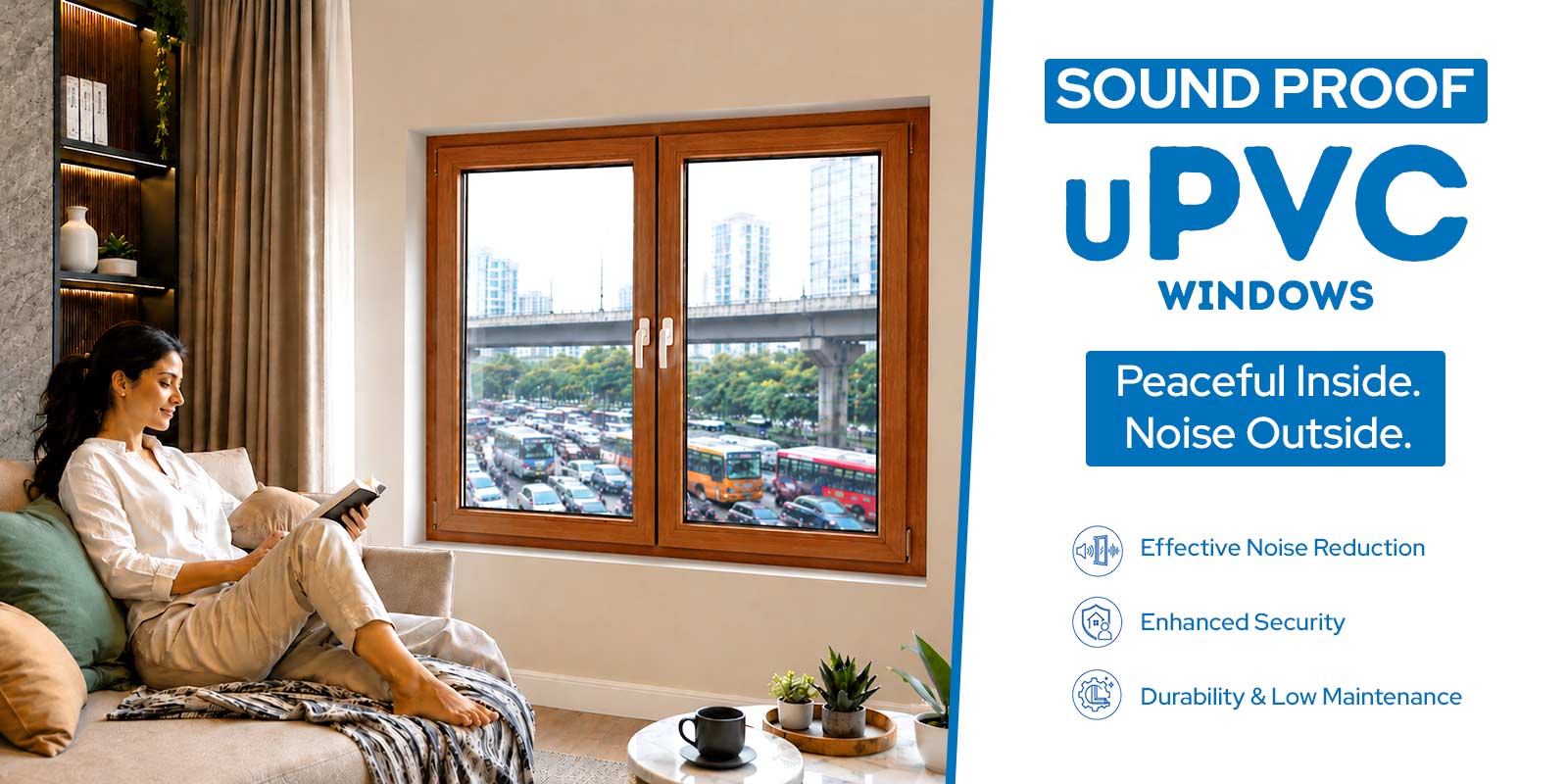
Soundproof uPVC windows reduce outside noise by sealing your home against sound the same way they seal it against air and water. A well-specified uPVC window with the right glazing can cut external noise by roughly 25 to 45 decibels — enough to turn the roar of a busy main road into a soft, distant murmur. How much you actually gain depends on four things: the thickness of the glass, the air or gas gap between the panes, whether the glass is laminated or acoustic, and how well the frame is sealed and installed. This guide explains how that noise reduction works, what STC ratings to look for, which glazing and window styles perform best, and how to choose the right setup for your home.
Key Takeaways
- Noise reduction: Quality soundproof uPVC windows typically cut outside noise by about 25–45 dB, depending on the glazing.
- Look at the STC rating: Sound Transmission Class is the number to compare (higher is better). Aim for STC 35+ for noticeable relief on a noisy road.
- Glazing matters most: Double glazing with laminated or acoustic glass and a wider air gap delivers the biggest reduction.
- Window style counts: Tightly-sealing casement and tilt-and-turn windows generally outperform sliding windows acoustically.
- Bonus benefits: They also lower energy bills (typically 10–25%) and improve privacy and security.
- Be realistic: No window is 100% soundproof. It all depends on correct specification and professional installation are what make the real difference.
How Noise Gets In And How uPVC Stops It?
Outside noise enters a home mainly through the windows, because glass and the gaps around it transmit sound far more easily than a solid wall. Soundproof uPVC windows reduce that transmission on four fronts.
-
Glass Thickness And Mass
Thicker, heavier glass blocks more sound because dense material is harder for sound waves to vibrate through. This is why a thin single pane lets in so much noise, while thicker or multi-layer glass cuts it noticeably. Increasing the glass mass is one of the simplest ways to raise a window’s acoustic performance.
-
The Air Or Gas Gap Between Panes
In double glazing, the sealed gap between the two panes breaks the path that sound travels, and a wider gap absorbs more low-frequency noise like traffic rumble. Filling the cavity with a denser inert gas such as argon improves both sound and thermal insulation. As a rule, a larger, gas-filled cavity performs better acoustically than a narrow air gap.
-
Laminated And Acoustic Glass
Laminated glass bonds two glass layers around a plastic interlayer that dampens sound vibrations before they pass through. Purpose-made acoustic glass uses a specialised interlayer tuned to absorb the frequencies of urban noise. Adding laminated or acoustic glass is the single most effective upgrade for a quieter room.
-
Frame Seals And The Multi-chamber Profile
Even the best glass fails if sound leaks around the frame, so soundproof uPVC windows use continuous gaskets and multi-point locking that compress the sash tightly shut. The uPVC profile itself is multi-chambered — hollow internal cells that interrupt sound and add insulation. Tight seals and a quality profile are what stop the small gaps that let noise sneak in.
How Much Noise Can Soundproof uPVC Windows Reduce?
The honest answer is that it depends on the glazing, and the right way to compare windows is the STC rating. STC, or Sound Transmission Class, is a standard measure of how well a window blocks airborne sound — the higher the number, the more noise it stops. For context, ordinary conversation sits around 60 dB, while busy city traffic and honking can reach 70–85 dB. A higher-STC window pulls that down to a level where it fades into the background. The table below shows approximate performance by glazing configuration.
Glazing Configuration |
Approx. noise Reduction |
Approx. STC Rating |
| Single glazing (standard glass) | Baseline (~25 dB) | 26–28 |
| Standard double glazing (DGU) | Up to ~30 dB | 28–32 |
| Laminated / acoustic single glass | Up to ~35 dB | 34–37 |
| Double glazing with laminated/acoustic glass + wider gap | Up to ~40–45 dB | 38–45 |
Benefits Of Soundproof uPVC Windows
-
Effective Noise Reduction
Soundproof uPVC windows cut a large share of outside noise because their multi-layer glazing and airtight seals absorb and block sound before it reaches the room. Depending on the configuration, they can reduce external noise by up to around 40–45 dB, turning a disruptive street into a calm interior. This is their core purpose and their biggest single advantage.
-
Energy Efficiency And Lower Bills
The same sealed, multi-pane construction that blocks noise also blocks heat, so soundproof uPVC windows improve energy efficiency at the same time. By reducing heat gain in summer and heat loss in winter, they ease the load on air conditioning and typically trim energy bills by around 10–25%. You get a quieter and a cheaper-to-run home from one upgrade.
-
Greater Privacy
Because they block sound in both directions, soundproof uPVC windows keep your conversations inside as effectively as they keep noise out. This matters for bedrooms, home offices and ground-floor rooms facing the street, where privacy is as valuable as quiet. Households and offices handling sensitive conversations benefit most.
-
Enhanced Security
Soundproof uPVC windows are inherently more secure because the same steel-reinforced frames and multi-point locking that seal out noise also resist forced entry. Laminated glass adds a further barrier, as it holds together rather than shattering on impact. Quiet and security come from the same robust construction.
-
Durability And Low Maintenance
uPVC frames resist warping, rusting, corrosion and termites, so soundproof windows keep performing for years with almost no upkeep. They never need painting or polishing — an occasional wipe is enough. This makes them a long-term, low-hassle investment rather than a recurring maintenance cost.
-
Higher Property Value
Soundproof windows are increasingly seen as a premium feature that lifts a property’s appeal, especially in busy urban locations. Buyers and tenants recognise the value of a quiet, energy-efficient home, which can support a stronger sale or rental price. It is a visible, tangible upgrade that pays back at resale.
Soundproof Window Types Compared: Sliding Vs Casement Vs Fixed
Window style affects acoustic performance because it determines how tightly the sash seals when closed. Casement and tilt-and-turn windows press against a continuous gasket as they shut, giving the tightest seal and the best noise control. Sliding windows perform well but seal slightly less tightly, as the panes slide past each other. Fixed windows are the quietest of all because they have no opening mechanism and therefore the fewest gaps.
Window type |
Acoustic performance |
Why |
| Casement | Best | Sash compresses against the frame gasket for the tightest seal |
| Tilt & turn | Very good | Multi-point seal all around, close to casement |
| Fixed | Excellent (but non-opening) | No opening mechanism means the fewest gaps for sound |
| Sliding | Good | Panes slide past one another, so the seal is slightly looser |
Best Glazing For Soundproofing: Double Vs Triple Vs Laminated
If noise is your main concern, the glazing choice matters more than any other single decision. Standard double glazing handles everyday urban noise well and is the practical default for most homes. For high-noise locations near highways, railways or flight paths, laminated or acoustic glass, ideally combined with double glazing and a wider air gap, gives the strongest result. Triple glazing adds thermal insulation but offers only modest extra noise reduction over a good laminated double-glazed unit, so for soundproofing specifically, laminated glass usually delivers more value than a third pane.
How To Choose Soundproof uPVC Windows In India?
Start by matching the window to your noise source. A home on a quiet lane needs far less than one beside a flyover or under a flight path, so identify how loud and what kind of noise you are dealing with before specifying glass. For heavy traffic or construction, prioritise laminated or acoustic glazing and a higher STC rating.
Then check three things that make or break performance. The glass spec, double-glazed or laminated, with the thickness and gap suited to your noise level. The frame quality, a well-built multi-chamber uPVC profile with steel reinforcement and quality gaskets, since even the best glass underperforms in a poor frame. And the installation; a precisely fitted, fully sealed window, because gaps around a badly installed frame let noise straight back in. A professionally installed, correctly specified window from an established manufacturer will always outperform a cheaper unit fitted poorly.
Why Choose Aparna Enterprises For Soundproof uPVC Windows?
Aparna Enterprises manufactures uPVC windows and doors engineered for Indian conditions, backed by more than 35 years of building-materials expertise. Our soundproof range combines multi-chamber profiles, steel reinforcement, quality acoustic glazing options and precise factory engineering to deliver dependable noise reduction along with energy efficiency, security and low maintenance. To find the right soundproofing solution for your home or office, explore our uPVC windows and doors range or contact our team for a consultation and quote.
Conclusion
Soundproof uPVC windows are one of the most effective and practical ways to reclaim quiet in a noisy city — and they pay you back twice over, in lower energy bills and a more secure, more valuable home. For everyday urban noise, a well-sealed double-glazed unit does the job; for homes facing highways, railways or flight paths, step up to laminated or acoustic glass and a higher STC rating. Get the three essentials right — match the glazing to your noise, choose a quality multi-chamber frame, and insist on professional installation — and the difference is something you will notice the very first night.
Ready to silence the street?
Aparna Enterprises soundproof uPVC windows are designed for exactly these conditions, combining acoustic glazing, steel-reinforced multi-chamber frames and precise installation. Explore our soundproof uPVC window range or book a free consultation to find the right specification for your home, and start sleeping through the noise.
Frequently Asked Questions On Soundproof uPVC Windows
For most homes in noisy areas, soundproof uPVC windows are worth the investment, because the cost is offset over time by lower energy bills, reduced maintenance and a higher resale value. The bigger return is harder to price, which is better sleep, focus and comfort. They cost more than basic single-glazed windows upfront, but the long-term value usually justifies it for anyone affected by outside noise.
Quality soundproof uPVC windows typically last 25 years or more, since uPVC resists warping, rusting and weathering and needs no repainting. Their acoustic performance holds up over time as long as the seals and gaskets are maintained, which is minimal. Choosing a reputable manufacturer and professional installation is what ensures they last the full lifespan.
Yes, soundproof windows deliver their full noise reduction only when closed and sealed, because an open window leaves a direct path for sound. This is why pairing them with proper ventilation, such as a tilt-and-turn option or mechanical ventilation, matters in Indian homes that rely on airflow. When shut, they keep the room quiet without you having to compromise on a sealed, cool interior.
Not necessarily because many homeowners prioritise the rooms most affected by noise, such as bedrooms, a home office or living areas facing the street. Treating the noisiest, most-used rooms first delivers the most noticeable benefit for the budget. You can extend to other rooms later, since uPVC windows can be specified room by room.
They overlap but are not identical. The sealed, multi-pane construction that blocks noise also improves thermal insulation, so most soundproof uPVC windows are energy-efficient too. However, the highest acoustic performance comes specifically from laminated or acoustic glass and a wider air gap, so a window optimised for sound is not automatically optimised for heat, and vice versa.
Installation of a single window usually takes a few hours, while a full home can take one to a few days depending on the number and size of units. Because a precise, fully sealed fit is essential to acoustic performance, the time spent on accurate installation directly affects how well the windows block noise. A professional fitting is always worth it over a rushed job.
Start Your Project with the Right Materials
We provide everything you need for modern construction. Connect with our experts to discuss your requirements and get the best solution for your project. Submit your details and our team will contact you soon.
CORPORATE OFFICE
8-2-293/82/A, Plot No-1214, Road No-60,
Jubilee Hills, Hyderabad-500 033.