
Kitchen & Wardrobe Solutions
Modular Kitchen And Wardrobe Solutions: Know The Types & Design Ideas
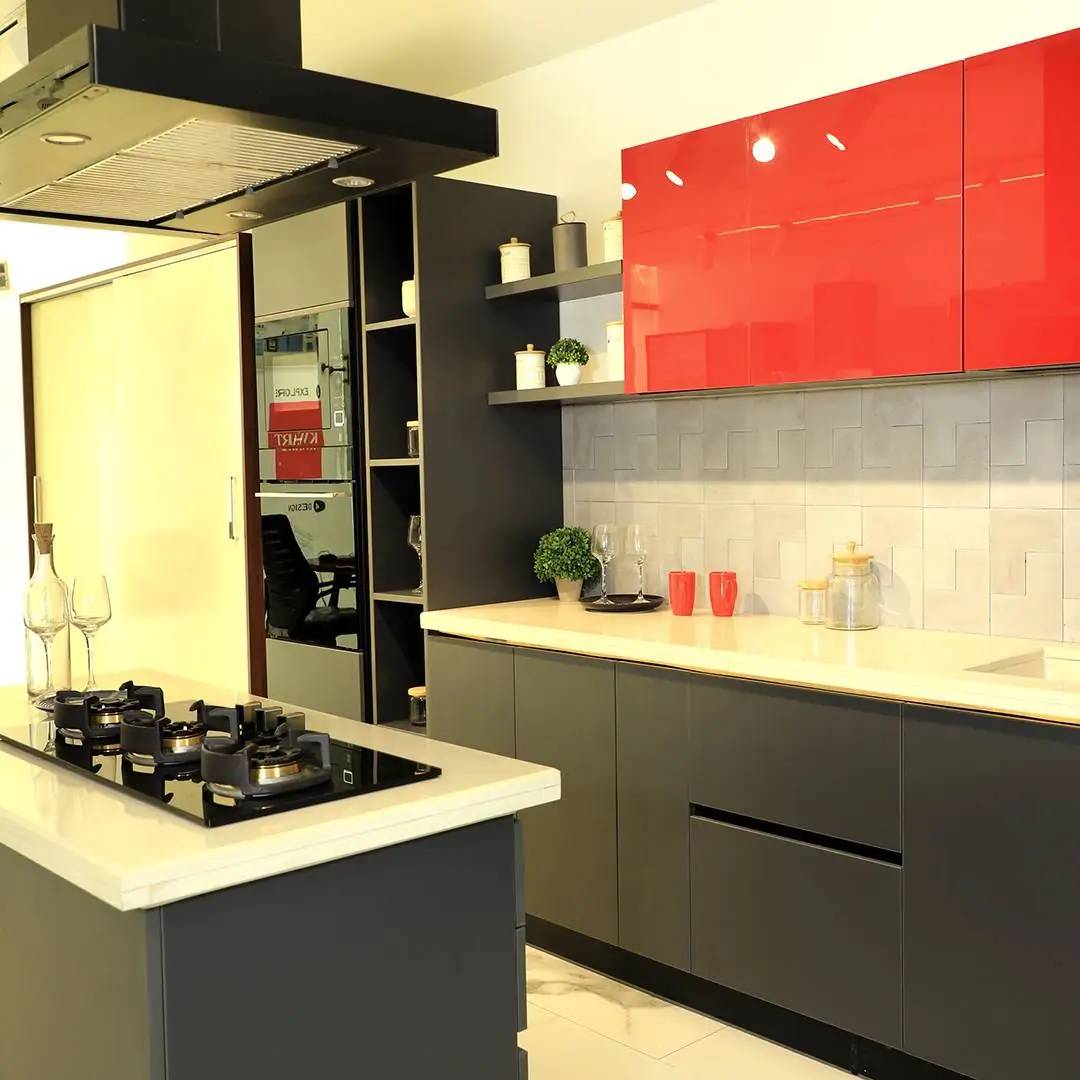
Kitchen and wardrobe have become the main focus of smart designs because they are the core of an organised, functional modern home. By focusing on smart storage and layout, these spaces keep your home organised and your daily routines simple. These workspaces have evolved into smart, modular systems that focus on flexibility and a clean look.
In this write-up, we will explore types, layouts, materials, designs, and wardrobe storage ideas, and insights, inspired by experienced manufacturers like Aparna Enterprises Limited, to help plan functional spaces.
What Is A Modular Kitchen?
A modular kitchen is a modern approach to kitchen design in which pre-manufactured modules or units like cabinets, drawers, and shelves are factory-made and assembled on-site to create a complete, functional kitchen. These customizable components are designed for effortless, systematic, and elegant cooking spaces, achieved by blending modern aesthetics and practical functionality. These modules or units, used to create kitchen solutions, offer great flexibility because they can be shifted and replaced with newer ones.
Types of Modular Kitchen Layouts
Kitchen layouts are designed based on available floor space and cooking habits to maximise efficiency and ergonomics. A properly designed layout minimises needless movement in the kitchen while cooking. Here, let’s see a few modular kitchen layouts:
-
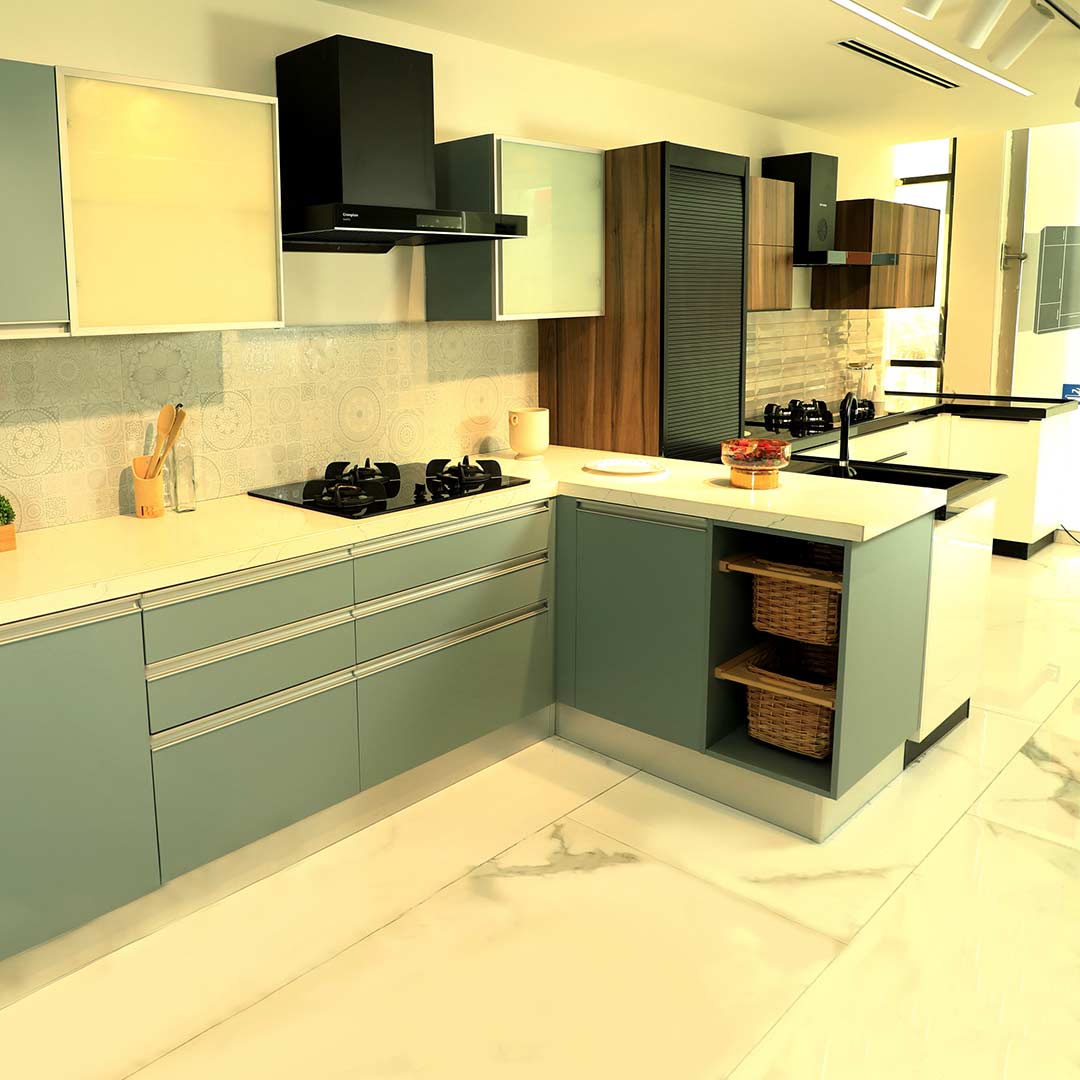
L-Shape Kitchen
It is a versatile kitchen layout that uses two adjacent walls that meet at a right angle to form an L shape, often featuring cabinets and appliances. This layout creates an efficient work triangle between the stove, sink, and refrigerator, reducing the steps needed for preparing a meal.
This popular layout maximises space, offers flexibility, creates an efficient workflow for smooth movement, opens up floor space, and increases storage.
They are suitable for small and compact spaces, kitchens with corners, open-concept layouts, and combined dining/kitchen areas.
-
U-Shape Kitchen
This is a highly efficient kitchen layout featuring furniture (cabinetry and countertops) or other equipment arranged along three adjacent walls to form a U-shaped layout. It is also called a horseshoe layout because it mimics the shape of a horseshoe, leaving one end open for entrance.
The U-shaped kitchen layout maximises space and storage, creates an uninterrupted workflow, enhances efficiency, supports multiple cooks, and offers enough room for food preparation.
They are ideal for medium to large kitchens, open plan living spaces, enclosed kitchen rooms, and homes with central windows.
-
G-Shape Kitchen
An expansion of the U-shaped layout, this layout features cabinetry and countertops along three walls, plus a fourth arm or peninsula. So, it appears like a G-shape, creating an area for storage, a worktop, or a functional social area.
G-shaped kitchen layout maximises storage and counter spaces, increases cabinetry flexibility, offers superior storage, and the extra arm acts as a breakfast bar.
It works best for open-plan homes, square rooms, studio or loft apartments, medium-sized square rooms, and small kitchen extensions.
-
Single Wall Kitchen
This is an efficient space-saving layout, in which cabinets, appliances, and countertops are arranged in a straight line along a single wall. It is also called a one-wall or straight layout, or Pullman kitchen.
Single-wall kitchens maximise floor space, boost workflow, and lower renovation expenses, and are easier to install and clean.
They are used in small/narrow houses, studio apartments and lofts, open-plan living areas, and rental apartments.
-
Galley Kitchen
This is a long, narrow layout with two parallel counters facing each other, which are separated by a central walkway for free movement. Also called the ship’s kitchen, this layout is mostly used on ships and trains.
The layout maximises efficiency, saves space, creates safe cooking zones, improves storage, and is easy to clean.
Galley kitchens are preferred in small homes and apartments, modern open-plan homes, industrial spaces, and commercial spaces.
-
Kitchen Island
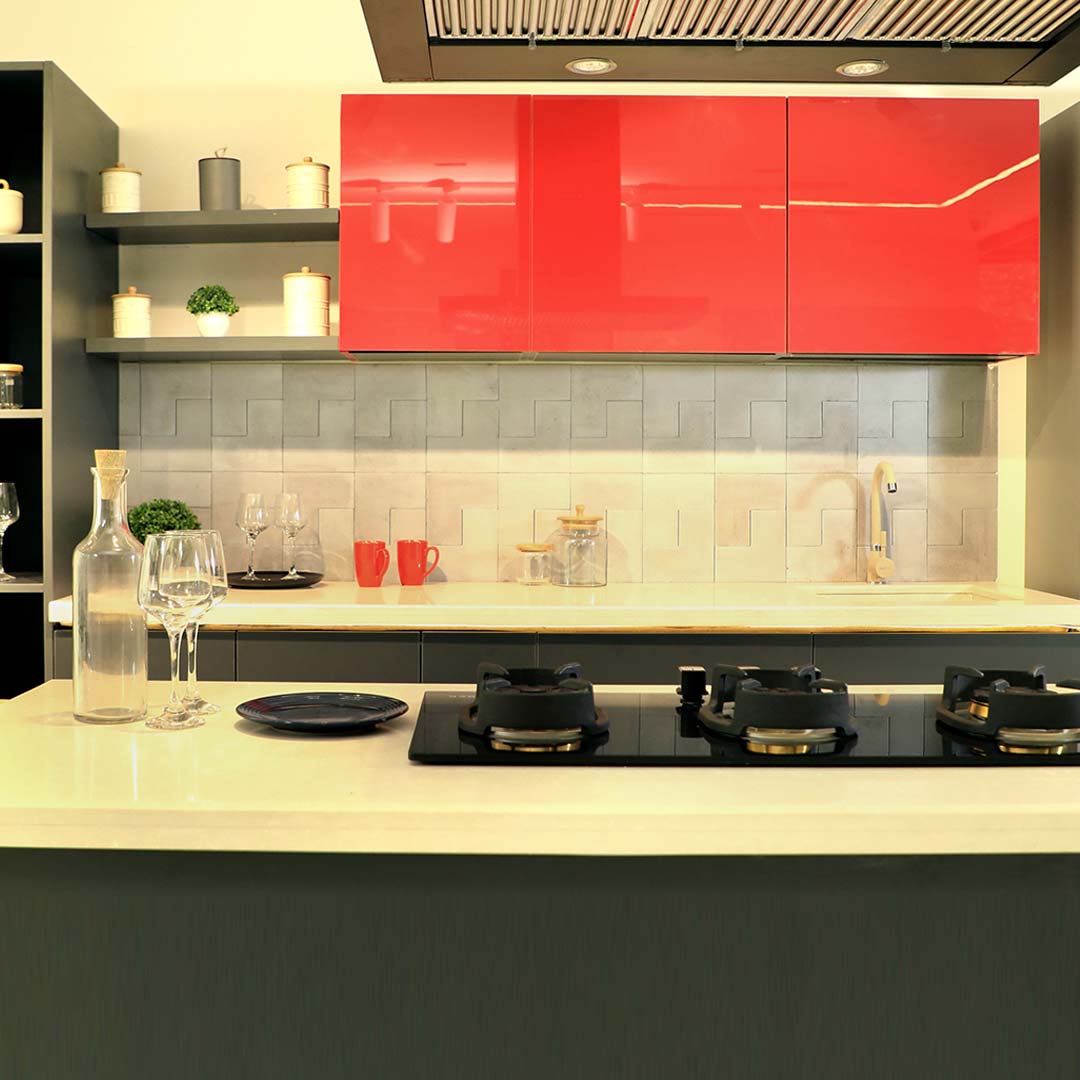
A kitchen island layout is a multifunctional centrepiece that remains independent of perimeter walls and main cabinetry in kitchens. A kitchen island can improve functionality and movement by combining various configurations, including L-shaped, U-shaped, and one-wall designs.
This layout provides an extra surface, reduces clutter on countertops, and improves workflow.
They are ideal for open-plan homes, L-shaped and straight kitchens, small apartments, and cooking schools.
Key Elements of Kitchen Design
Effective kitchen design relies on multiple elements to customise the kitchen as per the occupants’ needs. Let’s understand these kitsch design elements.
- Layout and Workflow: A well-designed kitchen starts with a layout that supports the work triangle (sink, stove, refrigerator). By keeping these areas on a separate wall, the layout optimises workflow in the kitchen and creates a proper pathway. The layout design removes bottlenecks, allowing multiple cooks to move freely in the cooking area.
- Storage Solutions: Storage is more than just a space; it is about access. Deep drawers, pull-out shelves, cabinets, and corner units maximise storage capacity and make everyday items easier to reach. It also includes planning storage based on usage. Things that are used regularly must be stored in places within arm’s reach, and others can go higher or deeper.
- Countertops and Materials: Countertops take most of the wear and tear, so they must be chosen wisely. Select a durable countertop that is easy to maintain and matches the cooking style. Quartz, granite, and marble are some of the popular material choices.
- Lighting: A great kitchen requires layered lighting for visibility and no eyestrain. Add background or general lighting for general brightness. Place task lighting below the cabinets to see the work area, and decorative lighting over the island for style.
- Ventilation: Ventilation keeps the kitchen breathable and clean, particularly in open-plan spaces. Without ventilation, heat builds up fast, and spaces start feeling uncomfortable. A good chimney or exhaust removes smoke, grease, and other kitchen smells.
- Safety and Ergonomics: Standard counter height (around 36 inches) makes it easier to stand without straining the body. And placing the most used utensils and dishes within reach helps prevent unnecessary bending. Other small details include the usage of non-slip flooring, ensuring safe edges, and having proper plug-in points.
- Appliance Selection: Built-in appliances save space and look clean. Also, energy-efficient models reduce long-term costs. Proper placement of appliances also matters, so place things where they are most useful.
Materials Used in Kitchen Interiors
Picking proper materials for kitchen interiors is important because you need to balance key durability and aesthetics. Let’s see different kitchen interior materials here.
Cabinetry and Structure Materials (Carcass)
- BWP Plywood: These materials are used for heavy-duty kitchen frames because they are extremely strong, waterproof, and termite-resistant.
- HDHMR (High-Density High-Moisture Resistant): This is mostly used for humid-area cabinetry because it is moisture-resistant, budget-friendly, and has a very smooth surface.
- PVC Foam Board: Used for sink and bathroom areas because it is 100% waterproof, lightweight, and doesn’t rot.
- MDF (Medium-Density Fiberboard): It is for decorative shutters and dry-area cabinets because it is very affordable and provides a perfect finish for paint.
Cabinet Finishes (Shutters/Doors)
- Laminates (Sunmica): A budget-friendly all-rounder, laminates are tough, easy to maintain, and come in any color or texture, like matte, wood-grain, or gloss.
- Acrylic: A high-gloss, ultra-reflective finish that makes small rooms look larger and luxurious.
- Lacquer / PU Paint: It provides a sleek, glass-like finish with no visible edges. It’s highly durable, moisture-resistant, and easy to wipe down.
- Veneer: These are thin layers of real wood, providing a great aesthetic appeal
Countertop Materials
- Quartz (Engineered Stone): This is tough, on-porous, stain-proof, and comes in many colors.
- Granite: It is a natural stone with a realistic look. It is heat-resistant and lasts forever.
- Solid Surface: These are hygienic surfaces and easy to repair. It is composed of acrylic or polyester resins mixed with minerals
What Is A Modular Wardrobe?
A modular wardrobe is a contemporary, customizable, factory-made storage solution made from pre-engineered sections or modules. These individual sections—carcasses, doors, and shelves—are assembled on-site into a single unit to maximise space. These modular components can be configured to fit any space and easily disassembled for transport to a new location.
Types of Modular Wardrobes
In modern homes where spaces are often limited, a properly planned wardrobe makes small bedrooms more efficient by maximising every inch of space. Here, let’s see different types of modular wardrobes.
-
Sliding Door Wardrobe
These are modern storage units featuring panels that slide horizontally along the tracks. Sliding door wardrobes do not swing inward or outward, so they eliminate the need for a door swing clearance and require no front space to open panels.
They are the preferred choice because they combine space efficiency with a modern aesthetic, offer durable and customisable storage, enhance brightness, and make a room appear larger.
Sliding door wardrobes are ideal for small bedrooms, urban apartments, shared spaces, walk-in closets, and narrow walkways.
-
Hinged Door Wardrobe
These are traditional storage units where doors are attached to the main frame by hinges. This allows them to swing outward, providing full access to the interior. These openable wardrobes offer storage solutions like hooks, tie racks, or a mirror on the back of the doors.
Some of the key benefits include space-saving efficiency, enhanced stability, high resale value, floor-to-ceiling storage, and ease of usage.
They are used in places that require full visibility and view for bedrooms, large rooms, awkward layouts, and budget-friendly projects.
-
Walk-in Wardrobe
A walk-in wardrobe is a large, designated storage area where an individual can walk and manage their clothing, shoes, and accessories. In simple terms, a walk-in closet acts as a private dressing area offering plenty of space for hanging rails, drawers, shelves, and mirrors.
These wardrobes offer several functional and lifestyle benefits, such as superior organisation, reducing bedroom clutter, and increasing property value.
It is best situated in master bedrooms, en-suite transition: attics, loft spaces, spare rooms, hallways, and corridors.
-
Free-Standing/Standalone Wardrobe
A free-standing or standalone wardrobe is a portable, independent piece of furniture featuring a carcass (the main body frame) and shutters (the doors). They are fully finished on all sides and are designed for storing clothes and accessories. These wardrobes are not attached to walls or floors, so they can be moved freely to any place.
Standalone wardrobes offer mobility, storage flexibility, cost-effectiveness, and are easy to replace.
They are mostly used in bedrooms, guest rooms, entryways, foyers, bathrooms, and kitchens.
-
Built-in/Fitted Wardrobe
A built-in wardrobe is a custom closet made to fit your room’s exact size. It is fixed permanently into the walls, extending from the floor to the ceiling. A fitted wardrobe can be customised with interior open shelving, deep drawers, and hanging rails.
Fitted wardrobes offer mobility and flexibility, aesthetic variety, cost-effectiveness, and resale potential.
These wardrobes are widely used in bedrooms, children’s rooms, guest rooms, dressing rooms, and hallways and corridors.
-
L-Shaped/Corner Wardrobe
It is a highly efficient storage unit designed to fit the corners of a room perfectly. It extends along two adjacent walls to form an L-shape, and converts wasted corners into a functional storage space.
L-shaped offers design flexibility, reduces clutter, and provides clean, modern aesthetics. They are used in master bedrooms, small rooms, dressing areas, hallways, and entryways.
Wardrobe Design Considerations
For designing a great wardrobe, balancing storage capacity with room dimensions is a crucial factor. It’s all about making the space work for you. Let’s understand these considerations here:
Storage Requirements
Below are the standard measurements:
- Depth: 24″ (60 cm)
- Short Hanging: 40–42″ (for shirts)
- Long Hanging: 66–72″ (for dresses)
Dimensions & Ergonomics
Modular wardrobes have a standard depth of 2 feet. The height must be around 7-8 feet to maximise space. To avoid strain, daily items are kept in a prime zone (900mm–1400mm), with waist-high drawers and pull-out racks.
Door Types
This type of wardrobe door is decided based on how the room functions and its style. Some of the wardrobe door types are sliding doors, hinged doors, bi-fold doors, pocket doors, barn doors, louvred doors, and tambour doors.
Materials & Finishes
For long-lasting furniture, choose moisture-resistant layers (cores) and high-quality finishes. Match the look to your room’s style. Use bright, reflective surfaces in small rooms. Select textured materials for a premium, cosy feel. Pair colours with your lighting for the best results.
Organization & Accessories
Effective wardrobe organisation focuses on zonal planning and high-access hardware. Use double hanging rods and pull-out racks to boost space. Add stackable bins for high shelves and dividers for jewellery drawers to keep items visible. Finish with accessories like door hooks and motion LEDs.
Materials Used in Wardrobes
Various types of materials are used in the manufacturing of wardrobes. Here, let’s see different types of materials:
- Solid Wood: It is for its natural beauty and long-lasting attractiveness. Solid wood offers unmatched longevity and increases the value of your home.
- Engineered Wood (MDF/Particleboard): A cost-effective alternative to wood, it provides an even surface for laminates and is lightweight for easy modular assembly.
- Plywood: Used for the structural carcass because its layered construction prevents bending or twisting and offers the best screw-holding strength for heavy-duty storage.
- Fabric/Collapsible: It is used as temporary or portable storage. Fabric is also affordable, easy to move, and can be assembled in minutes without using tools.
- Metal/Steel/Aluminium: Steel and aluminium are used mainly for their durability. They are also resistant to fire. These metals are ideal for high-humidity areas as it is resistant to termites and rust.
- Plastic/Polypropylene (PP): Used for child-friendly or budget solutions, it is waterproof, stain-resistant, and comes in vibrant colours. They are also easy to wipe clean.
Why Choose Aparna Enterprises For A Modular Kitchen & Wardrobe?
Choosing the right company, such as Aparna Enterprises Limited (AEL), is crucial for modular kitchen and wardrobe solutions because they require precision manufacturing and reliable installation services. Here is why you need to choose AEL:
- Colour & Finish Options: AEL offers a range of premium colours and finishes to match your personal choice. Glass, textures, wood grains, and mirrors are some of the finish options. Some of the colour options available are wood, oak, matte, and other elite colours.
- International Brand Collaboration: AEL collaborated with multiple international brands to integrate global technology and luxury standards into the modular solutions. These partnerships span across hardware, luxury design, and state-of-the-art manufacturing processes.
- Dedicated Point of Contact: From design to delivery, AEL provides a dedicated point of contact for personalised support for your kitchen and wardrobe projects.
- German Fittings: Aparna integrates German engineering excellence with the functional design, fulfilling the demands of Indian homes. They are tailored to handle the heavy-duty usage and weather conditions of Indian households.
- Heat & Moisture Resistance: Aparna materials last longer because they are resistant to moisture and termite-proof. Aparna ensures longevity through advanced material science and factory-grade treatments.
- Soft – Close System & European Hardware: AEL uses premium European hardware to give a luxury feel. The kitchens and wardrobe systems come with a soft-close system to keep crunchy or scratching sounds at bay.
Takeaway
Designing the perfect kitchen or wardrobe solutions needs a balance of functionality and aesthetics. Choosing the right layout, durable materials, and smart storage makes your daily life easier, turning everyday chores into smooth and effortless experiences.
AEL simplifies modern living by blending European precision with Indian needs. We create organised, stylish kitchens and wardrobes using smart technology and also use premium materials to ensure your home remains beautiful and lasts longer.
Ready to transform your kitchen and wardrobe with a smart approach? Contact our experts to explore suitable solutions for your project.
ABOUT KWART

AEL-KWART offers end-to-end kitch and wardrobe modular solutions, where we own the design and execution of each step, from conceptualization and customization to 3D visualization, production, and installation. Our expert designers strategize a custom solution at the confluence of aesthetics, functionality, space optimization, and technology. With skilled craftsmanship and thoughtfully crafted designs and finishes, we add a touch of timeless appeal and harmonious aesthetics to your kitchens and wardrobes.
Visit WebsitePRODUCT IMAGES
Start Your Project with the Right Materials
We provide everything you need for modern construction. Connect with our experts to discuss your requirements and get the best solution for your project. Submit your details and our team will contact you soon.
CORPORATE OFFICE
8-2-293/82/A, Plot No-1214, Road No-60,
Jubilee Hills, Hyderabad-500 033.