
Aluminium Kitchen Doors: Types, Benefits & Designs
In This Article
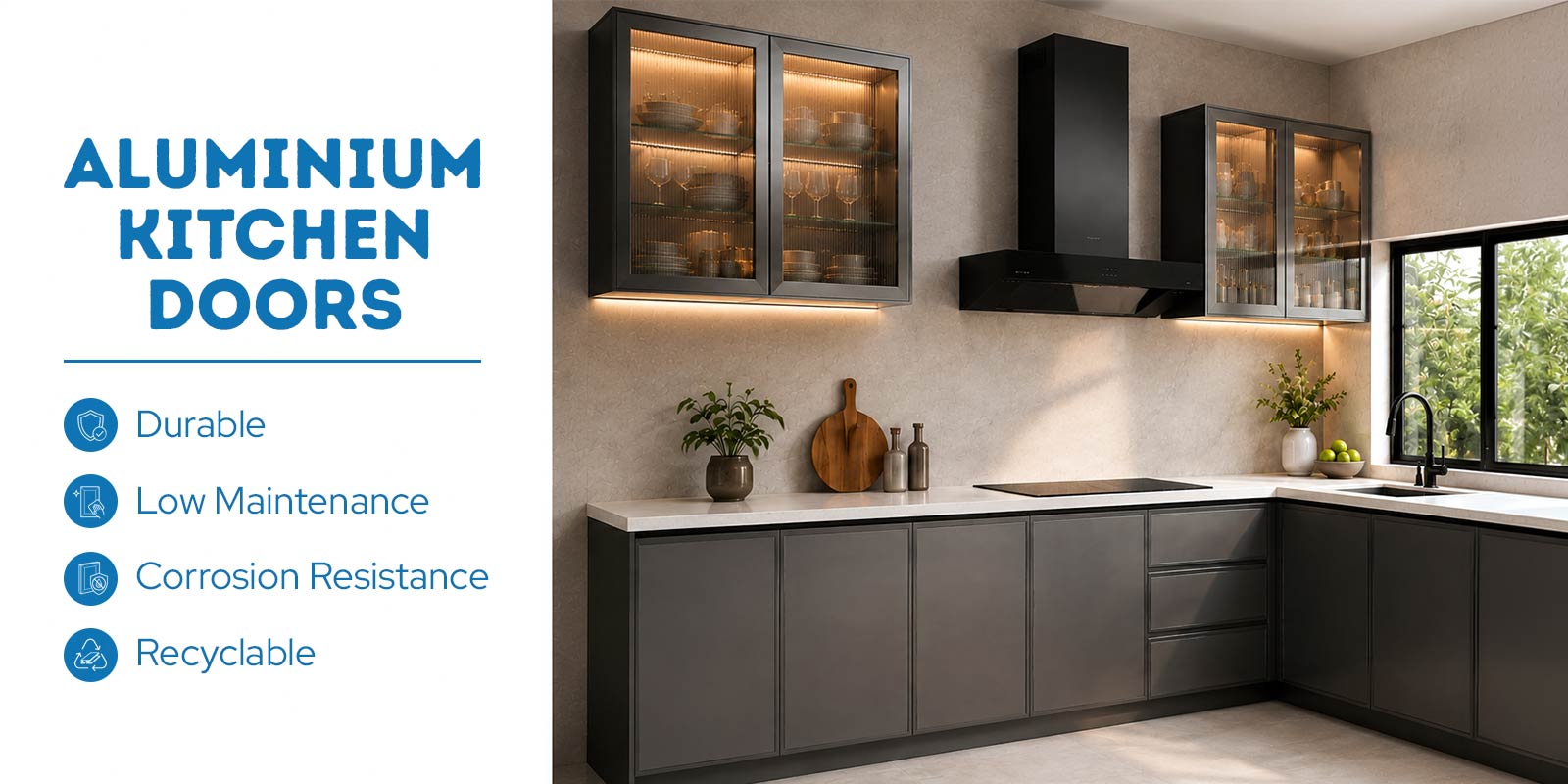
Aluminium kitchen doors are doors made with a strong aluminium frame and can be fitted with glass, acrylic, laminate, or other infill panels. They are widely used in modern kitchens because they offer durability, moisture resistance, and low maintenance.
Unlike wooden kitchen doors, which absorb water and contain cellulose, aluminium kitchen doors are resistant to termite attacks.
This guide explains what aluminium kitchen doors are, how they are made, their benefits, popular designs, how they compare with other materials, what to consider before buying, pricing, and who they are best suited for.
What Are Aluminium Kitchen Doors?
An aluminium kitchen door consists of a durable aluminium frame and an infill panel made from materials such as glass, acrylic, or laminate. These doors are designed to provide strength, moisture resistance, and a modern appearance.
The frame is an extruded aluminium profile and is finished with anodising or powder-coating to protect the metal and allow it to take on various colours and textures like matte, gloss, brushed, or wood-grain.
The infill is the panel fitted inside the aluminium frame and can be customised with different materials based on your design and functional requirements, including:
- Glass (clear, frosted, or tinted) for an open, contemporary look
- Acrylic for a smooth, high-gloss finish
- MDF or laminate for a solid, durable appearance
- Rubber gaskets and beading strips that secure the infill panel, reduce vibration, and protect the panel edges
As the frame carries the structural load, the infill can be customised or replaced without compromising the door’s strength. This is one of the reasons why aluminium systems have gained popularity.
Benefits of Aluminium Kitchen Doors
- Moisture and heat resistant: Aluminium doesn’t warp, swell, or rot when installed near a sink, dishwasher, or hob, making it a preferred choice for humid climates or kitchens where steam and splashes are common.
- Lightweight: Aluminium is lightweight, making kitchen doors easier to operate and reducing stress on hinges and other door hardware. This helps ensure smooth operation and long-lasting performance.
- Slim sightlines: Narrow frames give kitchens a clean, minimalist look. This is one of the main reasons why aluminium kitchen doors are perfect for modern and industrial kitchens.
- Low maintenance: These doors are easy to maintain because you can wipe down dust with a soft, non-abrasive cloth. They need no repainting, resealing, or refinishing, unlike wood over time.
- Recyclable: Aluminium is fully recyclable without loss of material quality. This is important for buyers, architects, or builders who give importance to sustainability. Recycling aluminium uses about 95% less energy than making it from raw ore. [1]
Popular Aluminium Kitchen Doors Designs
Aluminium kitchen doors are available in different styles and opening configurations to suit various kitchen layouts and storage requirements. The most common styles and opening configurations include:
-
Glass Profile Doors
Glass profile aluminium doors feature a slim aluminium frame holding clear, frosted, tinted, or lacquered glass infills. They create a modern appearance while allowing light to pass through. Frosted or tinted glass provides greater privacy and shows fewer fingerprints than clear glass.
-
Solid Panel Doors
Solid panel aluminium doors use laminate or acrylic infill panels to create a clean, durable, and opaque finish. They are suitable for homeowners who prefer complete privacy and a contemporary appearance.
-
Handleless Doors
Handleless aluminium doors feature integrated J-profiles or groove pulls, eliminating protruding handles. They offer a clean, minimalist appearance, are easy to maintain, and are ideal for modern kitchens.
-
Louvred Doors
Louvred aluminium doors feature slatted or perforated infill panels that improve airflow. They are suitable for kitchens or utility areas where ventilation helps reduce moisture build-up.
-
Lift-up Aluminium Doors
Lift-up aluminium doors open upwards using a specialised hinge mechanism instead of swinging outward. They are commonly used for overhead storage and provide easy access while saving space.
-
Sliding Aluminium Doors
Sliding aluminium doors move horizontally on a track instead of swinging open. They are ideal for compact kitchens because they save space and provide smooth operation.
Finishes
Aluminium kitchen doors are available in a variety of finishes, including powder-coated, anodised, and wood-grain sublimation finishes, with matte and gloss options to complement different kitchen styles.
Aluminium Kitchen Door vs Other Materials
Here’s how aluminium compares to other materials like plywood, MDF, WPC, and solid wood:
| Feature | Aluminium | Plywood | MDF | WPC | Solid Wood |
| Water Resistance | Excellent | Medium | Poor | Good | Poor |
| Termites | Excellent | Medium | Medium | Excellent | Poor |
| Strength | High | High | Medium | Medium | High |
| Appearance | Modern | Warm | Warm | Wood-like | Natural |
| Fire Behaviour | Non-combustible | Burns | Burns | Low | Burns |
| Price | Mid–High | Low–Mid | Lowest | Mid | Highest |
| Lifespan | 20+ Years | 10–15 Yrs | 8–15 Yrs | 15–20 Yrs | 15–25 Yrs |
Aluminium vs Plywood/MDF
Plywood and MDF cost less than aluminium, and they are readily available. However, aluminium is better for humid kitchens or coastal areas because wood quickly degrades from moisture and termites.
Aluminium vs Wood-Plastic Composite
WPC offers good moisture resistance and a natural wood appearance. However, aluminium provides better structural strength and long-term durability, especially in high-use kitchens.
Aluminium vs Solid Wood
Wood offers great aesthetics and a traditional look. It also lasts long in dry conditions. Aluminium performs better in humid environments because it does not warp, rot, or require repainting like wood.
Aluminium costs less than solid wood while offering excellent moisture resistance, durability, and low maintenance, making it a practical long-term choice for many kitchens.
Points to Consider
Although aluminium kitchen doors offer several advantages, they may not suit every home. Before making your decision, consider the following factors:
- Cost: The upfront cost of aluminium kitchen doors is more than MDF or laminate doors because of raw material prices and making.
- Fingerprints — gloss or dark anodised finishes can show smudges and fingerprints because of the way light reflects off their smooth surfaces.
- Aesthetic: Some buyers may not prefer aluminium because of its cold or industrial appearance. It may make the room look less welcoming or like an office.
- Glass infills: They require more frequent cleaning because they show fingerprints, water spots, and dust more easily than solid aluminium or laminate panels.
How to Choose the Right Aluminium Kitchen Doors?
Before selecting a profile aluminium kitchen door, consider profile thickness, coating quality, infill panel type, and hardware rating.
-
- Profile thickness & aluminium grade: Ask for the exact mm figure on the frame profile and the aluminium grade used.
- Coating: Check if it is anodised or powder-coated. Ask for the coating’s micron thickness, and what warranty is offered against peeling or fading.
- Infill panel: Ask about the glass thickness, and confirm if it’s toughened. Also, ask how the acrylic/laminate infill compares on scratch and impact durability.
- Hardware: Ask about the hinge cycle rating, hardware quality, and load-bearing capacity, as these components play a major role in the long-term performance of aluminium kitchen doors.
- Finish & aesthetics: Choose a finish that complements your kitchen’s overall design. Also, understand the maintenance differences between matte and gloss finishes before making your decision.
- Installation quality: Ask who installs the aluminium kitchen doors, what alignment and gap tolerances they follow, and what warranty covers the installation.
- Budget & value: Ask for the cost per running foot, and do not rely on per-shutter pricing. This is because per-shutter prices hide the true total, and running foot is the only fair metric.
Why Choose Aparna Enterprises for Aluminium Kitchen Doors?
Aparna Enterprises manufactures premium aluminium kitchen doors designed for modern homes. Built using high-quality aluminium profiles, these doors combine durability, contemporary aesthetics, and easy maintenance to deliver long-lasting performance in modern kitchens.
- Manufacturing & sourcing: Premium aluminium kitchen doors are manufactured in-house in Hyderabad, using 6063-T6 virgin aluminium, and do not use recycled metal.
- Colour, Finish and Infill options: Aparna Enterprises offers aluminium kitchen doors in multiple colours, finishes, and infill options, including RAL colours, wood finishes in 25 shades, and silver, champagne, bronze, or black anodized options.
- Warranty: Aparna Enterprises offers a 12-year warranty on all aluminium kitchen doors, ensuring long-term performance and protection against wear and tear.
- Easy to Maintain: Aluminium kitchen doors require only routine cleaning with a soft cloth and mild detergent. They do not require repainting or refinishing, making them easy to maintain over the long term.
Key Takeaways
Aluminium doors are the practical choice for Indian homes because they offer resistance against humidity and termites, which shorten the life of wooden doors
By giving importance to long-term durability and moisture resistance over lower upfront costs, aluminium doors solve the common structural failures of wooden doors.
Looking to upgrade your spaces with custom, weather-proof doors? Explore Aparna Enterprises’ aluminium doors today.
Disclaimer: This article is for informational purposes only. AEL does not manufacture aluminium kitchen cabinet doors. Our aluminium door range includes casement, sliding, slide-and-fold, slimline sliding, and lift-and-slide doors.
Frequently Asked Questions On Aluminium Kitchen Doors
Yes, because they are entirely immune to termites and resist high humidity. Their powder-coated or anodised finish also prevents corrosion and grease stains over time.
Aluminium resists water, steam, and pests perfectly, but it costs more and feels cold. Plywood is budget-friendly and looks naturally warm, but it swells and attracts termites.
Aluminium doors can dent under sharp impact, but sturdier profiles resist this well. Their treated surfaces easily prevent everyday scratching.
Tempered glass is mostly used because it resists impacts and heat safely. Fluted or frosted glass is also popular to hide cabinet clutter.
The aluminium frame is water-resistant and does not absorb moisture, swell, or warp. Glass and acrylic infills also perform well in humid kitchens, while MDF-based infills should be protected from prolonged water exposure.
No, they do not rust. This is because they lack iron, which prevents the formation of iron oxide. It also forms a thin layer upon exposure to oxygen, protecting it from corrosion and moisture.
Aluminium kitchen doors can last over 20 years when made with quality materials, installed correctly, and maintained properly. Their lifespan also depends on the durability of the hinges, hardware, and surface finish.
Start Your Project with the Right Materials
We provide everything you need for modern construction. Connect with our experts to discuss your requirements and get the best solution for your project. Submit your details and our team will contact you soon.
CORPORATE OFFICE
8-2-293/82/A, Plot No-1214, Road No-60,
Jubilee Hills, Hyderabad-500 033.