
Advantages of Aluminium Doors and Windows: Key Benefits Explained
In This Article
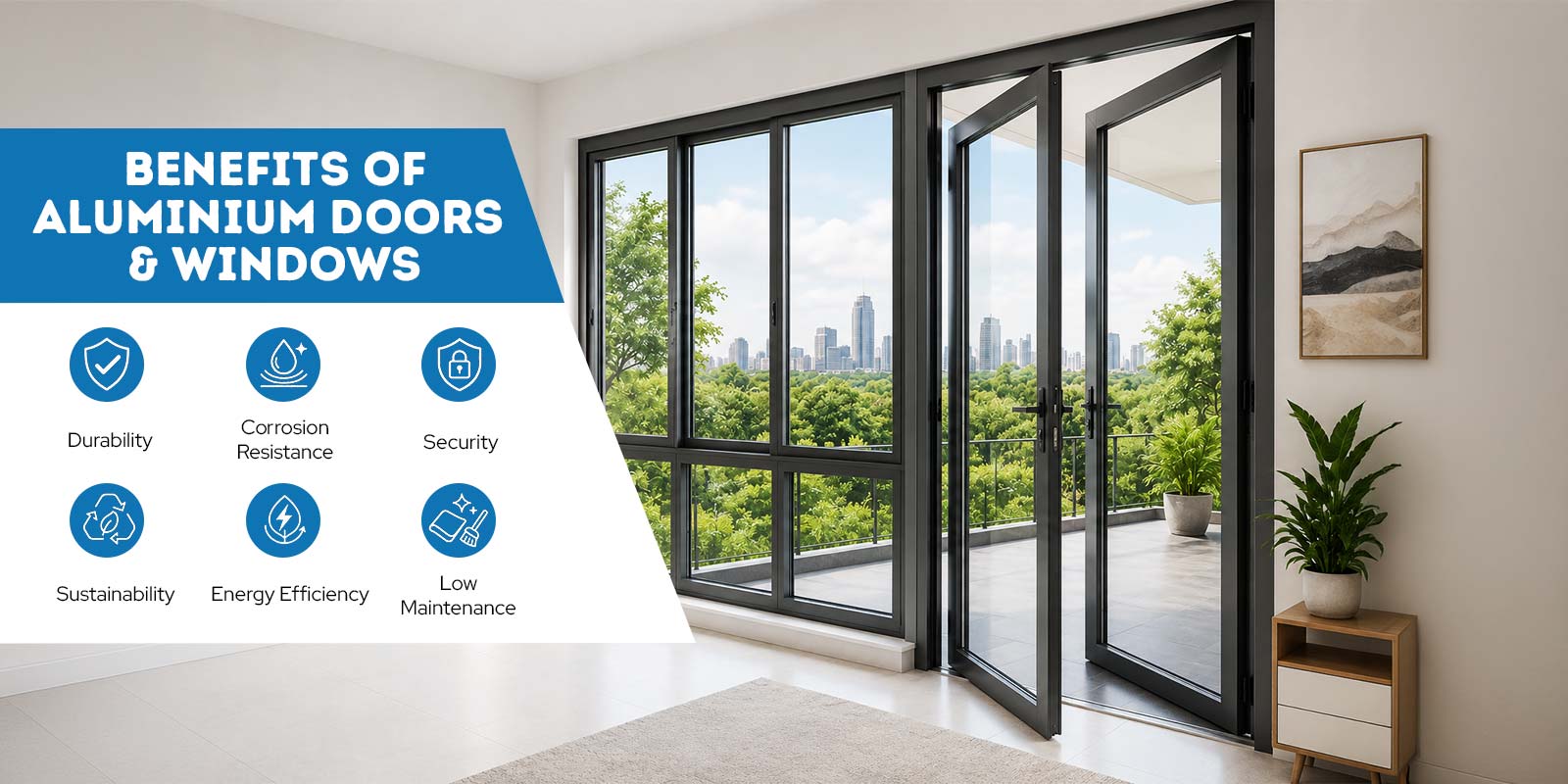
Aluminium doors and windows are valued for a rare combination: they are strong enough to hold large panes of glass in slim frames, light enough to operate smoothly for decades, and durable enough to shrug off sun, rain and coastal air with almost no maintenance. That mix of strength, slim aesthetics and longevity is why aluminium has become a default choice for modern homes, high-rise apartments and commercial buildings alike. This guide explains the key advantages of aluminium doors and windows in depth, weighs the few genuine considerations honestly, and shows how to choose a system that delivers on the promise.
Key Takeaways
- Aluminium’s high strength-to-weight ratio allows slim frames and large glass areas that other materials struggle to match.
- It is highly durable and corrosion-resistant, does not warp, rot or swell, and needs very little maintenance.
- Powder-coated and anodised finishes offer wide colour and texture choices that last for years.
- Aluminium is 100% recyclable, making it one of the more sustainable framing materials over a building’s life.
- Thermally broken aluminium systems close most of the old efficiency gap, giving strength and insulation together.
What Are Aluminium Doors and Windows?
Aluminium doors and windows are framing systems made from extruded aluminium profiles — hollow sections shaped for strength and fitted with glass, seals and hardware. The aluminium is typically alloyed for rigidity, then finished by powder coating or anodising for colour and weather protection. Modern systems are often “thermally broken,” meaning an insulating barrier is built into the frame to reduce heat transfer. The result is a window or door that carries large glass panels in a slim, precise frame while standing up to decades of outdoor exposure.
Key Advantages of Aluminium Doors and Windows
Here are the benefits of aluminium windows and doors that matter most in real buildings, from structural strength to sustainability:
-
Exceptional Strength and Slim Sightlines
Aluminium has an excellent strength-to-weight ratio, so a slim frame can carry a large, heavy pane of glass without bowing. In practice this means narrower frames, wider glass, and more daylight and view for the same opening — the slim-sightline look that defines contemporary architecture. It is also what makes expansive sliding doors and floor-to-ceiling windows structurally practical.
-
Outstanding Durability and Weather Resistance
Aluminium does not rot, warp, crack or swell with moisture, and it naturally resists corrosion. Powder-coated and anodised finishes add a further protective layer that withstands UV, rain and even salty coastal air. A well-made aluminium window can serve for decades with its structure and finish intact — one of the longest service lives of any framing material.
-
Very Low Maintenance
Because the finish is baked or bonded onto the metal, aluminium never needs painting, sealing or oiling. Routine care is simply an occasional wipe-down with mild soapy water and a check of the seals and moving hardware. For homeowners, that is one of aluminium’s most tangible day-to-day advantages over materials that need regular upkeep.
-
Design Flexibility and Finishes
Aluminium is extruded, so profiles can be shaped precisely for casement, sliding, tilt-and-turn, slide-and-fold and large façade systems. Powder coating offers a wide palette of colours and textures — including matt, metallic and wood-look finishes — and anodising gives durable metallic tones. This flexibility lets aluminium doors and windows suit everything from minimalist modern homes to premium commercial frontages.
-
Large Glazing and Better Natural Light
Because slim aluminium frames can hold large glass safely, aluminium systems maximise the glazed area of an opening. More glass means more natural light, better views and a more open feel indoors — a major reason architects specify aluminium for living spaces, balconies and commercial frontages.
-
Strength for Security and Large Openings
The same rigidity that allows slim frames also makes aluminium doors and windows inherently sturdy. Combined with multi-point locking and toughened or laminated glass, aluminium systems provide strong security, and their structural strength is what makes very large sliding and slide-fold openings feasible without sagging over time.
-
Thermal Performance with Thermal Breaks
Aluminium conducts heat, which older frames did not manage well. Modern thermally broken aluminium systems solve this by inserting an insulating polyamide barrier inside the frame, cutting heat transfer significantly. Paired with double or insulated glazing, thermally broken aluminium windows deliver comfortable, energy-efficient interiors while keeping all of aluminium’s strength advantages.
-
Sustainability and Recyclability
Aluminium is 100% recyclable and can be recycled repeatedly without losing quality, and recycling it uses a small fraction of the energy of primary production. Combined with a long service life, this gives aluminium doors and windows a strong sustainability profile over a building’s lifetime — an increasingly important advantage for green-rated projects.
Aluminium Doors and Windows at a Glance
A quick summary of where aluminium’s advantages come from and what each one means for a building:
Advantage |
What it means for you |
| High strength-to-weight ratio | Slim frames, large glass, more daylight and view |
| Corrosion & weather resistance | Long life even in coastal and humid climates |
| Low maintenance | No painting or sealing — just occasional cleaning |
| Powder-coat / anodised finishes | Wide, long-lasting colour and texture choices |
| Thermal break option | Energy efficiency without losing strength |
| 100% recyclable | Lower lifetime environmental impact |
| Structural rigidity | Large sliding/fold openings and strong security |
How Aluminium Compares with Other Framing Materials?
Choosing a window frame is about matching the material to the priority — strength and spans, insulation, or budget. This comparison keeps it honest.
Factor |
Aluminium |
uPVC |
Wood |
| Strength / large spans | Excellent | Moderate | Good |
| Frame slimness | Slimmest | Bulkier | Moderate |
| Maintenance | Very low | Very low | High (needs sealing/painting) |
| Thermal insulation | Good with thermal break | Naturally high | Good |
| Durability / lifespan | Very long | Long | Long if maintained |
| Recyclability | 100% recyclable | Recyclable | Renewable |
The short version: aluminium leads on strength, slim sightlines and large glazing; uPVC leads on out-of-the-box thermal insulation and value; timber leads on natural warmth. For large openings, modern facades and long coastal life, aluminium is usually the strongest fit.
Where Aluminium Doors and Windows Work Best
Aluminium’s advantages show most clearly in these applications:
- Large sliding and slide-fold doors opening to balconies, decks and gardens
- Floor-to-ceiling and picture windows where slim frames maximise the view
- High-rise apartments and commercial facades that need strength and consistency at scale
- Coastal and high-humidity locations where corrosion resistance matters
- Contemporary homes where minimalist, slim-framed aesthetics are the design goal
A Few Considerations Before You Choose
No material is perfect for every situation, and a good decision weighs the trade-offs. For completeness — and to answer the common “advantages and disadvantages” question — here are the points worth knowing, none of which outweigh aluminium’s strengths for the right application.
- Insulation depends on the system: basic aluminium frames conduct heat, so for hot or cold climates choose a thermally broken system with insulated glazing — it resolves this fully.
- Upfront cost: quality aluminium systems can cost more initially than basic alternatives, though long life and low maintenance improve the lifetime value.
- Quality varies by maker: performance depends on alloy grade, finish quality, hardware and installation — which is why the manufacturer matters as much as the material.
Chosen well — a thermally broken system, a quality finish and professional installation — these considerations are easily managed, and aluminium’s advantages come through in full.
How to Choose Quality Aluminium Doors and Windows?
Use this checklist to make sure you get aluminium’s full benefit, not just its name:
- Ask about the alloy and profile: a proper structural alloy and adequately thick profile walls are what deliver the strength.
- Choose the finish deliberately: powder coating or anodising, with a warranty on the finish for coastal or high-UV locations.
- Specify a thermal break if energy efficiency matters in your climate.
- Check the glazing and hardware: double/insulated glass where needed, and multi-point locking for security.
- Confirm professional installation: even the best system underperforms if it is poorly fitted or sealed.
Aluminium Doors and Windows from Aparna Enterprises
Aluminium delivers its advantages only when the system behind it is engineered properly — the right alloy and profile, a durable finish, quality hardware and precise installation. This is where a trusted manufacturer makes the difference between a window that merely looks slim and one that stays strong, weatherproof and smooth-operating for decades.
Aparna Enterprises is a building materials manufacturer with deep expertise in fenestration, engineering doors and windows for Indian conditions — heat, monsoon, humidity and coastal exposure. Its systems are designed to combine slim aesthetics with the strength, durability and finish quality that make aluminium worth choosing. To explore options for your project, browse the product range or contact the team for expert guidance on the right system for your home or building.
Conclusion
The advantages of aluminium doors and windows come down to a combination few materials can match: strength for slim frames and large glass, durability that resists decades of weather, low maintenance, design flexibility and full recyclability — and, with a thermal break, energy efficiency to go with it. Choose a quality system and a capable manufacturer, and aluminium rewards the decision for the life of the building.
Planning new windows or doors? Contact the team for guidance on the right aluminium system for your project.
Frequently Asked Questions
Their biggest advantages are strength with slim frames (allowing large glass and more light), excellent durability and corrosion resistance, very low maintenance, wide finish choices, and full recyclability. Thermally broken systems add energy efficiency without sacrificing strength.
Neither is universally better — they suit different priorities. Aluminium is stronger and slimmer, ideal for large openings and modern facades; uPVC offers naturally higher insulation at lower cost. For big spans, coastal durability and minimalist looks, aluminium usually wins; for maximum out-of-the-box insulation and value, uPVC is strong.
Basic aluminium frames conduct heat, but modern thermally broken aluminium systems insert an insulating barrier inside the frame to cut heat transfer significantly. Paired with double or insulated glazing, they deliver energy-efficient interiors while keeping aluminium’s strength.
With quality finishes and basic care, aluminium doors and windows commonly last several decades — among the longest service lives of any framing material — because aluminium does not rot, warp or corrode the way some alternatives can.
Very little. The powder-coated or anodised finish never needs painting or sealing; routine care is an occasional wipe with mild soapy water and a periodic check of seals and hardware.
Yes — aluminium is 100% recyclable and can be recycled repeatedly without losing quality, using a fraction of the energy of primary production. Combined with a long service life, that gives aluminium fenestration a strong lifetime sustainability profile.
Start Your Project with the Right Materials
We provide everything you need for modern construction. Connect with our experts to discuss your requirements and get the best solution for your project. Submit your details and our team will contact you soon.
CORPORATE OFFICE
8-2-293/82/A, Plot No-1214, Road No-60,
Jubilee Hills, Hyderabad-500 033.