
Kitchen Floor Tiles: Designs, Textures & The Best Tile To Choose
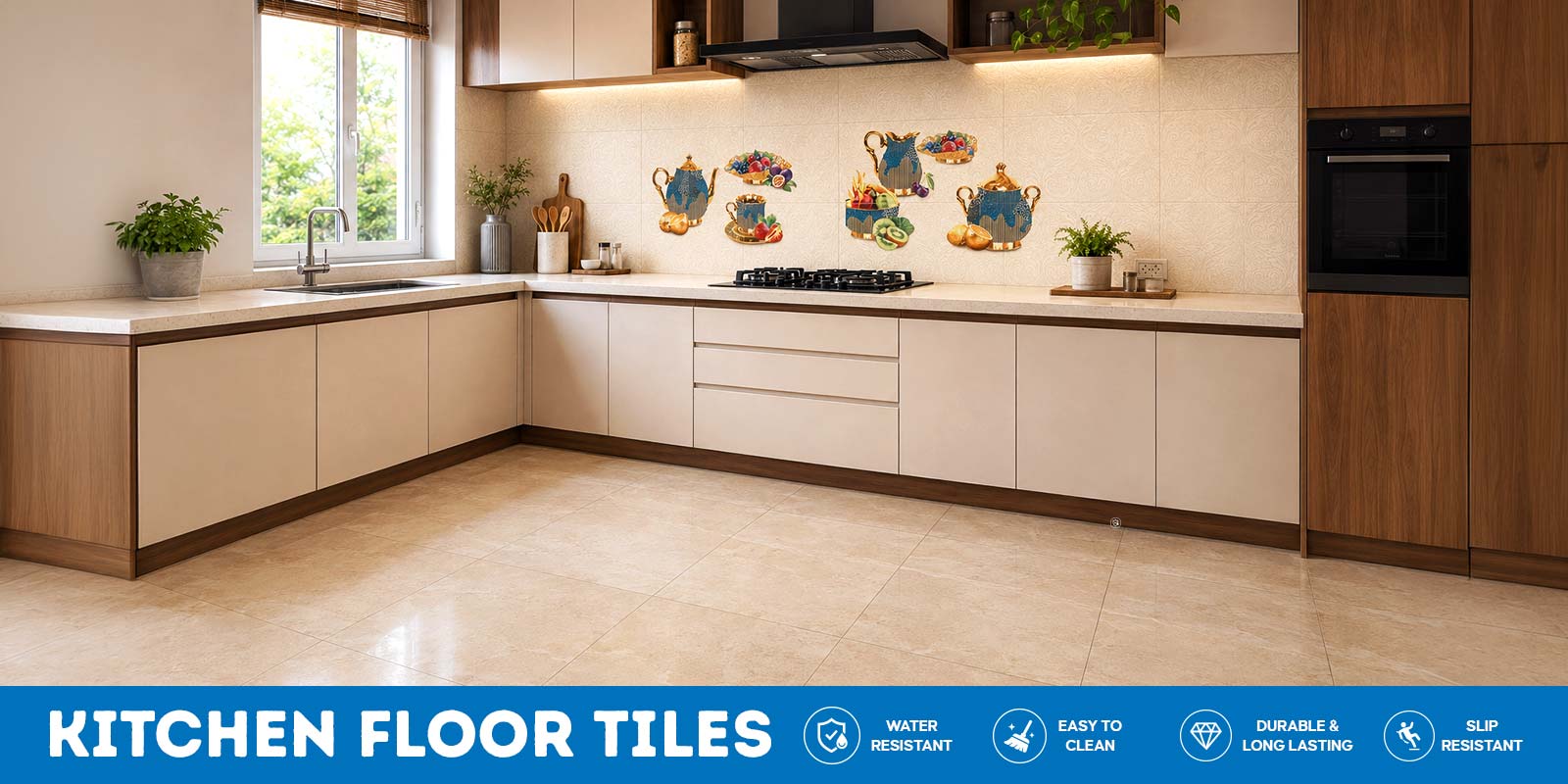
The best kitchen floor tile is the one with water absorption below 0.5%. This number will decide if a tile can resist stains like oil, turmeric, moisture, and hard water (mineral deposits), or soak them up. Vitrified tiles meet this high standard consistently. So that is why they have been dominating Indian kitchen flooring in modern construction. Brands like Aparna Enterprises engineer vitrified tiles exactly for these conditions.
This guide covers material choice, slip safety, finishes, sizes, and long-term cost, so you can pick a floor that performs as well as it looks.
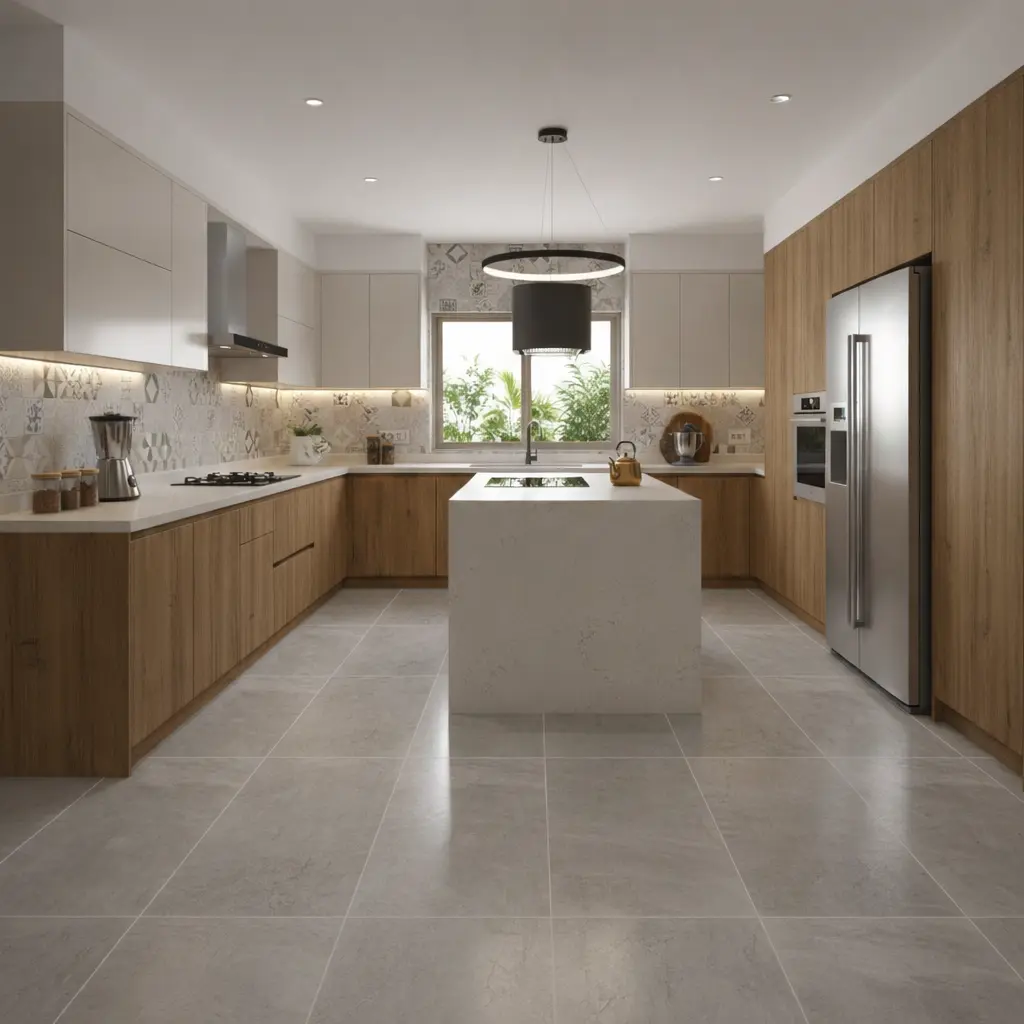
Best Tile for Kitchen Floor — Which Material Should You Choose?
Double-charge vitrified tiles are the preferred choice for Indian kitchens. Porcelain is one type of vitrified tile. Homeowners choose between porcelain, double-charge vitrified, and GVT tiles based on design preferences.
This table compares the features of different kitchen floor tiles:
| Flooring Material | Water Absorption | Slip Resistance | Best For |
| Vitrified Tiles (including Double-Charge, GVT & Porcelain) | <0.5% | Depends on the finish | Most kitchens |
| Ceramic Tiles | 3–7% | Depends on the finish | Budget kitchens |
| Natural Stone | Higher; requires sealing | Depends on the finish and surface treatment | Premium interiors |
Slip resistance depends more on the surface finish (matte, anti-skid, polished) than on the tile material.
Aparna Enterprises offers premium, long-lasting vitrified tiles ( 15–20+ years). Engineered with a low < 0.5% water absorption rate and high PEI ratings (Class 4-5), they are perfect for kitchen areas.
Vitrified tiles have an advantage in the dimensions that matter most for kitchens. The availability of large-format tiles reduces grout lines, resulting in less dirt and improved hygiene.
The close competitor to vitrified tile is porcelain, which matches its water absorption and premium finish. But porcelain costs more and comes in a narrower size range.
Ceramic tiles have a water absorption ratio in the 3–7% range because they are more porous. They are used mostly in low-traffic areas and cannot handle kitchen spills and stains.
Natural stone, like granite and marble, offers a natural look that cannot be mimicked by vitrified materials. Because they are porous, they need to be sealed every one to two years in order to prevent stains. But, vitrified is the ideal option for kitchens because it doesn’t require such regular upkeep.
How to Choose the Best Kitchen Floor Tiles?
The right kitchen tile comes down to five factors: durability, slip resistance, ease of cleaning, size, and long-term value.
- Durability: For high-traffic kitchen floors, look for a Porcelain Enamel Institute (PEI) IV–V rating or a Deep Abrasion under 175 mm³. This is important to ensure they do not crack, scratch, or wear down quickly under kitchen conditions.
- Slip resistance: Check for an R10–R11 anti-slip rating (or DCOF ≥ 0.42 when wet) because spills and cooking oil can lead to falls or slips in kitchens.
- Easy-clean surface: Low-porosity, glazed tiles can be cleaned easily without staining. Prefer tiles with small grout lines because these lines attract grease and are hard to clean,
- Tile size: Large-sized tiles make rooms look spacious and enhance the appeal because of fewer joints. Larger formats (600×1200mm and above) are easier to keep clean.
- Colour and style: Neutral tones hide daily wear better than very light or very dark extremes. Their mid-range shades sit right in the middle of the color spectrum of everyday dirt.
- Maintenance: Porcelain and vitrified tiles are easy to clean because they are highly water-resistant. Spills can be wiped off easily without staining. Natural stone requires a sealing process every 1 or 2 years because of its porous nature.
- Long-term value: Ceramic is the cheapest upfront but wears faster, and vitrified costs more upfront but wins on lifespan.
- Design Match: Match tile colour with cabinetry and countertop undertone for visual continuity, and do not rely on personal taste.
Aparna Enterprise offers tiles engineered to provide slip resistance and require minimal maintenance for kitchens of various sizes.
Which Tile Finish Is Best for a Kitchen Floor?
Matte, anti-skid, or honed finishes are a safer option than glossy ones because they provide better grip in a wet kitchen.
| Finish | Best Kitchen Use |
| Matte / Anti-skid | Safest choice. Best grip for wet areas near sinks and stoves. |
| Satin / Honed | Medium grip. Smooth, elegant look for dining or dry prep areas. |
| Glossy / Polished | Slippery. Easy to clean but unsafe when wet. Avoid near water. |
| Printed (GVT) | Look closely. Mimics wood, but check the grip rating first. |
Aparna Enterprises’ range offers matte, anti-skid, and wood-grain glazed vitrified (GVT) finishes across its collections.
Best Kitchen Floor Tile Sizes
600×600mm and 600×1200mm size tiles are a good option for the kitchen because they provide fewer grout joints, easy cleaning, and a modern look.
Here is the simplified table, organized clearly by kitchen size:
| Tile Size | Best Kitchen Layout | Cleaning Effort |
| 300×300 mm | Small layouts | Hardest to clean |
| 300×600 mm | Narrow / Galley layouts | Moderate cleaning |
| 600×600 mm | Medium layouts | Average cleaning |
| 800×800 mm | Large / Open layouts | Very easy to clean |
| 600×1200 mm | Large / Open layouts | Very easy to clean |
Aparna Enterprises manufactures all the mentioned ranges, from 300×300mm to 1200×1800mm large-format slabs, covering all kitchen sizes.
Why Vitrified Kitchen Floor Tiles Are a Smart Long-Term Choice?
- Load Strength: Vitrified tiles meet strict national quality standards. These tiles can also handle heavy appliances or dropped cast-iron pots without cracking or chipping.
- Scratch Protection: Vitrified tiles are factory-tested to resist deep abrasion. This ensures the surface does not wear down, scratch, or lose its look from heavy traffic.
- Perfect Edges: Every tile remains the same size and thickness as the edges are cut to precision, giving a smooth floor with no uneven edges.
- Heat Proof: The material is heated in kilns at temperatures up to 1,300°C, they resist thermal shocks. So they do not warp or crack from hot ovens or boiling spills.
- Eco-Friendly Certification (CII GreenPro): Tiles are manufactured using a cleaner process, which emits less carbon. Trusted brands like Aparna Enterprises carry eco-certifications for their tiles.
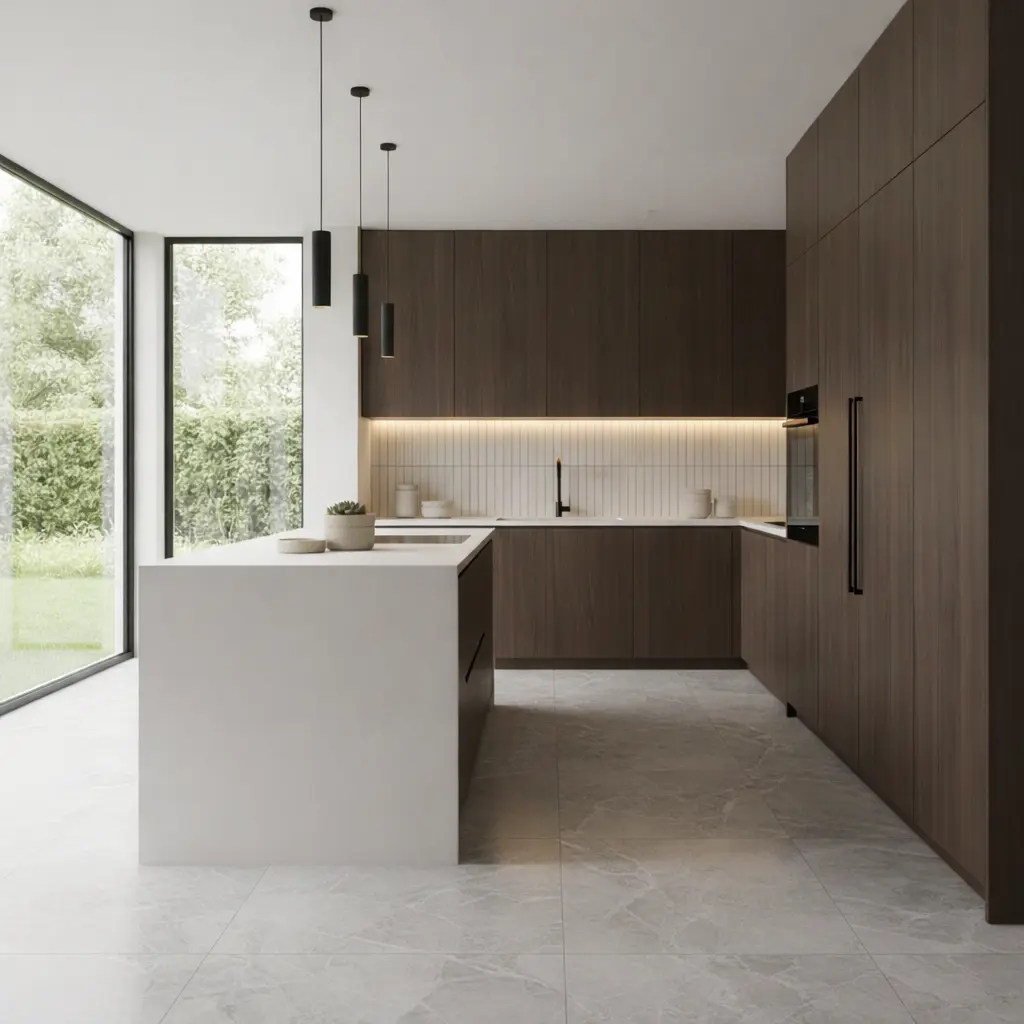
Why Choose Aparna Enterprises for Kitchen Floor Tiles?
Aparna Enterprises Limited (AEL) offers key advantages like stain & scratch resistance, durability, and design options.
- Wide design range: Aparna Enterprises offers over 3,500 tile options and 500-plus ready-to-use design concepts, which allow homeowners to choose tiles that match their interiors.
- Certification: AEL tiles are GreenPro certified by CII (Confederation of Indian Industry) Green Products and Services Council and tested to IS 15622 standards. This certificate ensures the tiles produced are sustainable.
- Manufacturing scale: A 1 million+ sq. ft. facility with large gas-fired kilns in Kakinada, Andhra Pradesh. A new plant was launched in Morbi, Gujarat, in 2026 to serve customers in North and West India.
- Nano Technology: AEL uses advanced nano-polishing technology to seal the microscopic pores. This polishing makes tile exceptionally glossy, stain-resistant, and non-porous.
Takeaway
Vitrified tiles are a good option for Indian kitchens because of their low water absorption rate (<0.5%). They prevent staining and slipping when the floor is wet, making them easy to clean. They also come in large formats, which reduce the grout lines, to improve the look of a room. Aparna Enterprises’ range matches these exact specifications.
If you are planning to upgrade your existing tiles or build a new home, contact AEL today to explore a wide range of collections.
Frequently Asked Questions On Kitchen Floor Tiles
Yes, it is a good option for the kitchen because of its low water absorption rate (<0.5%). Their abrasion resistance helps tiles handle heavy kitchen traffic. Aparna Enterprises’ tiles are built to this standard for kitchens of different sizes.
Double-charge vitrified, porcelain, and glazed vitrified (GVT) tiles are suitable for kitchens because they have water absorption below 0.5%. Double-charge tiles are preferred for heavy-use kitchens. Porcelain and GVT tiles are chosen for premium finishes and design flexibility.
Double-charge vitrified tiles with a deep abrasion <175 mm³ rating are best for wet and high-traffic kitchen areas. They resist daily traffic without losing surface finish.
A matte or anti-skid floor finish with high slip-resistance is the best choice to prevent slips and trip-overs. They provide better grip and lack an uneven surface, preventing accidents in the kitchen.
Both light and dark colours are pleasing, but it depends on the kitchen’s size.
Dark floors are paired with light countertops for balance, and light floors with dark countertops for visual contrast.
Neutral earthy tones, matte wood-grain glazed vitrified (GVT) finishes, and large-format tiles are trending.
Start Your Project with the Right Materials
We provide everything you need for modern construction. Connect with our experts to discuss your requirements and get the best solution for your project. Submit your details and our team will contact you soon.
CORPORATE OFFICE
8-2-293/82/A, Plot No-1214, Road No-60,
Jubilee Hills, Hyderabad-500 033.