
uPVC vs WPC: Key Differences & Which Is Better For You
In This Article
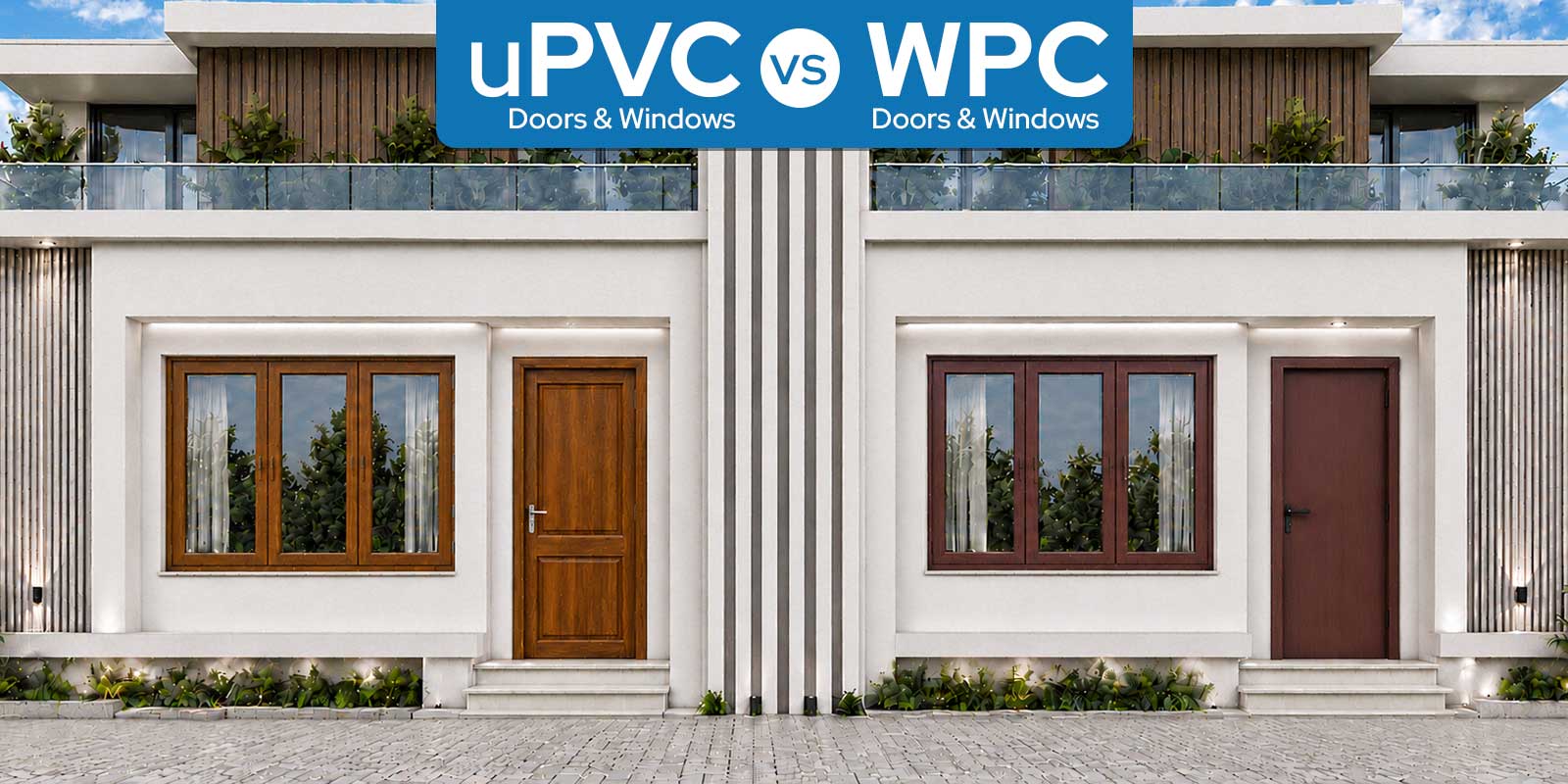
uPVC (unplasticised PVC) and WPC (wood-plastic composite) are both durable, low-maintenance alternatives to wood and metal — and in most Indian homes, uPVC is the better choice for windows, while WPC is often preferred for doors, especially in wet areas. The two look similar in a showroom and are frequently pitched interchangeably, but they are different materials engineered for different jobs. This guide explains what each one is, compares them side by side, settles the uPVC vs WPC doors question honestly, and shows you how to choose the right material for each opening in your home.
Key Takeaways
- uPVC is a rigid plastic profile (usually steel-reinforced); WPC is a wood-and-plastic composite board.
- Both are waterproof, termite-proof and low-maintenance — the real difference is where each performs best.
- For windows, uPVC generally wins on glazing, sealing and insulation; for doors, WPC is often preferred as it is moisture-proof and holds hardware like wood.
- Many homes use both: uPVC windows paired with WPC (or uPVC) doors — the choice is application-by-application, not one-size-fits-all.
What Is uPVC?
uPVC stands for unplasticised polyvinyl chloride — a rigid, weather-resistant form of PVC extruded into hollow, multi-chamber profiles. Because the material is unplasticised, it stays stiff and dimensionally stable rather than flexible, and the profiles are usually reinforced internally with galvanised steel to carry structural loads. uPVC is used mainly for windows and doors.
Its strengths are well suited to fenestration: excellent weather and UV resistance, good thermal and acoustic insulation from the multi-chamber profile design paired with double glazing, the strength to carry large glass panes, and support for multi-point locking. It never needs painting and stands up to monsoon, heat and coastal air. For wet areas, uPVC is chosen less often than WPC — which the doors section explains.
What Is WPC?
WPC stands for wood-plastic composite — a moulded blend of wood fibre or wood flour and plastic, commonly PVC. The result is a material that looks and works much like wood but resists the water and termites that damage natural timber. WPC is produced as boards and door shutters, and is used mainly for doors, door frames and wet-area joinery.
Its strengths make it a natural door material: it is 100% waterproof, termite- and borer-proof, and it holds screws and hinges like timber, so hardware fixes directly into it. It can be cut, routed and finished with laminate, veneer or paint, and it stays dimensionally stable in humidity. Its limitations are that it is less suited to large, hollow window profiles, it is heavier than uPVC, and in low grades it can sag or vary in quality — points the comparison below covers honestly.
uPVC vs WPC: Side-by-Side Comparison
Here is how uPVC and WPC compare across the parameters that actually decide a purchase. The last row does the honest work — the better material depends on whether you are fitting a window or a door.
Parameter |
uPVC |
WPC |
| Composition | Rigid PVC, steel-reinforced | Wood fibre + plastic (PVC) |
| Primary use | Windows and doors | Doors, frames, joinery |
| Water resistance | Excellent | Excellent — 100% waterproof |
| Termite resistance | Immune | Immune |
| Strength for large glazing | High (with steel reinforcement) | Limited |
| Screw / hinge holding | Moderate (needs reinforcement) | High — wood-like |
| Finish options | Wide colour and foil options | Veneer, laminate, paint — like wood |
| Thermal / acoustic insulation | High (multi-chamber | Moderate |
| Weight | Lighter | Heavier |
| Maintenance | Very low | Low |
| Typical cost | Moderate (varies by profile) | Comparable (varies by grade) |
| Best application | Windows | Doors |
Key Differences Between uPVC and WPC
The table shows the what; these four differences explain the why — and why one material suits windows and the other suits doors.
Material behaviour. uPVC is a hollow, rigid profile engineered for spans and sealing, which is exactly what a window frame needs. WPC is a solid board engineered to replace wood, which is exactly what a door shutter needs. The difference in form is the difference in purpose.
Structural strength. uPVC relies on internal galvanised steel to carry large windows without bowing. WPC holds screws and hinges directly, the way timber does, so door hardware fixes into it securely without extra reinforcement.
Finish and appearance. WPC accepts veneer, laminate and paint, so it can take a genuine wood look — an advantage for doors. uPVC comes in a narrower range of colours and laminated foils, which is rarely a drawback for windows.
Insulation versus workability. uPVC’s multi-chamber design gives it better thermal and acoustic insulation. WPC’s workability lets it be cut and fitted like wood on site. Each strength matches its typical job.
uPVC vs WPC Doors: Which Is Better?
For doors — particularly bathroom, toilet and flush doors — WPC is usually the better choice, because it is 100% waterproof, termite-proof, and holds hinges and hardware like wood. uPVC doors are a strong option for balcony, utility and external openings, where weather-sealing and glazing matter more than a wood-like finish.
The reason comes down to where each door sits. A bathroom or wet-area door has to survive constant moisture without swelling or rotting, and WPC does this while taking a clean laminate finish. A main door or internal flush door benefits from WPC’s wood-like feel and its ability to hold locks and hinges firmly. A balcony, French or external glazed door benefits instead from uPVC’s weather gaskets, multi-point locking and ability to carry glass. Here is the practical split:
Best door material by location
- Bathroom / toilet door — WPC (waterproof, no swelling, takes laminate)
- Bedroom / internal flush door — WPC (or engineered wood) for the wood-like feel and strength
- Balcony / French door — uPVC for sealing, glazing and locking
- Utility / external service door — uPVC or WPC; both perform, so decide on finish and budget
- Main entrance door — WPC (or solid/engineered wood) for strength and appearance
For wet-area and internal doors, the verdict genuinely leans WPC — and choosing it there is the right call, not a compromise.
uPVC vs WPC for Windows
For windows, uPVC is generally the better material, and this is where it clearly leads. Its multi-chamber profiles insulate against heat and noise, internal steel reinforcement lets slim frames carry large glass, and weather gaskets with multi-point locking seal reliably against monsoon rain, dust and coastal air. These are precisely the demands a window places on its frame.
WPC is rarely used for windows because it is a solid board material built for shutters and frames, not for the hollow, glazed, sliding or casement profiles that windows require. This is why the most common and sensible combination in Indian homes is uPVC windows paired with WPC (or uPVC) doors — each material used where it performs best.
Pros and Cons of uPVC and WPC
uPVC — pros: excellent weather and UV resistance, strong thermal and acoustic insulation, the capability to carry large glazing, very low maintenance, and secure multi-point locking. Cons: needs internal steel reinforcement for structural strength, offers a narrower range of finishes, and is less suited to wet-area door shutters.
WPC — pros: 100% waterproof and termite-proof, wood-like workability and screw-holding, accepts veneer, laminate and paint, and is ideal for doors and wet areas. Cons: heavier than uPVC, quality varies by grade so low-density boards can sag, and it is less suited to large window profiles.
uPVC or WPC: How to Choose
You rarely have to pick just one for the whole house. Match the material to the opening:
Quick Decision Guide
- Choose uPVC if: it’s a window; it’s a large glazed or sliding opening; insulation against heat and noise is a priority; or it’s a weather-exposed balcony door.
- Choose WPC if: it’s a door, especially a bathroom, toilet or flush door; you want a wood look with laminate or veneer; you need to cut, route or fit it like timber; or it’s a wet-area frame or joinery.
- Consider either if: it’s a utility or external service door — both perform well, so decide on finish preference and budget.
Three questions settle almost every case: Is it a window or a door? Is it a wet area? Do you want a wood-like finish? Answer those, and the right material is usually obvious.
uPVC Windows and Doors from Aparna Enterprises
Whichever material suits a given opening, the manufacturer and the installation decide whether it actually performs — profile quality, reinforcement, hardware and precise fitting matter more than the material name on the brochure. A well-made uPVC window outlasts and outperforms a poorly made one by years.
Aparna Enterprises manufactures uPVC windows and doors engineered for Indian conditions — heat, monsoon, humidity and coastal exposure — with steel-reinforced multi-chamber profiles, multi-point locking and weather sealing. For windows, and for balcony, utility and other weather-exposed doors where sealing and glazing matter, uPVC is a dependable choice. If you are specifying windows or external doors, talk to our team for guidance on your project.
uPVC or WPC: The Practical Verdict
This isn’t a contest with a single winner. uPVC is the window material; WPC is the door material, especially for bathrooms and other wet areas — and the smart approach uses each where it performs best rather than forcing one across the whole home. Decide opening by opening, and you get the best of both.
Planning windows or external doors for a new home or renovation? Explore Aparna Enterprises’ uPVC range, or talk to the team about the right specification for those openings.
Frequently Asked Questions
Neither is universally better — it depends on the application. uPVC is generally better for windows, thanks to its insulation, glazing capability and sealing; WPC is often better for doors, especially bathroom and flush doors, because it is waterproof, termite-proof and wood-like. Many homes use uPVC windows with WPC doors.
WPC is usually the better choice for bathroom doors. It is 100% waterproof, does not swell or rot, resists termites, and holds hinges and handles like wood. It also takes a laminate finish for a clean, wood-like look that stands up to constant moisture.
uPVC is a rigid, hollow, steel-reinforced plastic profile made mainly for windows and doors. WPC is a solid wood-and-plastic composite board made to replace wood, mainly for doors, frames and joinery. Different structures suited to different uses.
Costs overlap and depend heavily on grade, profile and finish rather than the material name. Low-grade versions of either are cheap and problematic, while high-quality uPVC and WPC fall within a similar range. Compare specification and warranty rather than headline price.
Rarely. WPC is a solid board suited to door shutters and frames, not to the hollow, glazed, sliding or casement profiles that windows require. For windows, uPVC is the appropriate material.
Yes — both are fully waterproof and immune to termites, which is why both outperform natural wood in Indian conditions. The choice between them comes down to application: windows favour uPVC, while doors and wet-area joinery favour WPC.
Start Your Project with the Right Materials
We provide everything you need for modern construction. Connect with our experts to discuss your requirements and get the best solution for your project. Submit your details and our team will contact you soon.
CORPORATE OFFICE
8-2-293/82/A, Plot No-1214, Road No-60,
Jubilee Hills, Hyderabad-500 033.