
What Is a Glass Canopy? Types, Benefits, Materials & Uses
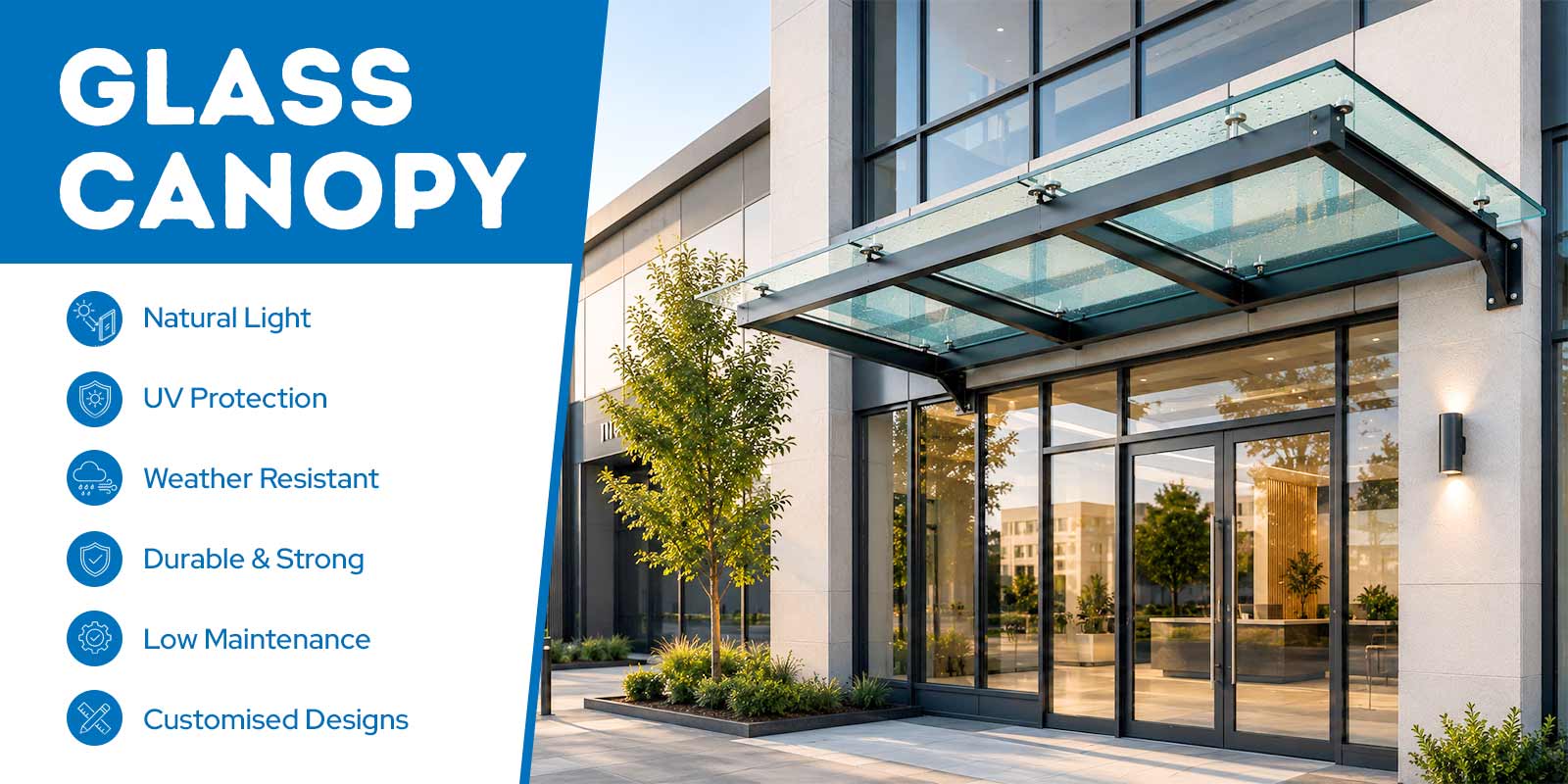
Outdoor spaces like entrances, balconies and walkways need natural light to brighten these areas and protect people from weather elements like rain, snow, and wind. Constructing them is a difficult task because materials like concrete, wood and steel block natural light. Glass canopies exactly address these issues by providing weather protection to people and keeping entrances bright and open.
In this guide, we will understand what glass canopy is, its common applications, benefits, types, and material used in making it.
What is a Glass Canopy?
A glass canopy is an overhead protective structure made using safety glass and supporting metal frames. It is installed above building entrances, patios, terraces, walkways, and balconies because they are durable, easy to maintain, and enhance the curb appeal. It is engineered to protect from external elements like dust, rain, snow, UV rays, and wind. At the same time, a glass canopy allows ample light to pass through, making spaces brighter and open.
Where are Glass Canopies Used?
Glass canopies are premium design options that can be customised to fit various requirements. Here, let’s see some of the common usage of glass canopies.
- Commercial Building Entrances: Glass canopies are used as the front facades of the corporate offices, hotels, and shopping malls. This protects people from sun and rain as they enter and exit the building or wait for their cabs to arrive.
- Walkway and Pathway Covers: This modern design is installed on walkways or pathways connecting different buildings. This allows people to walk between structures without feeling confined. Glass canopies are used on university campuses, hospitals, and corporate offices to connect different areas.
- Residential Use: In houses, a glass canopy is used to improve outdoor living spaces. It provides shelter over patios and decks, blocking rain or other elements without obstructing natural light.
- Public Infrastructure: In major cities, glass canopies are used in busy transit hubs and public areas because they are durable, safe, and allow people to see clearly. We often see them in bus shelters protecting passengers from rain.
- Outdoor Dining Areas: Restaurants, cafes, and hotels use glass canopies to maximise their seating capacity. This allows patrons to enjoy their meal in the outdoor patios under a glass canopy, protecting them from rain or UV rays.
Benefits of Glass Canopy
Glass canopies offer several practical and architectural advantages for any building. Here are the benefits:
- Natural Light & Aesthetics: Glass allows more natural light than opaque roofing materials. This brightens entrances and outdoor spaces without blocking views of the sky.
- Protection & Durability: Glass canopies act as a shield against rain, snow, and harmful UV rays. They are constructed using heavy-duty laminated or tempered safety glass to withstand impact and structural stress.
- Energy Efficiency & Sustainability: Canopies come equipped with UV-resistant and tinted coatings to regulate indoor temperatures. This reduced dependence on ACs during the summer. Since glass is recyclable, they are considered a sustainable architectural choice.
- Low Maintenance: Glass canopies are easy to clean, as they do not require regular cleaning. An occasional cleaning is enough to maintain their appearance. Also, they do not rust, fade or tear.
- Design Versatility: This overhead glass structure can be customised to fit any style and design, including both contemporary and traditional properties. They also enhance the aesthetic appeal of commercial and residential projects alike.
Types of Glass Canopies
Glass canopies are categorised based on their structural support systems and the type of glass used. Here are the different types:
-
Suspended Glass Canopies
It is a glass roof hung from an overhead structure using metal tension rods or cables. It creates a floating appearance by eliminating ground-level support posts. A suspended glass canopy also offers complete transparency in a slim structure.
The design required precise engineering as it features heavy-duty steel cables, rod rigging, spider fitting and wall brackets. This allows the canopy to handle slight structural movements.
Some of the common uses include modern commercial buildings, office entrances, and retail storefronts.
-
Cantilevered Glass Canopies
This canopy is projected outward from the building and supported entirely from one end of the wall. Cantilevered glass canopy lacks external braces or cables, vertical columns, or overhead suspension.
It keeps the underneath clear and clean, and also offers a modern, transparent design.
The design features an internal steel frame, concealed wall braces or even glass fins anchored deep to the building’s structural walls.
Mostly used in residential entrances, boutique store fronts, hotel entrances, and modern museums.
-
Frameless/Bolted Glass Canopies
It is a structural glass system where glass panels are connected using spider fitting or pin-mounted bolts directly through pre-drilled holes in the glass.
Frameless glass canopy offers maximum transparency, as it eliminates the traditional perimeter frames, giving the illusion of a floating sheet of glass.
The design features toughened laminated glass with hardware like steel spiders, bolts and articulated joints.
Bolted glass canopies are commonly seen in shopping malls, hotel entrances, and corporate lobbies.
-
Framed Glass Canopies
It is a traditional overhead system, where glass panels are fully enclosed in a structural metal framework.
The design features a laminated glass with clear, frosted, grey, or UV-filtering interlayers to control sunlight and privacy. The glass is supported by aluminium, stainless steel, or mild steel.
Framed glass canopy withstands weather elements, making it highly-durable. It also offers an excellent load-bearing capacity by transferring the force of heavy weather outward to the building’s main columns and beams.
Some of the common applications include residential entryways, commercial buildings, public walkways, and train station platforms.
-
Curved Glass Canopies
This is a custom-designed canopy featuring a curved glass panel or custom bent, creating a unique design. The unique design includes flowing, arched or wave-like structures.
It offers a visual character to the facade by softening rigid building lines. Its dome-like structure sheds water, and prevents it from pooling.
Curved glass canopy used specialised curved laminated glass and custom-bent metal frame or tension rods, or engineered cables.
This type of canopy is used for historic building renovations, hotel driveways, luxury and building entrances.
-
Retractable Glass Canopies
This is a motorised system that slides open or closed along a track on demand. This can also be manually operated. This system allows users to enjoy the open air or close the area during rain.
This design features segmented sliding glass panels that slide one over another. It incorporates heavy-duty motorised tracks, weatherproof seals, and sensors together.
Retractable glass canopies are used in rooftop bars, restaurant patios, luxury residential terraces, and dining areas.
Materials Used In Glass Canopies
To ensure safety and longevity, the material used must combine durability, bear load capacity and glazing. Let’s understand the different metals used here:
Glass (toughened or laminated) is the main overhead component, engineered to withstand heavy loads. This glass is supported by aluminium or steel frames, which provide structural stability and resist corrosion. High-quality structural fittings like brackets and rods ensure secure installation. Other materials, like polycarbonate, may be used as an alternative where reduced weight is needed. Sealants and protective coatings are applied to improve the waterproofing and performance in the long run.
How To Maintain A Glass Canopy?
Glass canopies require low maintenance as they do not need heavy cleaning. Here’s how to maintain a glass canopy:
- Use a pH-neutral detergent mixed in water and a soft microfiber sponge to clean the glass
- Avoid using abrasive brushes to prevent glass from scratches
- Clear debris and flush gutters and drainage channels to avoid water pooling and leaks
- Inspect seals and gaskets for cracks to make sure it remains watertight
- Tighten bolts and clamps of the panels
- Check the metal frames for rust or rot
- Lubricate hinges with grease regularly
Why Aparna Enterprises is the Best Choice for Glass Canopies?
Aparna Enterprises has built a reputation of providing quality glass canopies systems due to these following reasons.
- Advanced Tools: Aparna Externa uses advanced engineering software like Building Information Modelling (BIM) and 3D Software tools to manufacture and install glass canopies.
- End-to-End Management: Aparna Enterprises ensures perfect project executing by handling the entire process, including manufacturing and installing glass canopies.
- State-of-the-art Facilities: Aparna Enterprises Limited (AEL) houses machinery imported from Germany to produce quality products. It follows European technology and follows strict global protocols to meet international standards.
- Energy-Efficient and Eco-Friendly Facade: Aparna’s facades combine thermal breaks, glazing, and dynamic shading to block harsh heat and optimise indoor airflow. Aluminium frames are fully recyclable at the end of the building’s lifecycle.
Takeaway
A glass canopy is a smart investment choice if you want to protect entrances from weather elements. It combines glass with metal frames to improve natural light, durability, and curb appeal.
If you’re planning to add a modern touch to your entrances with a premium glass canopy design or glass roof canopy, explore customised solutions with Aparna Enterprises.
Reach out to Aparna Enterprises for expert guidance, a design consultation, and a tailored quote. We’ll help you create a stylish, durable canopy you’ll love.
Frequently Asked Questions On Glass Canopy
Yes, a glass canopy is safe for Indian weather. However, it must be made using toughened laminated glass and heavy-duty and corrosion-resistant frames.
Yes, glass canopies can withstand heavy rains, as they use robust support structures to handle wind loads, rain and storms.
The thickness of a glass canopy ranges from 8 mm to 25 mm, depending on the size and its application. However, the standard thickness ranges between 12 mm and 15 mm.
Yes, you can customise the glass colour or type. Some of the popular glass colours include bronze, grey, blue and any other solid colour. Tempered, laminated, frosted, and low-E are a few popular glass types to choose from.
Residential glass canopies are small and lightweight structures made using thin tempered glass and aluminium frames. Commercial canopies are heavy-duty systems designed with thick laminated safety glass and structural metal to meet strict public safety codes.
Start Your Project with the Right Materials
We provide everything you need for modern construction. Connect with our experts to discuss your requirements and get the best solution for your project. Submit your details and our team will contact you soon.
CORPORATE OFFICE
8-2-293/82/A, Plot No-1214, Road No-60,
Jubilee Hills, Hyderabad-500 033.