
Vitrified Tiles: Designs, Types, Sizes, Thickness & Benefits for Modern Flooring
Vitrified tiles are produced through a manufacturing process called vitrification, in which raw materials (clay, silica, feldspar, and quartz) are mixed and heated at high temperatures of 1200°C and 1300°C to create a dense, non-porous mass.
In modern construction, vitrified tiles have become the preferred choice because they are made with straight edges, allowing them to be placed very close together to create a smooth, high-end look. They are also cheaper and easier to clean.
In this write-up, let’s see the benefits of vitrified tiles, types of vitrified tiles, available finishes, manufacturing process, and cost.
What Are Vitrified Tiles?
Vitrified tiles are highly durable flooring tiles with very low porosity. Known for low water absorption and scratch resistance, these tiles remain shiny even with heavy use. So they are ideal for high-traffic areas, kitchens, and bathrooms.
Benefits Of Choosing Vitrified Tiles
Vitrified tiles are a premium choice in modern interior design. They are also a superior alternative to traditional materials like marble and granite. This section describes some of the major benefits of selecting vitrified tile for your home.
-
Durability & Low Water Absorption
Vitrified tiles are tougher than ceramic tiles because of their low porosity rate (less than 0.5%). These tiles are also water-resistant and address moisture-related issues like seepage or mould build-up.
-
Stain and Scratch Resistance
Their non-porous nature and high surface hardness prevent liquids and oils from penetrating. This means spills can be wiped off easily, and no stain remains on the tile.
-
Low Maintenance
Vitrified tiles are easy to maintain as they do not need periodic sealing or polishing. Mopping with household cleaners is enough to clean them.
-
Versatile Design & Aesthetics
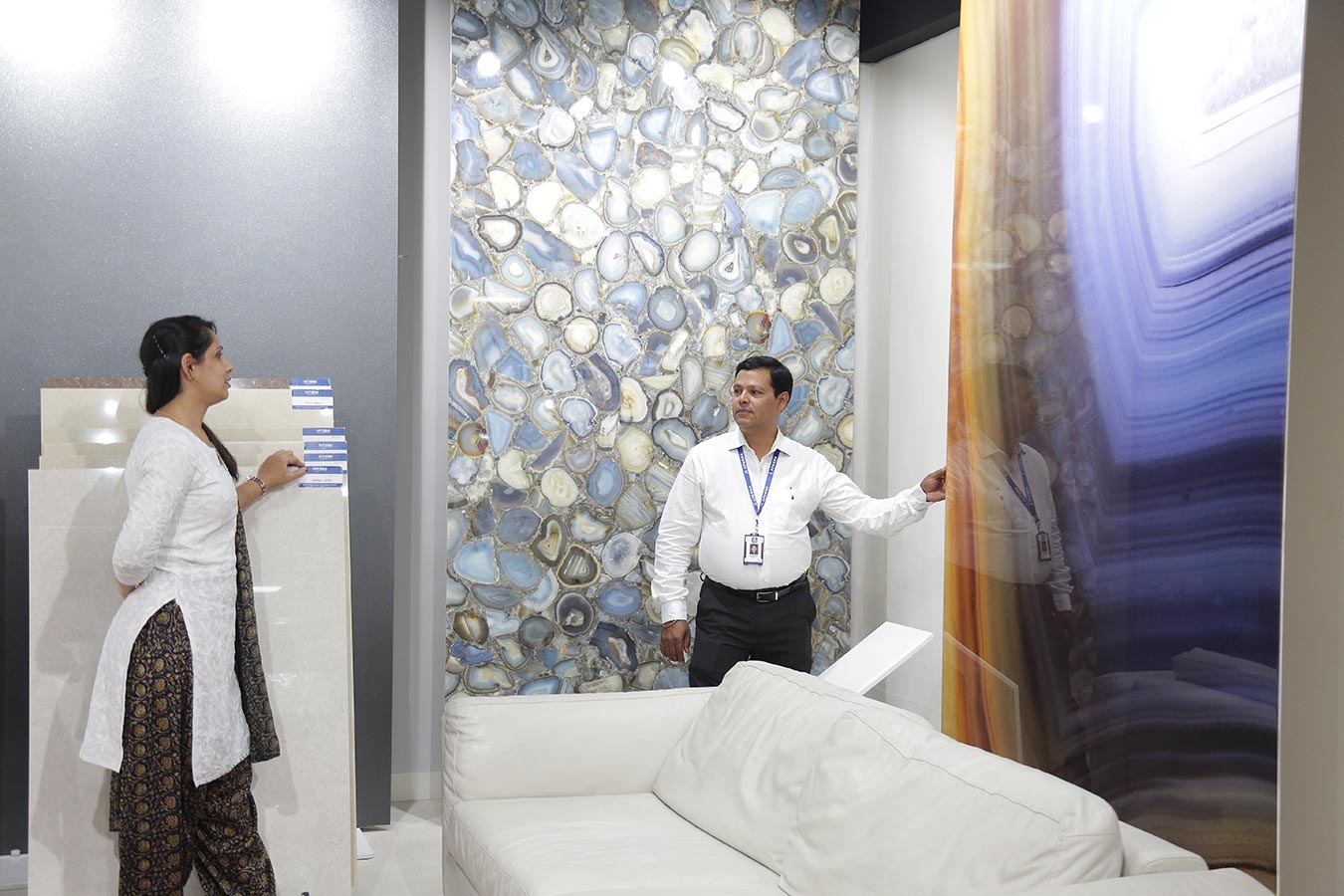
From matte to high-gloss, these tiles are available in various patterns and finishes. They can also mimic materials like marble, granite, and even wood.
-
Colour Fastness
The colour, shade, and design of these tiles do not fade when exposed to sunlight because they are resistant to UV rays and chemical agents.
-
Quick Installation
These tiles are easier and faster to install because they are factory-made. So they come in uniform size and thickness. They also don’t need much cutting or levelling on-site, allowing you to walk on them within 48 hours.
-
Cost Effective
Vitrified tiles are a smart investment option because of their durability and low maintenance requirements. It saves your money over time compared to buying the cheapest option.
How to Choose the Best Vitrified Tiles Design?
Vitrified tiles come in multiple designs and options, so you may face difficulties when selecting the right one. This section highlights a few parameters to help you select your preference.
- Consider Technical Specifications: Ensure the water absorption is less than 0.5 per cent of water by weight of the tile. Less water absorption means greater strength and durability. Select vitrified tiles with a minimum thickness of 8 mm, and a breaking strength of 1130 N to 1300 N.
- Go with a Top Brand: Branded tiles are manufactured using stringent, standard procedures to ensure durability, quality, and performance. Buying from a local trader may lead to cracking or damage over a period of time. So always choose a reputed tile manufacturer.
- Match Size to Room Scale: Selecting the best vitrified tile size depends on balancing the room scale. Prefer large-sized tiles in your living rooms to make your home look larger and create a great ambience (>600×1200). For bedrooms or smaller rooms, you can choose smaller-sized tiles.
- Colour Scheme: Prefer light colours like white, beige, and cream for improving natural light. Dark colours can add warmth, but they can make rooms look small. One can also consider printed vitrified tiles and two-tone colours.
- Finish & Texture: When picking the right tile finish, consider both style and safety. Glossy tiles reflect light to make living areas feel brighter and larger. On the other hand, matte finish provides grip. Sugar finishes offer a velvet-like texture, and carving finishes add textured depth that mimics natural stone or wood.
- Estimate Tile Quantities: First, calculate the total area and quantity, and then add a margin of 10% for wastage. Always order all tiles at once to ensure that they come from the same manufacturing batch to avoid shade variations when you place the order again.
Types of Vitrified Tiles
Vitrified tiles are popular floor tiles used for both residential and commercial applications. There are different types of tiles to suit various requirements. This section discusses the most popular types used in India.
-
Full-Body Vitrified Tiles
These tiles feature the same colour and design throughout their entire thickness. Because of their homogeneity, scratches or chips are barely visible over time.
Full-body vitrified tiles are commonly used in high-traffic areas like airports, metro stations, shopping malls, industrial floors, and staircases.
The thickness of the tiles ranges from 9 mm to 15–16 mm. These full-body vitrified tile sizes include 600×600 mm, 600×1200 mm, 800×1600 mm, and 1000×1000 mm sizes.
-
Double Charge Vitrified Tiles
These are made by combining two layers of pigment. The top decorative layer provides deep colour saturation and high wear resistance.
Common usage includes living rooms, hallways, offices, and hotels to handle high traffic.
The thickness ranges between 8 mm and 10 mm. Double-charged tiles are available in 600×600 mm, 800×800 mm, and 600×1200 mm sizes.
-
Glazed Vitrified Tiles (GVT)
These tiles feature a glazed surface that allows high-definition digital printing of designs, colours, and textures. It has two specialised versions: Polished Glazed Vitrified Tiles (PGVT) and Digital Glazed Vitrified Tiles (DGVT).
- Polished Glazed Vitrified Tiles (PGVT): These GVT tiles undergo an additional polishing process for a high-gloss, mirror-like finish.
- Digital Glazed Vitrified Tiles: These tiles use a digital printing process, mostly used to create matte or textured finishes.
Some of the common usage areas of these tiles include residential floors and walls, bathrooms, kitchens, living rooms, and bedrooms.
The thickness of these tiles ranges between 5 mm and 10 mm. Glazed vitrified tiles are available in 600×600 mm, 600×1200 mm, 800×1600 mm, and 1200×2400 mm sizes.
-
Soluble Salt Vitrified Tiles
These are ivory-based tiles that are manufactured using liquid salt screen printing. The liquid salt penetrates about 1–2 mm deep into the tile surface to create soft patterns.
They are available in several designs, but are less durable than full-body or double-charge tiles. Commonly used in bedrooms, guest rooms, or small office cabins.
They are mostly manufactured in a 600×600 mm standard size, with a thickness ranging between 8 mm and 9 mm.
-
Nano Tiles (Nano-Polished)
Nano tiles are an upgraded version of soluble salt tiles. After undergoing polishing, a liquid silica layer (nano-coating) is applied to the surface to fill the microscopic pores of the tile. This is done to make the tile smoother, shinier, and resistant to dust and stains.
These tiles are widely used in living rooms and drawing rooms. They are available in thicknesses between 8.5 mm and 10 mm.
Nano-polished tiles are available in 600×600 mm and 800×800 mm sizes.
Finishes Available in Vitrified Tiles
Vitrified tiles are available in many finishes designed for both aesthetic appeal and functionality. Here, let’s see the different finishes in detail.
- Glossy/Polished: These are smooth and very shiny. They reflect light like a mirror, which makes small rooms look bigger and brighter.
- High Gloss: This is the shiniest option available, giving a luxurious feel to living rooms or hotel lobbies.
- Matte: These finishes have a flat look and do not shine, but they offer better grip.
- Satin Matte: This is a smooth, matte finish with a very soft shine. It is also easy to clean.
- Sugar Finish: This features a grainy, sparkling texture. When you touch the tile, it feels like fine sugar crystals.
- Carving: This combines matte and gloss finishes to highlight textured patterns. When you touch the patterns, you can actually feel them.
- Rustic: This type offers a rough, earthy look. They are perfect for rustic or traditional aesthetics.
- Metallic: These are modern finishes that have a shiny, metal-like look. They are used to create accent walls.
- Wood/Stone: These tiles can mimic wood or stone to offer the beauty of natural materials.
Manufacturing Process of Vitrified Tiles
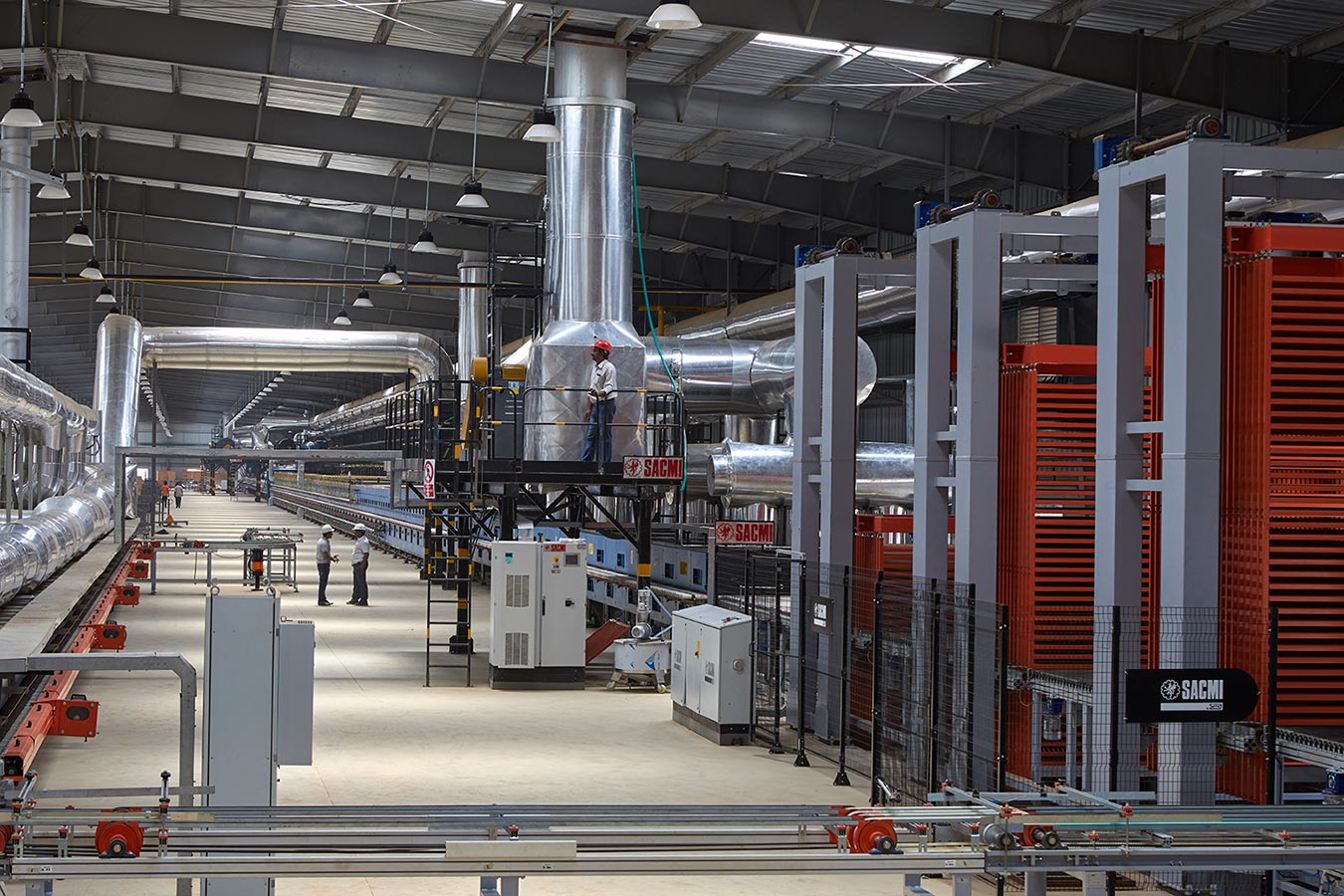
The manufacturing of vitrified tiles is a complex and technically demanding process. It primarily involves the following steps:
- Preparation of Raw Material: Materials like clay, silica, quartz, and feldspar are finely ground and mixed with water to create a slurry.
- Spray Drying: The slurry is then passed through a hot spray dryer to evaporate excess water, resulting in a consistent powder.
- Pressing: A high-pressure hydraulic press is used to press the powder to form a green tile.
- Glazing (optional): When manufacturing GVT, a protective glaze is applied, followed by digital printing for a specific design, before firing.
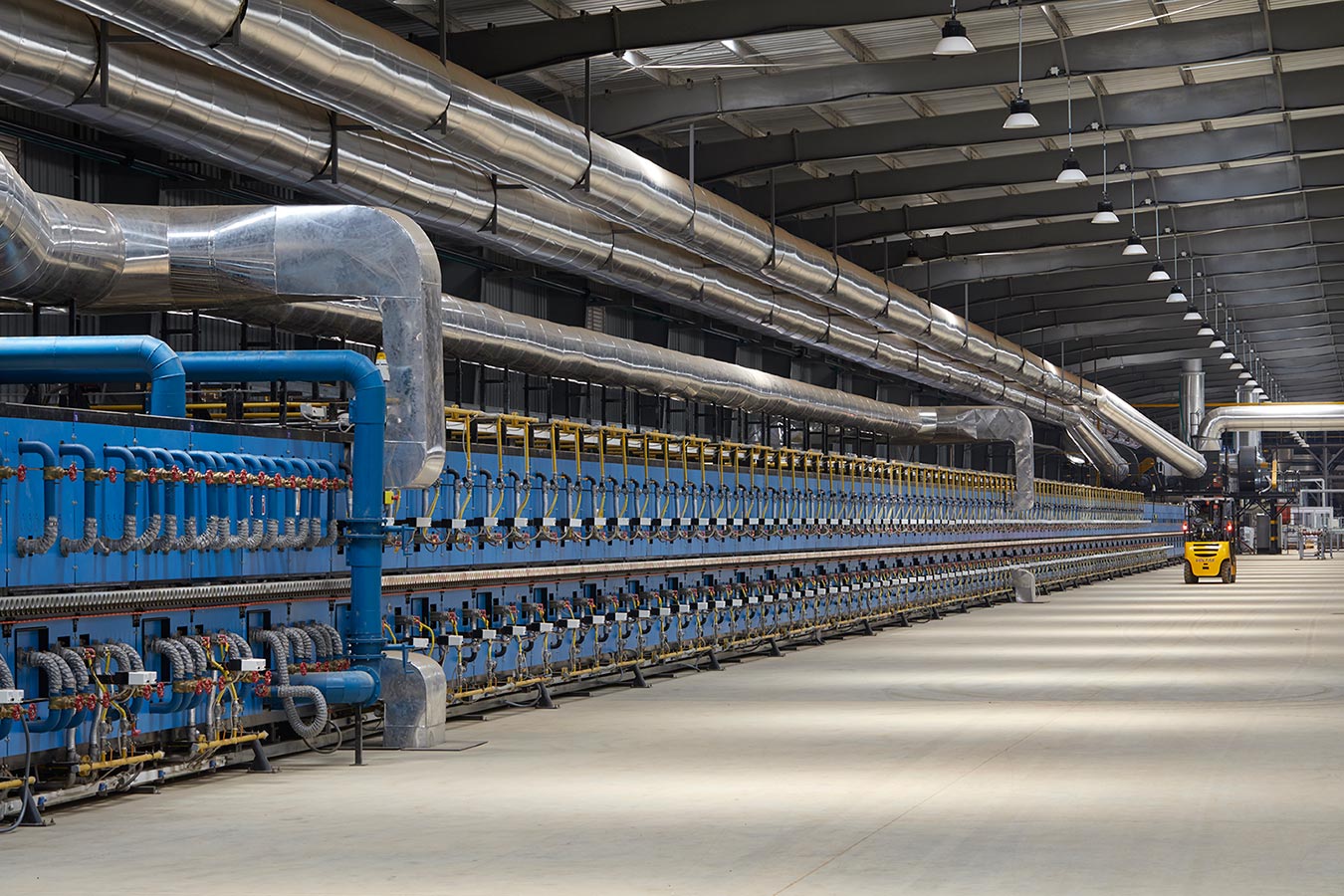
- Firing: The tiles are fired in large kilns at temperatures of 1200-1250°C. This leads to partial melting and fusing of minerals.
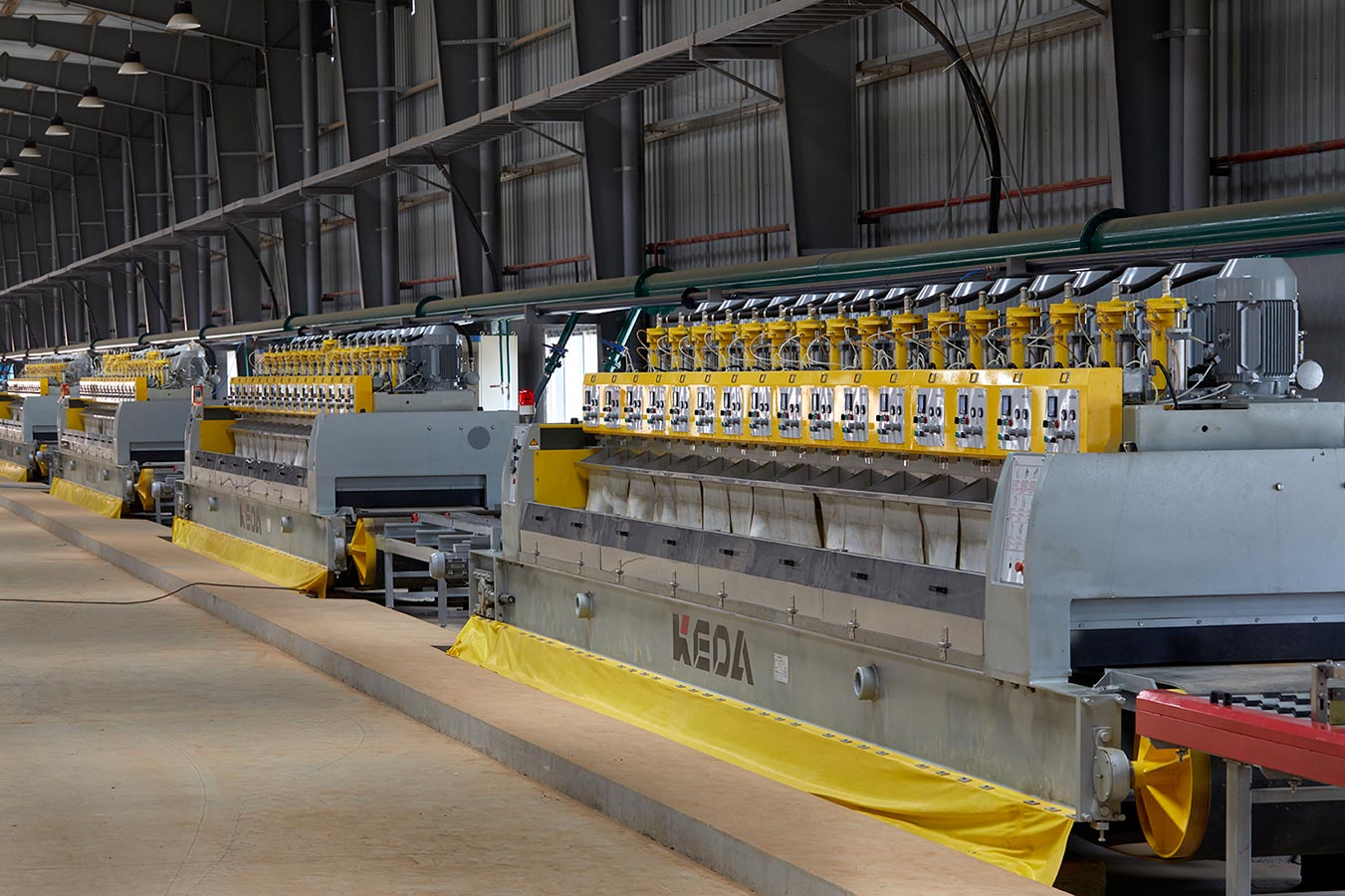
- Polishing and Cutting: The tiles are then polished using machines to achieve a high gloss or matte finish. After this, the tiles are cut into different sizes
- Quality Checking & Packing: Finally, the tiles undergo rigorous quality checks to ensure consistency in colour, size, and strength before they get packed.
What Is The Cost Of Vitrified Tiles?
The price of vitrified tiles depends on the type, brand, size, and finish. Full-body vitrified tiles are more expensive than the double-charged and glazed vitrified tiles. GVT offers many design options at a competitive price. Double-charged tiles are available at a medium price point.
Why Choose Aparna Enterprises Ltd For Vitrified Tiles?
Aparna Enterprises Limited offers several key features that make its tiles stand out from others. Here are a few points why they are a preferred choice:
- Standardised Durability: By adhering to IS 15622:2017, Aparna Enterprises Limited tiles are tested for several critical performance factors.
- Design Versatility: AEL offers over 3500 tile options and 500-plus ready-to-use concepts to offer a designer look for your home.
- Eco-Conscious: Aparna’s Green Pro Certification signals that the manufacturing process is more sustainable compared to uncertified local alternatives.
- Advanced Machinery: AEL uses high-end Italian machinery to mimic the precision of Italian design tiles. Aparna’s advanced printing technology can create tiles with diverse, premium patterns.
Takeaway
Vitrified tiles are a high-end, durable flooring tile made through a high-temperature manufacturing process. It involves fusing clay, silica, and feldspar into a non-porous substance
Unlike ceramic tiles, these tiles are uniform in composition. So they are resistant to scratches, stains, and moisture. Also, their straight edges help in the easy installation of tiles. They are also cost-effective when compared to natural marble or granite.
Are you looking to upgrade your home with a premium finish? Contact us to explore our latest collection of vitrified tiles and style your home.
Frequently Asked Questions On Vitrified Tiles
Vitrified tiles are denser, more durable, and less porous than ceramic tiles. Ceramic tiles are more porous and are good for low-traffic indoor areas. Ceramic tiles cost less and provide better grip than vitrified tiles.
Yes, vitrified tiles can be used on walls because they offer high durability and low moisture absorption. They are perfect for bathrooms and kitchens, and can also be used for accent walls
Maintaining vitrified tiles involves cleaning and wiping. They do not require huge maintenance because they are resistant to stains and water. But using harsh chemicals or abrasive tools can damage the tile.
Vitrified tiles last anywhere between 15 and 30+ years, if installed properly. They also require minimal maintenance to increase their lifespan. Double-charged and full-body vitrified tile lasts even longer because of its homogeneous composition and specialised manufacturing process
The best size of vitrified tiles depends on the size of the space. In modern homes, 600x1200mm (2×4 ft) size tiles are a popular choice because they feature fewer grout lines and fit both large and small spaces. Also, 800×800 mm, 800×1600 mm, and 1200×1800 mm are gaining popularity recently.
ABOUT VITERO TILES
Vitero Tiles stands at the forefront of the Indian construction market with a broad bouquet of wall and floor tiles that cater to diverse styles and functional requirements. At the intersection of innovation and exclusivity, we leverage the nuances of disruptive technologies to manufacture tiles that add finesse to floors and walls. Our tiles come in a vast range of distinct colors, contemporary shades, and unparalleled quality to add exclusivity to a building.
Visit WebsitePRODUCT IMAGES
Start Your Project with the Right Materials
We provide everything you need for modern construction. Connect with our experts to discuss your requirements and get the best solution for your project. Submit your details and our team will contact you soon.
CORPORATE OFFICE
8-2-293/82/A, Plot No-1214, Road No-60,
Jubilee Hills, Hyderabad-500 033.
CIN no.: U51109TG1994PLC018950