Powder Coating: Process, Types, Thickness & Powder Coating vs Painting
If you have ever seen smooth, colourful metal that still looks new after years of use, it likely has a powder coating. Developed in North America in the 1960s as a tougher alternative to liquid paint, it is now used everywhere—from cars and buildings to kitchen appliances. This guide will explain how powder coating works, the different types, and also why so many industries trust it.
What Is Powder Coating?
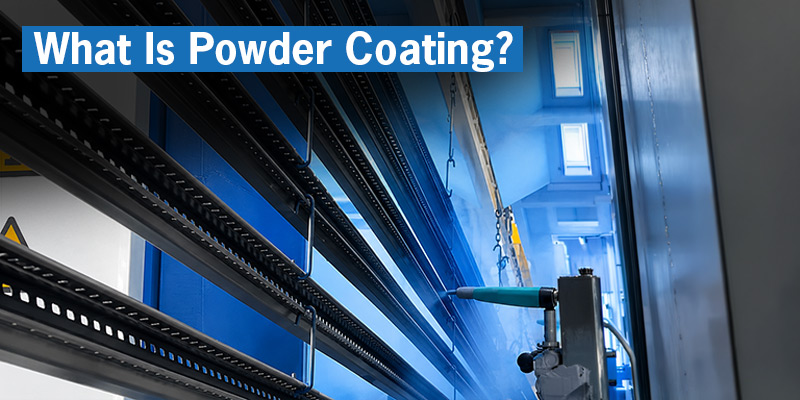
Powder coating is a dry finishing process of applying dry powder to a metal surface. It is applied to the surface with an electrostatic spray gun as a free-flowing dry powder. The charged or ionised powder adheres to the workpiece, which is then heated so that the powder melts, spreads evenly, and forms a smooth, strong layer. The powder contains resin, colour pigments, curing agents, and additives.
Powder Coating vs Paint
Unlike paint, powder coating does not contain solvents. It is made of dry, solid ingredients that melt when heated. Powder coating gives a stronger and longer-lasting finish compared to painting. It protects better against rust, and usually needs only one coat.
On the other hand, painting is cheaper, easier to use, and applied using brushes, rollers, and sprays.
Key Advantages of Powder Coating
Besides its unique application, there are a few advantages of powder coating that have helped it emerge as a premier finishing technique.
Here are a few advantages:
-
Durability
Powder-coated surfaces are known for their exceptional durability. They can withstand severe weather, corrosion, abrasion, scratches, and normal wear without being readily destroyed.
-
Cost-Effective
Initially, the powder coating cost may appear slightly high. But in the long run, it lowers cost because it lasts longer, requires less maintenance, and doesn’t need repainting. Also, the use of efficient spray guns reduces overspray, resulting in less wastage.
-
Eco-Friendly
Powder coating does not use harmful chemicals or minimal volatile organic compounds. So it is safe for the environment and people due to low emissions. Also, the oversprayed powder can be collected and reused.
-
Aesthetic Versatility
Powder coating offers a wide range of colours, textures, and finish options. It ensures high-quality aesthetics by providing a smooth and flawless appearance of the surfaces. It can also mimic materials such as wood or stone.
-
Corrosion Resistance
Powder coating increases the life span of the surface by preventing corrosion. It forms an impermeable barrier on the metal and prevents oxidation, which is the main reason for corrosion.
-
Low Maintenance
Powder coating materials require very little maintenance as they do not attract much dirt and dust. It can be wiped down with a cloth. So cleaning once every 6 to 12 months in normal environments does the job.
Types of Powder Coating
Powder coating can be classified into two types of polymers, depending on their reaction when exposed to heat during curing. The two types are thermosets and thermoplastics.
- Thermosets: When heated in an oven, powders undergo a chemical change that prevents them from melting because they form a permanent bond.
- Thermoplastics: Powders do not undergo a chemical reaction when heated, so they melt and can be reshaped or repaired.
Types of Thermoset Powder Coating
- Epoxy Powder Coating: These are popular for their durability and corrosion resistance, but they come with a drawback. They tend to fade when exposed to UV light, so they are suitable for indoor environments.
- Polyester Powder Coating: These are a preferred choice for outdoors, particularly for patio and fencing furniture, because they are resistant to UV rays and extreme weather. These versatile thermometers also retain colour and are resistant to chemicals.
- Epoxy-Polyester Hybrid: It is a combination of epoxy and polyester thermoset that offers durability and resistance to overbake. The coating can retain its colour, gloss, and physical properties when exposed to high temperatures and even during longer baking times. They are preferred for decorative items, office furniture, and shelving.
- Polyurethane: They have characteristics in common with polyester, but contain different hardeners, also called curing agents. Like liquid paints, these materials also offer a very smooth, glossy appearance and high chemical resistance. They serve as a barrier against UV radiation, moisture, and temperature fluctuations, offering excellent weatherability. So this synthetic polymer material is widely used for car rims, fuel tanks, doorknobs, wheels, bumpers, and chemical containers.
- Acrylic: These are specialised coatings used mostly on automotive wheels, particularly as a top coat, and premium decorative finishes. They are known for UV, corrosion, scratching, and weather resistance. This type of coating also offers ‘Class A’ finishes and tough surfaces.
- Fluoropolymer: These specialised coatings combine fluoropolymer resin with cross-linking agents to provide resistance against weather, radiation, and chemicals. Fluoropolymer coating is widely used on windows and doors to retain a high-gloss finish and retain colour.
- Super Durable Polyester: This type of powder coating is formulated with performance polyester to offer protection against harsh weather conditions, maintaining colour and superior gloss. They are used for door frames, curtain walls, heavy-duty construction equipment, communication towers, and building facades.
Types of Thermoplastics Powder Coating
Some of the common types of thermoplastics coatings include:
- Nylon (Polyamide): Known for providing superior abrasion resistance, chemical resistance, wear resistance, and low-friction efficiency, these thermoplastic coatings are used in gears, handles, food-safe applications, bearings, conveyers, and rollers. The coating is applied via preheating techniques (fluidised bed) or electrostatic spraying.
- Polyvinylchloride: PVC thermoplastic powder coating is a chemical-resistant finish applied on surfaces via preheating techniques (fluidised bed) or electrostatic spraying. Some of the common applications of this durable coating include outdoor furniture, wire fencing, industrial equipment, chemical pipelines, and dishwashers. It offers resistance against UV rays, corrosion, and moisture.
- Polyolefins (Polyethylene/Polypropylene): Polyolefins offer strong impact resistance and are capable of retaining flexibility even at lower temperatures. They are also resistant to chemicals and corrosion, protect against salt spray, and are low in moisture absorption. So they are ideal for coastal and industrial applications. Used in fencing, outdoor furniture, stadium seating, pipelines, dishwasher racks, chemical pipelines, medical equipment, and other applications.
Key Uses and Applications of Powder Coating
This superior finishing technique is widely used across sectors because they are durable, cost-efficient, environmentally friendly, and provides a long-lasting finish. Some of the key uses and applications across industries include:
-
Automotive and Transportation
Powder coating protects parts like wheels and engines from heat, chemicals, and road debris. It helps increase their performance and makes them always look new.
-
Architectural and Construction
In buildings, the coating protects aluminium frames, doors, and facades from weather and UV rays. So furniture and buildings look new and remain in the same condition.
-
Household Appliances
It helps your washer, dryer, and microwave stay clean and shiny without getting scratched. It also stops rust from growing, even if things get wet. For BBQ grills, it keeps the paint from peeling when it gets hot outside.
-
General Metal Finishing
Powder coating helps furniture, tools, and toys stay strong and look good for a long time. It stops them from getting scratched or rusty.
-
Functional and Infrastructure
It acts like a strong shield for pipes and power boxes, keeping them safe from rust and damage
-
Electronics
The dry finishing process provides a tough shield for electronic boxes, making them stronger and helping them last much longer.
-
Industrial and Agricultural Equipment
Powder coating acts as a tough shield for tractors and big machines, keeping them safe from rust and dirt so they last a long time.
Commonly Powder Coated Materials
-
Aluminium
Powder coating is applied to aluminium to increase durability, improve the aesthetic appeal, and protect it from corrosion. Besides its cost-effectiveness, it safeguards aluminium by securing it against moisture, extreme temperatures, and UV rays.
-
Steel and Stainless Steel
Applying powder coating to steel creates a thick protective barrier against corrosion and UV rays. It provides an easy-to-clean and non-toxic surface, particularly for food-grade stainless products. The coating also guards metal from scratches, chipping, and abrasions.
-
Galvanized Steel
This metal is powder-coated to increase its lifespan by up to 2.5 times, avoid corrosion, and provide a smooth, consistent finish. This coated galvanized steel is suitable for coastal areas and busy industrial zones as it safeguards metal against harsh UV rays and other chemicals. It also offers dual benefits – structural strength and aesthetic appeal.
-
Brass and Copper
These metals are prone to oxidation and tarnishing, and when a coating is applied, it prevents these chemical reactions. The durable coating offers a shield against air, UV rays, moisture, scratches, peeling, and delamination.
Common Powder Coating Textures
The textures are preferred to enhance performance, ensure safety, and improve the aesthetic appeal. Textures are chosen to hide flaws in the surface, increase grip, absorb sound, and improve energy efficiency. Some of the common textures include:
-
Smooth Texture
This is the standard finish for many industrial applications, delivering a classic, flat, polished look with no perceived texture. When this smooth texture is paired with high-gloss levels, it produces a mirror-like reflection of light.
-
Sand Texture
It offers a rugged feel because the surface is grainy like sandpaper or fine grit, providing a better non-slip grip. They are mostly restricted to matte and low-gloss finishes, as their physical design makes high reflectivity impossible.
-
Wrinkle Texture
This irregular texture finish looks like crinkled leather, offering high resistance to mechanical stress. The irregular finish texture is durable, offers resistance against wear and impact, and is good for hiding surface flaws.
-
Hammertone Texture
The specialised texture coating mimics the look of hard-hammered metal. The finish creates a pattern of small depressions or dimples and raised areas, looking similar to a hand-beaten hammer. It is used to hide imperfections in metal underneath, improve durability, and appearance.
-
Vein/Antique Texture
Vein and antique powder coatings are highly decorative, textured finishes. It combines a base colour (often black or white) with two distinct colours, such as silver, gold, or copper, to create a marble, cracked, or veined look. The coatings provide exceptional durability and conceal surface defects.
-
Metallic & Sparkle
It features metallic particles or large metallic flakes, or mica to provide a shimmering, reflective effect. When light hits the coating, it tends to sparkle and make the metal appear newer or stronger because the particles cause interferential reflection.
Powder Coating Finishes & Gloss Levels
Powder coating gives a decorative finish without polishing, so it is mostly used for decorative purposes.
Powder coating finish types are categorised by gloss level, which changes how the part looks and how long they last. These range from flat matte to shiny high-gloss, based on how much light they reflect.
-
High Gloss
This finish is very shiny, giving a premium look and smooth finish. It is suitable for car rims, automotive parts, high-visibility areas, or decorative accents. It is easy to clean, but scratches and dents appear easily.
-
Gloss/Semi-Gloss
Known for balancing shine and practicality, high gloss is a durable finish that is easy to clean and offers a polished look. The non-over reflective finish is resistant to moisture and dust. It is best for commercial applications, tools, and areas that require regular cleaning.
-
Satin
Satin finishes provide softer, low-sheen finishes that fall between matte and semi-gloss. This middle ground option is good for hiding fingerprints. It is perfect for indoor furniture, office equipment, and architectural fixtures.
-
Matte
Matte finishes look smooth and don’t shine much. They are great for hiding scratches and dents, but can be a bit harder to wipe. They also give your surface a modern, high-end look without any annoying glare. They are ideal for industrial equipment and exterior applications.
Powder Coating Process
The powder coating process involves three crucial steps: surface preparation (pre-treatment), powder application, and curing /baking.
-
Surface Preparation:
This is the most important step in the entire powder coating process because a good finish is achievable only when the powder adheres to the metal perfectly. It involves five main steps:
- Cleaning: The surface must be cleaned thoroughly to remove contaminants such as oil, grease, rust, dirt, and previous coats. The surface is cleaned using chemicals or degreasers at temperatures of 120°F to 160°F.
- Mechanical Pre-treatment: It involves different techniques, such as sandblasting, short blasting, or abrasive blasting, to remove hard surface contaminants, create a rough surface, and improve coating adhesion.
- Rinsing: The metals or parts are rinsed thoroughly multiple times at various stages using chemicals, degreasers, or alkaline cleaners.
- Chemical Conversion: This step is the foundation for the durable finish. The parts are immersed in or sprayed with zinc phosphate or chromate solutions to grow a microscopic phosphate crust on the surface. This crust or layer formed prevents rust and provides a rough texture for grip.
- Drying: The parts are then dried fully at low temperatures in an oven. Once completely dried, they are moved to the next stage.
-
Powder Application
The dry powder is applied to the surface in two different ways:
- Electrostatic Spraying: This is a widely used spraying method in the industry. A spraying gun is used to impart a charge to the dry powder particles. After this, parts are grounded to create an electrostatic attraction that allows the powder to adhere to the surface evenly.
- Fluidised Bed: This is another method mostly used for parts that need thicker coatings (over 300 micrometres), such as on dishwasher racks, wire shelving, automotive parts, and pipe fittings.In this method, the preheated parts are dipped into a bed of aerated powder. The heated surface or parts melt the powder, turning it into a thick, smooth plastic skin.
-
Curing/Baking
- Heating: The coated parts are moved to the curing oven, where the temperature is maintained between 160°C and 200°C (325°F to 400°F).
- Melting & Fusing: When the coated parts are exposed to these temperatures, the powder melts, flows together, and undergoes a chemical reaction, which turns the powder into a durable, resistant plastic layer. The entire curing process is finished within 10 to 30 minutes.
- Cooling: Cured parts are then cooled at room temperature. After cooling, they undergo a thorough quality check.
Common Powder Coating Defects & Causes
Most defects are identified during the quality checking process. Some of the most common types of defects are orange peel, pinholes or outgassing, peeling, specks, and under-curing/over-curing.
- Orange Peel: The surface looks bumpy and uneven, like the skin of an orange. It happens if the coating is too thick, too thin, or doesn’t level out properly while drying.
- Pinholes: These are tiny holes or bubbles that look like needle pricks. These are caused by trapped air, gas, or moisture popping through the coating.
- Specks: Small bumps or grit stuck in the finish. This is usually just dirt or leftover debris from a dirty spray gun or oven.
- Weld Spatter/Surface Imperfections: The main causes of these defects are uncleaned weld spatter, slag, or metal dust remaining on the surface before coating. These particles create an uneven finish on the surface and prevent powder from adhering.
- Under-curing /over-curing: As the name suggests, these defects are caused by overheating or underheating the coated parts in the oven.
- Faraday Cage Effect (Light Coating in Corners): This defect is primarily caused by electrical repulsion during the grounding process. Other contributing factors include air turbulence and excessively high voltage.
- Poor adhesion of flaking: It is caused by improper surface preparation, curing, and primer selection. Also occurs due to curing failures, poor grounding, and when coating is applied on incompatible layers.
Prioritising meticulous pre-treatment, maintaining stable oven temperatures, and consistent application techniques helps prevent these common powder coating failures. Choosing a trustworthy and reliable powder coating service provider like Aparna Enterprises helps in addressing the above-mentioned defects.
Why Aparna Enterprises Limited is the Best for Powder Coating?
- Aparna Enterprises Limited (AEL) is a leader in this field because it handles everything perfectly from start to finish. It combines the best machines with a very strict quality process. Here’s why AEL is perfect for your projects.
- Strong & Durable: The advanced and specialised coating protects surfaces from heavy rain, heat, UV rays, scratches and corrosion. AEL’s powder-coated products are easy to maintain and last longer.
- Faster Turnaround: Aparna’s powder coating process is quick and efficient because the coated products are cured quickly in an oven. This leads to minimal curing time and speedy turnaround for the projects.
- State-of-the-art Lab Facility: Aparna operates advanced laboratories to ensure superior coating and maintain the highest quality standards by conducting 10-plus rigorous tests.
- Quality Control: At Aparna, quality is not a standard; it is a promise. Our QA team maintains high-quality standards and ensures high customer satisfaction by thoroughly checking the finished product before packing. We offer a warranty of up to 30 years against fading, gloss retention, and beyond.
- Perfect Finish Every Time: Usage of high-tech spray guns and special ovens ensures the finish is smooth and even, without bubbles or patches. Also, customers can choose from a range of finishes and shades, like glossy, matte, and even metallic finishes.
- Environmentally Friendly: We strive hard for a cleaner and greener planet. The entire process is eco-friendly, as we use only non-toxic chemicals to avoid pollution.
- Unmatched Expertise: AEL brings decades of experience in meeting customer needs, ensuring high-quality and on-time delivery. We make sure the customer vision is transformed into reality by proper planning, using expertise, and dedication.
Takeaway
Powder coating has become a superior option for industries facing increased demand for high-speed production and environmentally responsible manufacturing.
By combining strength and style, the powder coating process ensures the products remain protected and look brand new for years. The right finishing method improves the performance and life of the coated products. Further, powder coating’s versatility makes it a preferred choice for modern design needs.
Are you looking for smart fishing solutions for your next project? Get in touch with Aparna Enterprises for superior finishing and long-lasting protection.
Frequently Asked Questions On Powder Coating
Powder coating falls short in a few areas — it can’t handle heat-sensitive materials, requires a hefty upfront investment, and comes with repair limitations, material restrictions, colour matching challenges, and worker safety risks. But, when it is applied properly, it offers greater durability and gives a perfect finish to the product.
Powder coating can last anywhere between 15 and 20 years. The product life can be extended beyond 20 years if coated products are used indoors.
The 2-stage powder coating process involves two layers of coating. A primer is applied as the first coat, and on it, a top coat or clear coat is applied. The first coat undergoes partial curing before a second coat is applied. This is done to give surfaces a dual tone or candy colour finish.
Yes, it is. Powder coating protects surfaces against water, moisture, and other harsh environments.
No. It is used to prevent metals from rusting and corrosion. So, a professional coating is required to prevent this issue.
No. A properly cured powder coating is water-resistant, durable, and designed for outdoor use. Poorly cured surfaces are prone to caking and rusting. So, selecting an experienced service provider is important.
Yes. Powder-coated surfaces can be painted, but the surface or metal must be prepared properly to prevent peeling. Scuff-sanding the surface, applying a high-quality primer, and using paints like epoxy or polyurethane are necessary for the powder to adhere properly.
Yes, it is easy to clean. It only needs mild soap and water to remove dirt and dust. Also, a gentle cleaning twice a year is usually enough.
Powder coating needs 350°F to 400°F heat for proper curing. Curing at 400°F is standard for most of the powders.
The maximum thickness of powder coating can be over 16 mills (50-100 microns). The general thickness ranges from 2.0 to 4.0 mills. For heavy-duty requirements, the thickness can surpass 16 mills (400 microns).
It is available in both matte and glass options. Powder coating formulations are mostly high-gloss, but they are also available in satin, medium, and semi-gloss options.
Usage of steel wool, wire brushes, harsh scrubbing pads, petroleum-based chemicals, solvents, and intense direct sunlight can damage powder coating. Besides, this improper curing during the application process can also damage the layer.
Yes, it can be applied twice. It is a common practice and is done to achieve enhanced protection, better aesthetic appeal, to increase thickness, and to change the existing colour.
If the metal or surface lacks an electrically conductive and heat-stable surface layer, it cannot be powder-coated. Some of the metals that cannot be powder-coated include rubber, standard wood, most plastics, fabrics, low-heat glass, highly porous ceramics, fibreglass, glued assemblies, and others.
It takes only 10-30 minutes to fully cure (standard polymers). However, low-temperature polymers may take 20-25 minutes to cure.
Powder coating uses finely ground dry powder (polymers and pigments). Spray painting uses a slurry containing pigments and binders dissolved in a solvent.
Powder coating is an external layer applied to the metal surface. It sits on the top of the surface. Anodizing is an integrated, conversion coating layer that becomes part of the metal.
Powder coating is a dry, electrostatic finish applied to metal or a surface to offer protection and improve the life, while Teflon coating is a liquid or powder applied for non-stick to offer a high-temperature resistant surface.
Epoxy powder coating provides great resistance against corrosion, chemical, and mechanical durability, and adhesion. Polyester powder coating provides resistance against UV, extreme weather, and colour stability.
Some of the common problems include pinholing/outgassing, peeling, surface contamination, orange peel texture, and others.
Powder coating thickness is measured twice – before and after curing. The most common method for checking is the Dry Film Thickness (DFT) gauge on cured parts, or specialised ultrasonic/powder comb gauges on uncured parts. Other methods include Powder Combs (Pre-Cure) and Micrometres/Destructive Testing.
A powder-coated cable tray, made of either iron or galvanised steel, is a metal cable management system coated with a polymer powder. It is then cured in an oven to create a durable, corrosion-resistant, and smooth surface.
In powder coating, the back ionisation looks like pinholes, small craters, or starbursts in the powder. This happens when an overcharged part repels the incoming powder, causing uneven, rough-textured finishes.
Gold coating is a durable coating that lasts anywhere between 15 and 20 years because it is baked on a plastic shell. It is also thicker by usually 2.5 to 3.5 mils.
Aluminium, steel, galvanised steel, and iron surfaces benefit the most because of molecular bonding. The surface preparation process involves cleaning, mechanical pre-treatment, rinsing, and drying.
Start Your Project with the Right Materials
We provide everything you need for modern construction. Connect with our experts to discuss your requirements and get the best solution for your project. Submit your details and our team will contact you soon.
CORPORATE OFFICE
8-2-293/82/A, Plot No-1214, Road No-60,
Jubilee Hills, Hyderabad-500 033.