
Tag: Best Kitchen Floor Tiles
Why Do Most Floor Tiles Fail the Indian Kitchen Challenge?
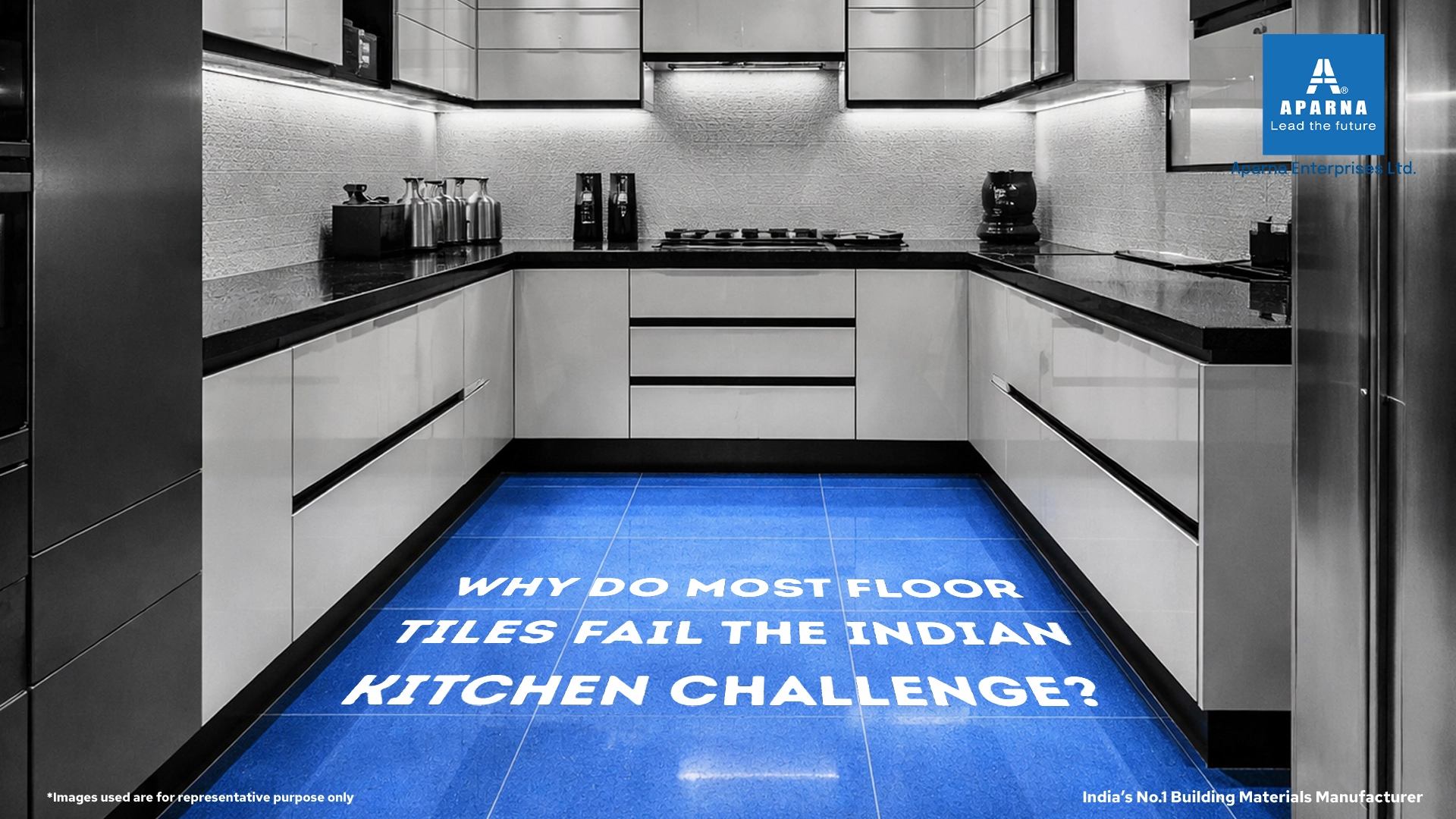
You’re standing in your kitchen, the pressure cooker is whistling, and a drop of hot oil splatters onto the floor. You reach for a mop, but your foot slips slightly on the glossy surface.
It’s a scenario played out in millions of homes. We often choose tiles that look like they belong in a glossy Italian magazine, only to realise they can’t handle the “Heavy Duty” reality of an Indian home. The turmeric stains, the high heat, the constant water spills—our kitchens are not just showrooms; they are workshops.
Finding the best floor tiles for kitchen use isn’t just about aesthetics; it’s about survival. If you are renovating or building a new home, you need to look past the shine and focus on the science of safety and durability.
Here is why most tiles fail the Indian kitchen challenge and exactly what you should buy instead.
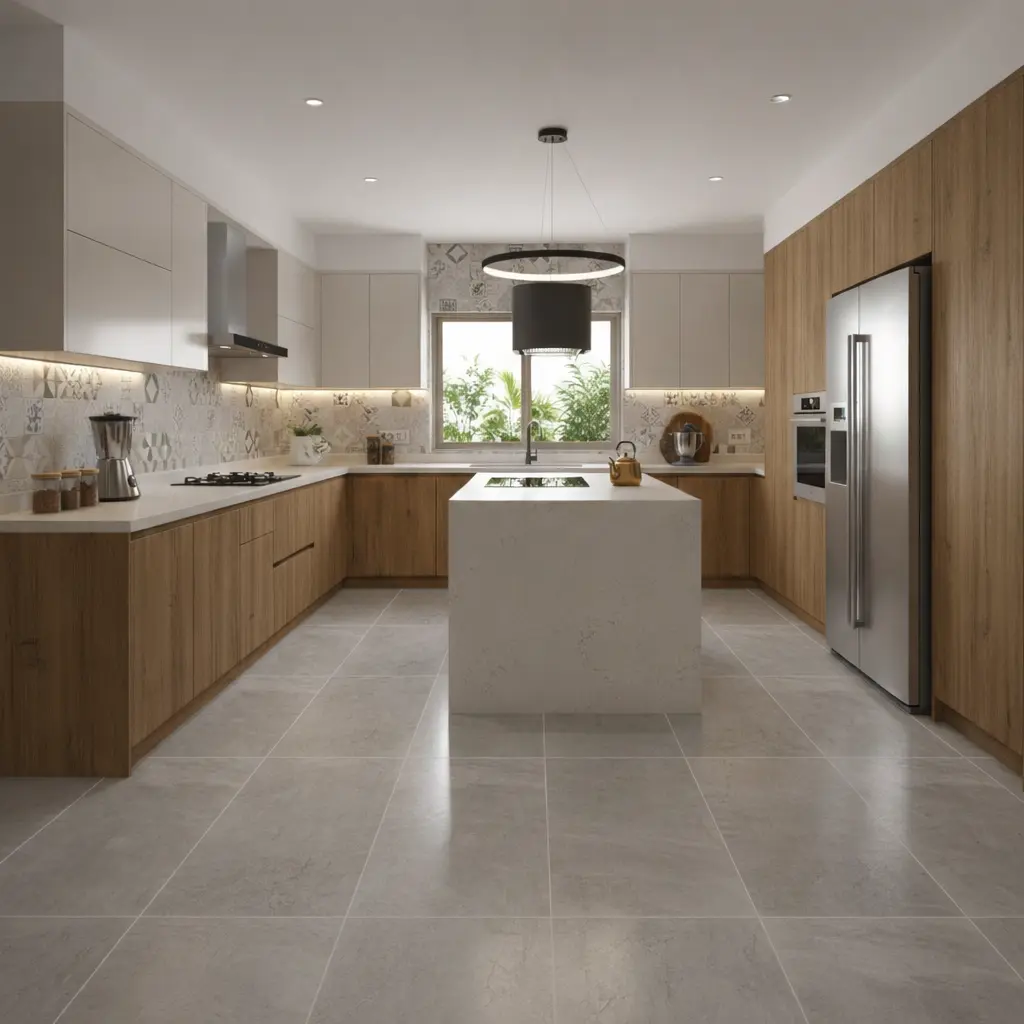
The “Indian Kitchen” Stress Test
Before we talk about materials, we need to respect the environment we are dealing with. Indian kitchen tiles have to deal with problems that Western kitchens don’t often have to deal with:
Chemical Warfare: We use turmeric, tamarind, and oil in our cooking. These tiles are porous, so they soak up these things like a sponge, which leaves persistent yellow stains.
Thermal Shock: We place hot vessels down frequently. Heat-resistant tiles are not a luxury; they are a necessity to prevent cracking over time.
The Water Hazard: We clean our kitchens with water. We don’t just “swiffer” them; we use a lot of water. Because of this, waterproofing and skid resistance are quite important.
If your current floor is chipped, stained, or slippery, it failed one of these three tests.
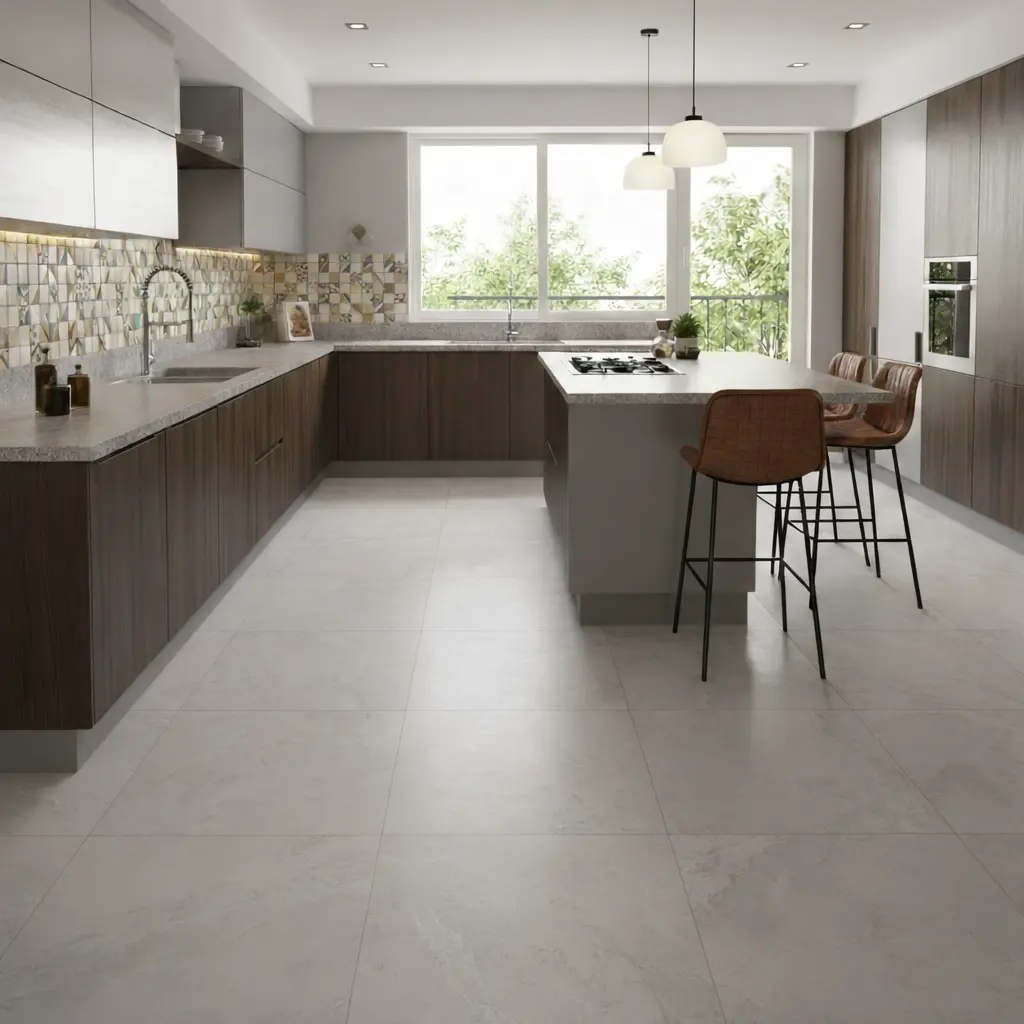
Why the “Glossy Look” is a Trap
We all love that mirror-finish look. It makes small kitchens look bigger and feels premium. But here is the kicker: glossy tiles are the number one enemy of safety in the kitchen.
When you spill water or oil on a glossy tile, it becomes an ice rink. For a high-traffic zone where you are carrying knives and hot food, this is a disaster waiting to happen. Furthermore, glossy tiles scratch easily. Drag a gas cylinder or a heavy sack of rice across the floor once, and that mirror finish is ruined forever.
This is why interior designers are pivoting massively toward matte tiles for kitchen floor applications. They hide scratches, provide grip, and offer a sophisticated, modern aesthetic that doesn’t scream for attention.
The Gold Standard: Vitrified Tiles
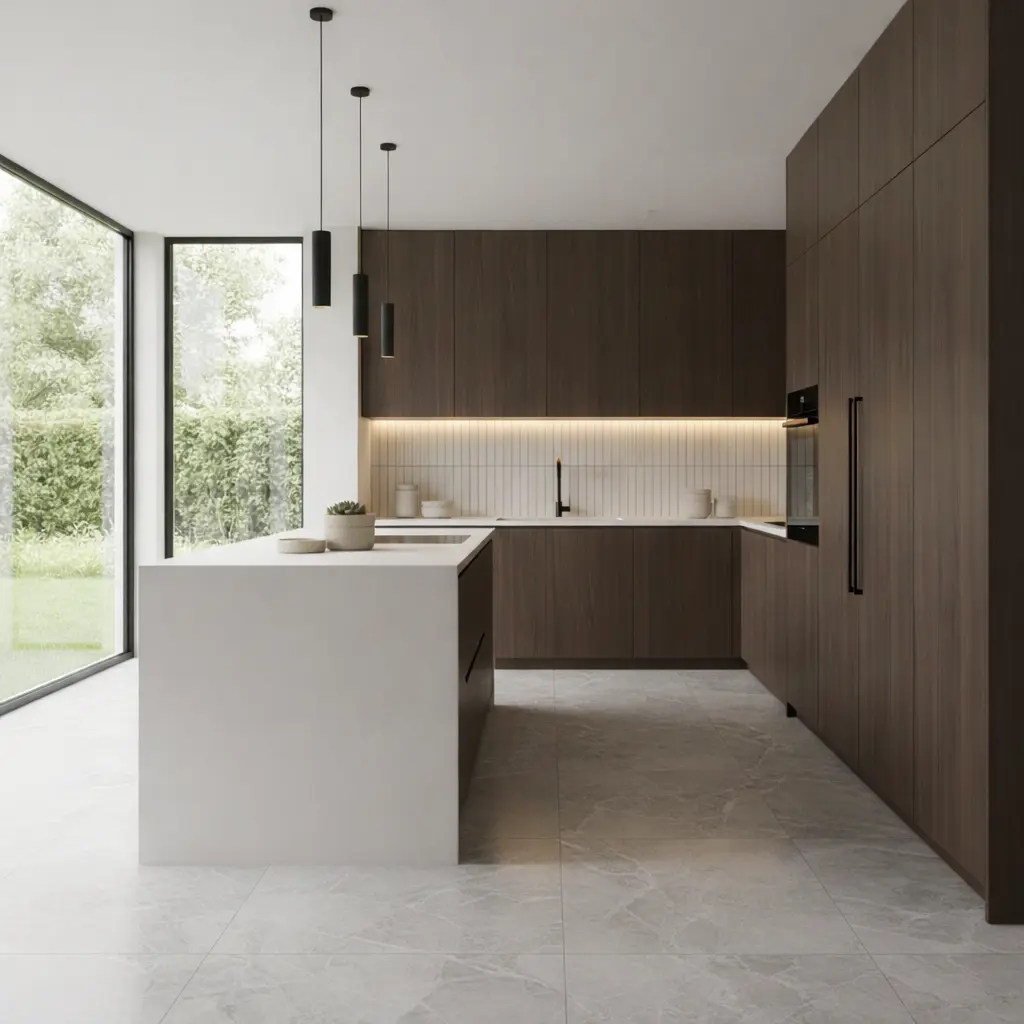
So, if marble is too porous and glossy ceramic is too slippery, what is the solution?
The industry consensus for the best kitchen tiles in India points to one clear winner: Vitrified Tiles.
Kitchen vitrified tiles are different from regular ceramic tiles because they are manufactured by fusing 60% silica and 40% clay at very high temperatures. Vitrifying the mix makes it resemble glass, which makes the tile very durable and non-porous.
Here is why they are the heavyweight champion for Indian homes:
Zero Porosity: They absorb almost no water (less than 0.1%). Turmeric sauce spilled? Wipe it up three hours later, and there won’t be a stain.
Impact Resistance: Drop a heavy ladle? A vitrified tile is less likely to crack compared to a standard ceramic tile.
Consistency: They are all the same size and thickness, which means that the grout lines can be smaller (which means that less dirt gets caught between tiles).
The Safety Factor: Anti-Skid Technology
This is the most critical section of this guide. If you live with elderly parents or active children, you cannot compromise here.
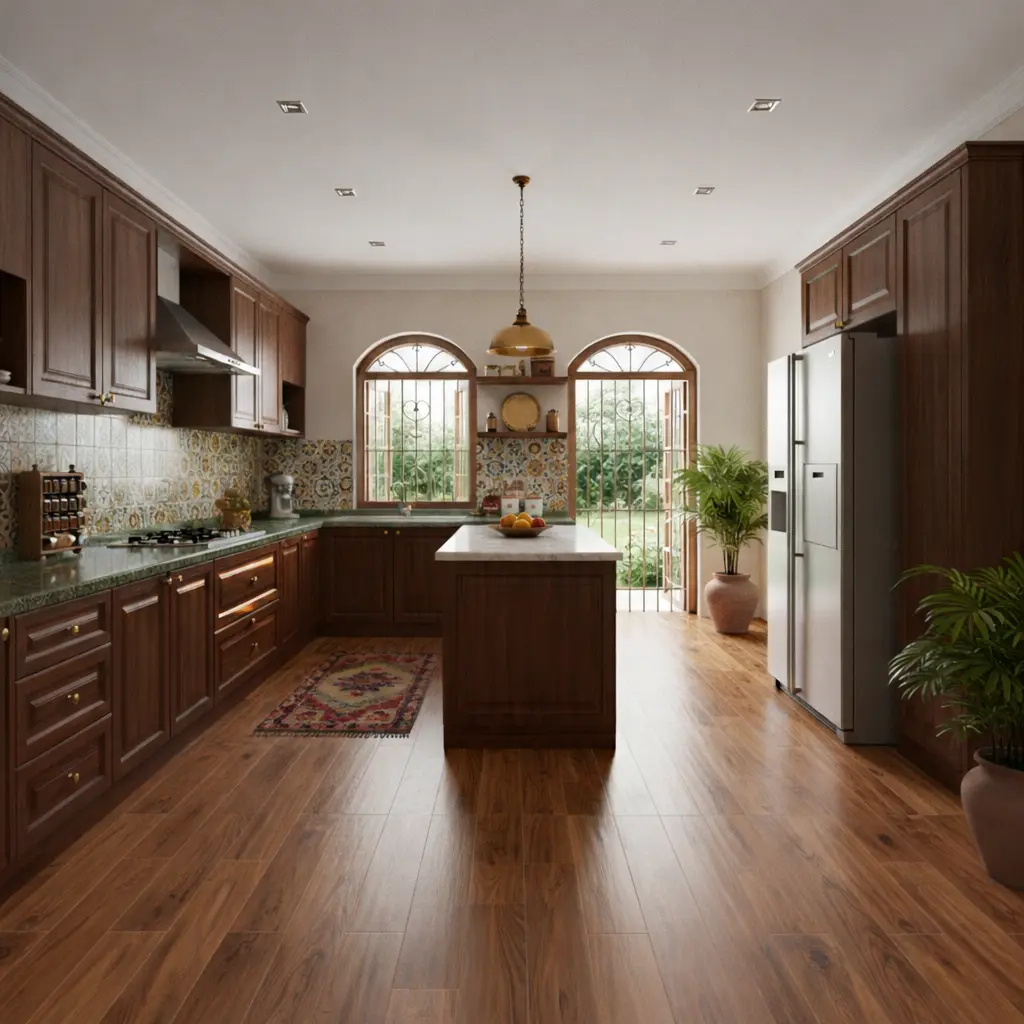
You must specifically look for anti-skid vitrified tiles. These tiles are treated with a coating that increases friction even when the surface is wet. In the tile industry, we measure this using the “R-Value” (Ramp Test). For a kitchen, you want an R-value of R10 or R11.
Non-slippery kitchen floor tiles might feel slightly rougher than bedroom tiles, but that texture is what saves you from a nasty fall when the dishwasher leaks or a water bottle spills.
Pro-Tip: Don’t just trust the label. When you are at the showroom, ask for a sample of anti-skid tiles for kitchen use, pour some water on it, and run your finger across the surface. If it feels slick, walk away.
Durability: Investing for the Long Haul
Renovating a kitchen floor is a massive headache. You have to remove cabinets, disconnect gas lines, and halt cooking for weeks. You want to do this once.
Durable kitchen floor tiles are an investment. While you might be tempted to save money with cheaper ceramic options, they will show wear patterns within two years. High-traffic areas (like the triangle between the stove, sink, and fridge) will fade.
Waterproof floor tiles are also non-negotiable. In many Indian apartments, the kitchen floor is washed with plenty of water. If your tiles aren’t waterproof, water can get through tiny holes and damage the concrete slab underneath, making the flat below yours moist.
Aesthetic Trends: What’s Hot in 2026?
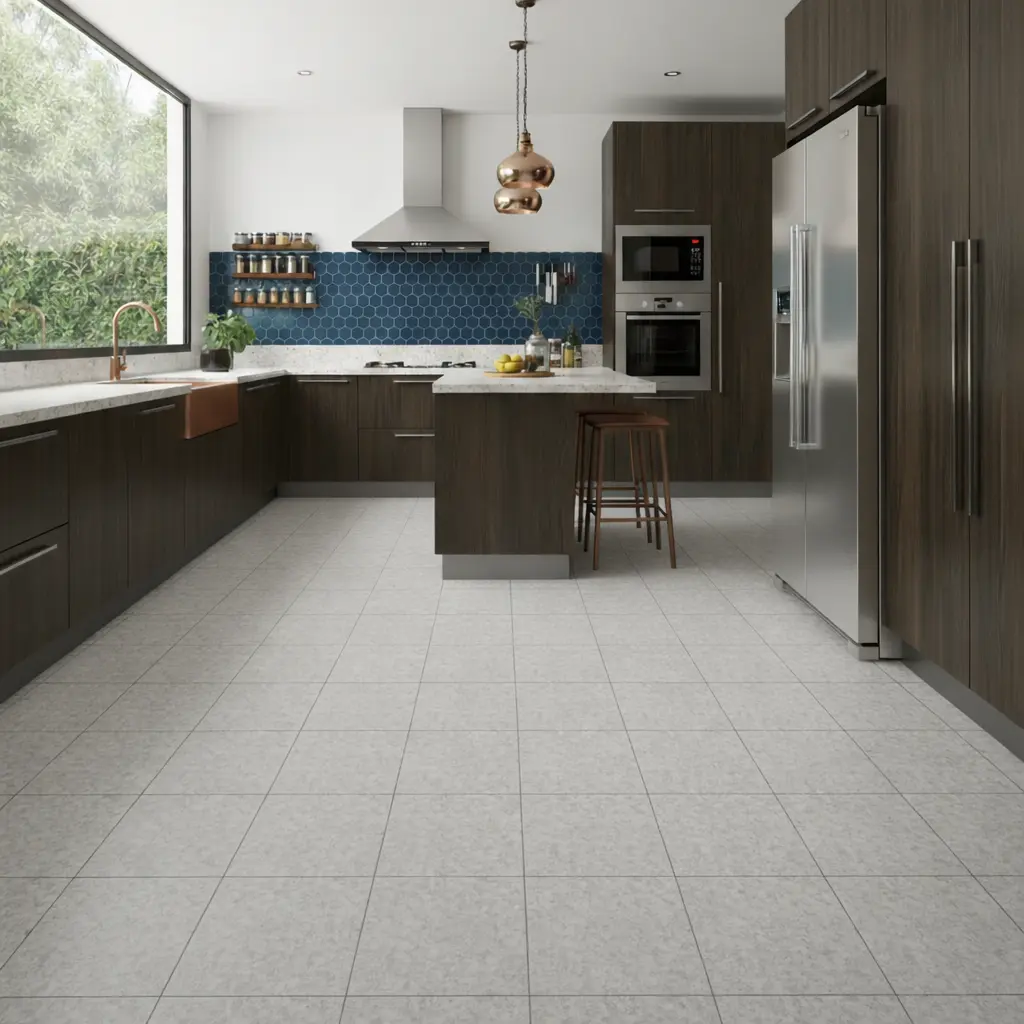
Style is important, but functionality comes first. The market for kitchen floor tiles in India is moving away from busy designs and towards “Quiet Luxury.”
Stone Lookalikes: Vitrified tiles that mimic natural grey stone or slate are huge. They hide dirt effectively and look incredibly high-end.
Warm Wood: Wood-finish tiles look like wood but are as strong as stone, ideal for open-plan kitchens.
Large Format: Tiles for kitchen floor spaces are getting bigger. The 600x600mm standard is moving to 800x800mm or even 600x1200mm. Fewer joints mean a cleaner look and easier maintenance.
How to Choose the Best Kitchen Floor Tiles
If you have too many choices, utilise this easy list before you buy the best kitchen floor tiles:
Check the Body: Is it full-body vitrified? (Ideally, yes).
Check the Finish: Is it Matte or Satin? (Avoid High Gloss).
Check the Grip: Is it Anti-Skid / R10 rated?
Check the Colour: Mid-tones (grey, beige, and taupe) are better at hiding dust and crumbs than stark white or jet black.
Final Thoughts
Let’s be real. Your kitchen floor takes a beating. It deals with high heat, sticky spills, and the morning rush every single day. Treating it like a background character is a mistake you will eventually regret.
When you install tough, anti-skid vitrified tiles, you aren’t just laying down stone. You are buying safety. You are ensuring that a spilled glass of water doesn’t turn into a trip to the hospital. Indian cooking is intense, make sure your floor is ready for the fight.
Frequently Asked Questions (FAQs)
What are the best floor tiles for kitchen use in India?
Matt-finish vitrified tiles are usually the best kitchen floor tiles. They are the perfect mix of long-lasting, stain-resistant, and easy to care for. They don’t need to be sealed like marble or granite, and they won’t discolour with turmeric or acid, which makes them perfect for Indian cooking.
Why should I avoid glossy tiles in the kitchen?
Glossy tiles are a major safety hazard. They become incredibly slippery when wet or oily, which is common in kitchens. Glossy coatings also show scratches and grime far more easily than matte finishes. Always use anti-skid tiles for kitchen areas to keep people safe and make them last longer.
Are ceramic tiles good for kitchen floors?
Ceramic tiles are a good value, but they aren’t the best choice for flooring because they don’t last long. Compared to vitrified tiles, they are more porous and more likely to chip. If you have a lot of foot activity in your kitchen, it’s advisable to use durable kitchen floor tiles like porcelain or vitrified.
How do I clean anti-skid kitchen tiles?
Some people worry that the texture of non-slippery kitchen floor tiles traps dirt. However, they are easy to clean with warm water and a mild detergent. For tough grease stains, a mixture of vinegar and baking soda works wonders. Use a soft-bristle brush to clean the grout lines occasionally.
Can I use wooden flooring in an Indian kitchen?
Real wood is generally a bad idea for Indian kitchens due to moisture and humidity; it can warp and rot. However, you can get the “wood look” by using wooden-finish kitchen vitrified tiles. These give you the aesthetic warmth of wood with the waterproof and heat-resistant properties of tile.
What size tiles should I use for a small kitchen?
Using bigger tiles, such 600x600mm or 600x1200mm, can make a tiny kitchen look bigger. A seamless look is produced by having fewer grout lines. Make sure you pick a light or neutral shade to let in light and make the area feel bigger.