Stone Crusher in India Market, Types, Regulations and Key Insights

India is witnessing rapid infrastructure growth, and at the heart of this expansion lies the stone crusher in India. These machines play a crucial role in converting large rocks into smaller aggregates used in roads, bridges, buildings, and industrial projects. With rising urbanization and government investments in highways, metro rail, and housing, the demand for stone crushers has reached record levels.

This guide provides in-depth insights into the stone crusher in India, covering types, operations, regulations, market trends, and industry practices that matter most for developers, builders, and equipment buyers.

Importance of Stone Crusher in India

The stone crusher in India is vital for the supply chain of the construction industry. Crushed stone is a primary ingredient for concrete, asphalt, and foundation work.

  • Infrastructure Projects: National programs like Bharatmala and Smart Cities Mission drive the need for millions of tons of aggregates.
  • Real Estate Growth: Housing and commercial projects require steady aggregate supply.
  • Mining and Industrial Uses: Crushers process minerals and ores for industrial applications.
  • Rural Development: Local crushers supply materials for small roads, canals, and village housing.

India’s stone crusher industry already produces over 1.5 billion tons of crushed material annually, and demand is only growing.

Types of Stone Crushers in India

When considering a stone crusher in India, different types of equipment suit different applications.

Jaw Crusher

  • Used for primary crushing
  • Breaks down large rocks into manageable sizes
  • Suited for hard, abrasive materials like granite and basalt

Cone Crusher

  • Used in secondary or tertiary crushing
  • Produces fine, uniform aggregates
  • Works best with granite, basalt, and iron ore

Impact Crusher

  • Used for cubical-shaped aggregates
  • Performs well with softer materials like limestone
  • Common in road building and concrete production

Roll Crusher

  • Operates with compression between two rolls
  • Generates uniform output with reduced dust
  • Effective for medium-hard materials and coal

Mobile Crusher

  • Portable and ideal for multiple sites
  • Reduces transportation costs
  • Increasingly popular for large infrastructure projects

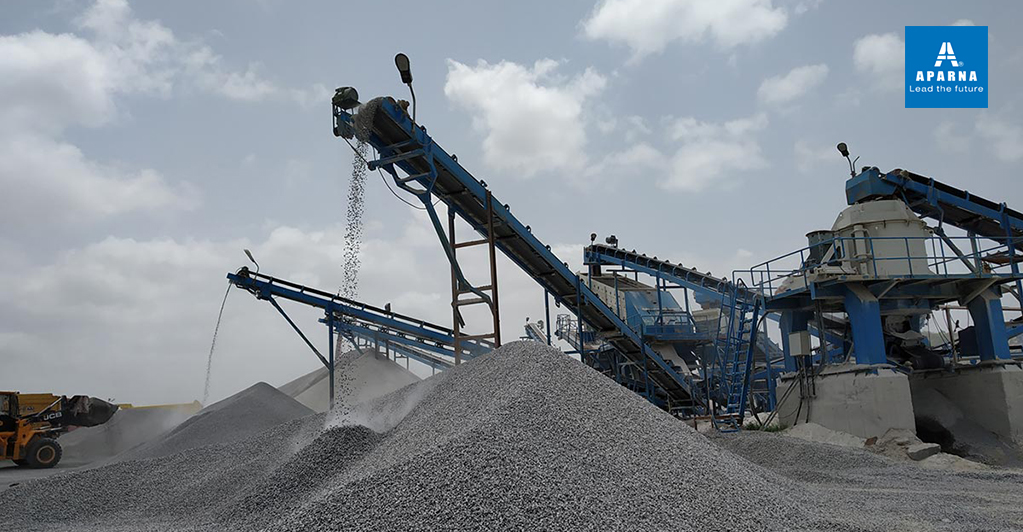
How Stone Crushers Work

The process followed by a stone crusher in India is systematic and efficient when designed correctly.

  1. Feeding: Raw stones are loaded through hoppers or conveyors.
  2. Primary Crushing: Jaw crushers reduce large rocks into smaller chunks.
  3. Secondary Crushing: Cone or impact crushers refine material into aggregates.
  4. Screening: Vibrating screens classify aggregates by size.
  5. Storage: Aggregates are stockpiled or moved into silos.
  6. Distribution: Material is transported to construction sites.

Market Overview of Stone Crusher in India

The market for stone crusher in India is expanding steadily, with strong drivers.

  • Market Value: Estimated at over ₹8,000 crore with steady CAGR growth.
  • Government Push: Road, rail, and housing projects are major growth engines.
  • Industry Trends:
    • Rising use of mobile crushers for flexible projects.
    • Automation and IoT for monitoring and predictive maintenance.
    • Energy-efficient machines reducing operating costs.
    • Growth in recycling crushers for construction and demolition waste.

Regulations Governing Stone Crusher in India

Operating a stone crusher in India requires compliance with environmental laws and industry standards.

  • Mandatory Approvals:
    • Consent to Establish (CTE) from State Pollution Control Board
    • Consent to Operate (CTO) after installation
  • CPCB Guidelines:
    • Dust suppression using water sprays
    • Green belt plantations around crushing units
    • Covered storage for raw materials
    • Internal roads must be wetted regularly
  • Worker Safety:
    • Personal protective equipment (PPE) is compulsory
    • Medical checkups twice a year for workers
  • Noise Control: Machines must operate within prescribed decibel limits

Failure to comply can result in fines, penalties, and plant shutdowns.

Choosing the Right Stone Crusher in India

Key considerations before investing in a stone crusher in India include:

  • Material hardness and abrasiveness
  • Required production capacity per hour
  • Stationary or mobile setup depending on project needs
  • Power consumption and long-term operating costs
  • Availability of local service, spare parts, and technical support
  • Compliance with environmental and pollution standards

Operational Best Practices

Running a stone crusher in India efficiently requires disciplined operations.

  • Perform daily and weekly maintenance checks
  • Install water misting and dust suppression systems
  • Train workers in safe machine operation and handling
  • Implement IoT and predictive maintenance technologies
  • Use efficient plant layouts to minimize handling time and costs

Challenges Facing the Stone Crusher Industry

Although demand is strong, several challenges exist for stone crusher in India.

  • High capital investment required for advanced plants
  • Shortage of skilled operators and technicians
  • Stringent environmental norms adding compliance costs
  • Rising fuel and electricity prices impacting margins

Future of Stone Crusher in India

The outlook for stone crusher in India is positive, supported by national infrastructure growth and innovation.

  • Adoption of AI-based crushers for real-time monitoring
  • Growth of eco-friendly crushing plants with lower emissions
  • More units recycling construction and demolition waste
  • Expansion into smaller cities and semi-urban regions

Frequently Asked Questions

  1. What is the price of a stone crusher in India?
    Smaller units cost around ₹10–20 lakh, while large industrial plants may exceed ₹3 crore.
  2. What permissions are needed for a stone crusher in India?
    CTE and CTO approvals from the State Pollution Control Board are mandatory.
  3. Which crusher is best for granite?
    Cone crushers are the most efficient for hard materials such as granite.
  4. Can stone crushers be used for recycling?
    Yes, mobile and impact crushers are effective for recycling construction debris.
  5. What are CPCB norms for stone crushers in India?
    They require dust control, green belt development, safe storage of materials, and noise control.


AEL – Your One-Stop Solution for long-lasting and durable building materials in India

Found in 1990, Aparna Enterprises Limited (AEL) has evolved to be a leading building materials manufacturer in India. AEL has a proven record of delivering innovative, high-quality, long-lasting building materials since its inception.

Aparna Enterprises Limited has 10 brands dedicated to manufacturing world-class building solutions and construction materials. The organization has been associated with several landmark projects in the country and this stands as a testament to its quality, innovative spirit, and workmanship.

Premium, Affordable building solutions and construction materials at Aparna Enterprises Limited

With 30+ years of experience in the field, Aparna Enterprises Limited has emerged as a leading building materials manufacturer in India. Functioning at the confluence of design, innovation, and technology AEL offers affordable, high-quality building materials for commercial, residential, and industrial buildings.

Diverse Portfolio

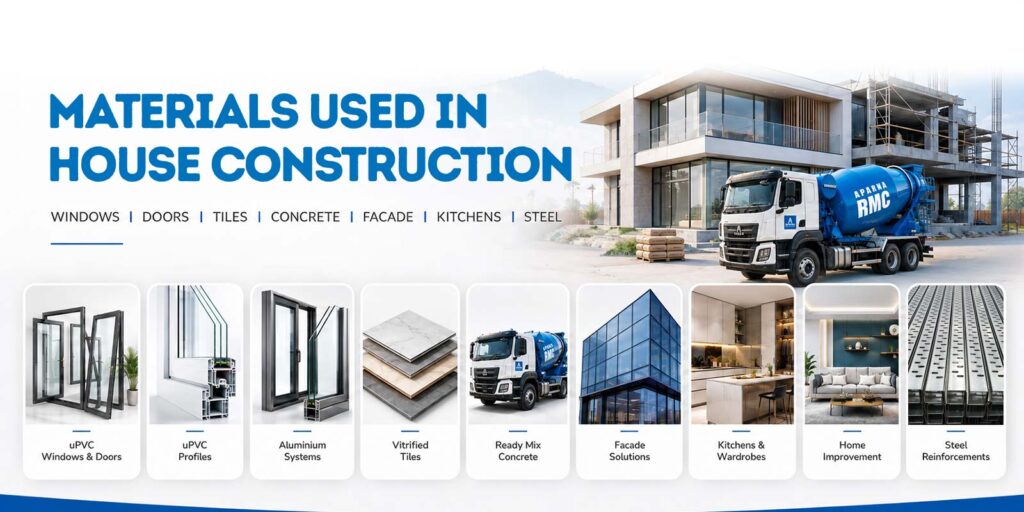
Equipped with sophisticated manufacturing technologies, AEL has ventured into manufacturing a diverse portfolio of building solutions and construction materials. They include,

  • Ready-mix concrete,
  • Steel reinforcements,
  • End-to-end facade solutions,
  • Aluminium windows and doors,
  • Premium sanitaryware,
  • Kitchen and wardrobe solutions,
  • Vitrified tiles,
  • uPVC windows and doors,
  • Crusher

International Standards

Aparna Enterprises has demonstrated an unwavering commitment to exploration and innovation to meet the complex needs of the evolving industry. The manufacturing facility is equipped with state-of-the-art machinery and equipment imported from leading brands in Italy, Germany, etc.

AEL has established partnerships with technological pioneers including Krauss Maffei, SACMI, Wegoma, Elumatec, and Schwing Stetter, that help design, manufacture, and deliver premium-grade construction solutions.

The building solutions and construction materials manufactured and delivered under the aegis of AEL adhere to international standards. This emphasis on quality makes AEL, a trusted building materials manufacturer in India.

The materials manufactured at AEL exhibit durability, functional design, and superior finish while helping builders and construction companies strike a balance between quality, safety, and aesthetic appeal.

Cost-effective solution

AEL’s mission is deeply synonymous and intertwined with the belief that every building carry hopes, ambitions, and aspirations. It offers premium solutions at economical prices to help people realize their architectural dreams and artistic vision. This exemplary commitment has helped AEL emerge as India’s most reputed building materials supplier.

What Makes Aparna Enterprises Limited Stand Apart from the Competitors?

AEL supplies standard as well as customized solutions to meet the specific needs of the construction projects. Holding 30+ years of experience in the field, Aparna Enterprises Limited has developed deep-rooted expertise and a passion for delivering cutting-edge construction solutions.

Given the nature and pace of the evolution in the construction space, AEL has developed dynamic abilities to harness futuristic technologies in pioneering innovative solutions. Its technological leadership helps achieve a balance between quality and cost, offering premium solutions at economical prices. This makes AEL, a reputed building construction materials supplier in India.

What Makes Aparna Enterprises Limited the Perfect Partner for Building Material Needs?

AEL adopts a collaborative approach where the company treats every project as its own and works in partnership to enable our clients to realize their architectural dreams. All our products are manufactured for precision at top-notch facilities following eco-friendly ways and stringent standards.

With customer-centric construction solutions, Aparna Enterprises Ltd. has built a stellar reputation for trust and reliability. This has helped the brand evolve to become a preferred choice of building materials supplier for architects, builders, and homeowners.

Closing Thoughts

Aparna Enterprises Limited is your go-to partner if you are exploring customized, innovative solutions for shaping your unique dreams and architectural vision. Transform your space with leading-edge solutions from AEL, India’s leading building construction materials supplier.

FAQ

  1. What support or guidance can you expect from your manufacturer for using these materials effectively?

Aparna Enterprises Limited offers guidance and expert advice from conceptualization to completion. With deep-rooted experience and expertise, we help select the materials that align with the various needs of the buildings.

  1. How does AEL prioritize quality control in material production?

AEL follows stringent quality standards and regulations in every stage right from design to production and delivery through raw materials inspection, supplier quality control, quality records, production process manufacturing, etc. The construction materials manufactured at AEL comply with global standards.

  1. Can I get customized solutions for my specific project requirements?

Yes, AEL offers bespoke building solutions and construction materials based on your specific project needs like budget, aesthetics, building type (industrial or commercial), etc.

  1. Are the materials suitable for both residential and commercial projects?

Yes, Aparna, a reputed building materials supplier offers a wide range of construction materials including ready-mix concrete, vitrified tiles, aluminium doors and windows, facades, steel reinforcements, etc. that are appropriate for residential and commercial projects.

AEL’s – 6 Factors to Consider when Choosing the Right Construction Materials for your Project

When embarking on a construction journey, choosing the right construction and building material solutions for your project is crucial. The kind of materials that you choose will impact the durability, functionality, strength, cost, aesthetics, etc.

In a crowded space of building construction materials suppliers, it gets hard to choose the right one that meets your building and financial requirements.

To ensure you make the right decision, we have curated some tips here from experts at Aparna Enterprises Limited (AEL), the leading building materials manufacturer in India. Read on.

How to choose the best construction and building material solutions for your project?

At first, choosing the construction materials may seem easy and straightforward. Unfortunately, it doesn’t turn out to be that simple. Use these hacks to make it less challenging.

1. Budget

The cost is a crucial aspect in choosing the right building materials. When you delve deeper, you will understand that the cost varies widely and it is determined by several factors.


While you embark on the construction journey, you must first set a clear budget. As is the norm, high-quality materials come with a hefty price tag. So, the key lies in striking a balance between quality and cost.


As construction is a long-term endeavor, you cannot afford to invest in substandard options, as repairs and replacements may turn out to be a costly affair.


AEL, India’s leading building and construction materials manufacturer, attaches enormous importance to offering high-quality materials at an affordable cost.

2. Durability

Durability is a critical factor in construction as buildings are exposed to varying conditions of moisture, corrosion, winds, seismic activities, etc. While choosing the building materials, you must consider the local environmental conditions.


AEL has a track record of manufacturing building materials that are long-lasting and resistant to wear and tear and natural stressors like corrosion, storms, high-speed wind, etc. Our construction and building material solutions comply with stringent quality standards.

3. Availability

Opting to use easily available materials is a common expert advice. Availability also determines the cost and you need to be doubly careful. For instance, you may incur high transport costs if the materials are not available in your vicinity.

Choosing such materials may also impact your workflow as it takes longer to source and transport. So, using materials that are available within your reach reduces transportation costs and ensures seamless completion of the construction work.

4. Climatic conditions

Climate is an important aspect in deciding the construction and building material solutions. You must consider the average rainfall, amount of sunlight, the intensity of heat, ventilation, humidity, etc. before choosing the materials.


You must choose materials that are appropriate, adaptive, and responsive to your climate conditions.

5. Ease of Maintenance

Repairs and maintenance are a costly, time-consuming affair. Choosing construction and building material solutions that are easy to maintain helps reduce operational costs. Frequent maintenance also results in downtime which disrupts the workflow.


AEL, the leading building and construction material manufacturer, invests enormous effort to manufacture durable building materials with a longer lifespan. They help reduce maintenance costs and enhance the safety of the building.

6. Aesthetic appeal

Aesthetics define the style and character of a building. Construction materials play a crucial role in shaping the visual appeal of a building. For instance, the texture and color of the construction material you choose determines whether the building looks vintage or contemporary.


While choosing the construction materials, you must prioritize the appearance and aesthetic you desire to achieve at the end.


At Aparna Enterprises Ltd., India’s top building materials company, the priority is to develop innovative materials at the convergence of design, performance, and functionality.

Closing Thoughts

The simplest way to choose the right construction materials is to choose materials that best accommodate the above-mentioned attributes, including budget, durability, availability, climatic conditions, ease of maintenance, and aesthetics.


Aparna Enterprises Ltd (AEL), a popular building materials manufacturer in India operates at the intersection of technology, design, and innovation to ensure a solid foundation with aesthetically appealing designs, and long-lasting quality.


For more insights and ideas on construction and building material solutions, contact us atwww.aparnaenterprisesltd.com


FAQ


  1. What are the materials used in building construction?

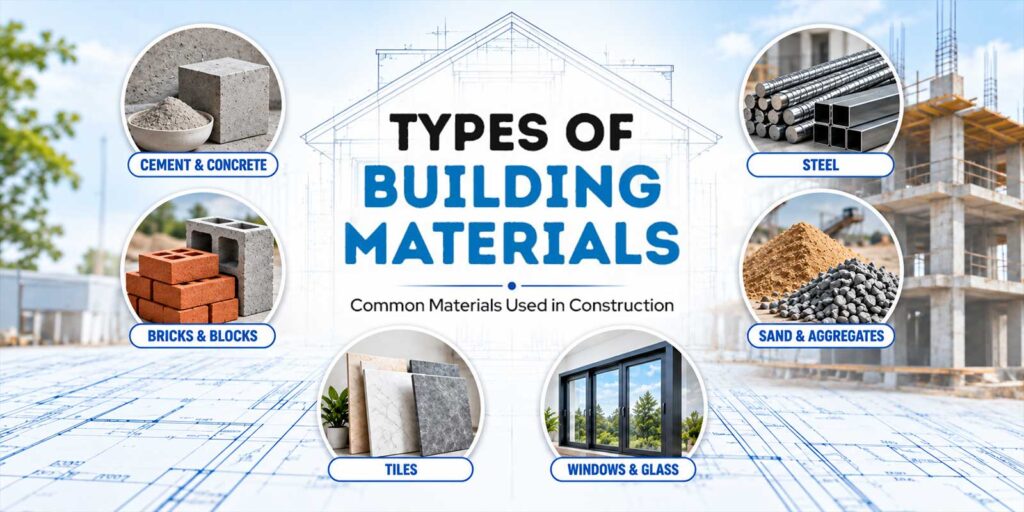
Common materials in building construction include ready-mix concrete, steel, uPVC and aluminum doors and windows, bricks, tiles, glass, masonry, etc.


  1. Which material waste can be reused in the construction industry?

Though the construction industry generates a notable amount of waste, a lot of materials like concrete, bricks, glass, wood, plaster and drywall, roofing materials, etc. can be recycled and reused. At AEL, we emphasize sustainability in manufacturing construction materials to promote reusability and reduce environmental damage.


  1. How to recycle construction materials?

Following are some of the few best practices followed in the industry to recycle construction materials.

  • Make recycling and sustainability a priority in each stage right from the design
  • Identify and use recyclable construction materials
  • Establish an exclusive recycling plan
  • Integrate the construction waste back into a new building
  • Focus on deconstruction instead of demolition


  1. How to check the quality of construction materials?

Different construction materials can be tested in different ways. The quality of cement is measured by its fineness and compressive strength, concrete by design mix, granite by water absorption, etc. You should refer to the quality standards and specifications defined for each material.